
Keeping someone with dementia safe at home comes down to three things: a home that is easier to move around in, a plan for the moments when things go wrong, and enough company and support that your loved one is never left to cope alone. None of it needs to be dramatic or expensive. Most of it is small, calm changes that you can make in a weekend, and then revisit as needs change.
We run a daytime community for older adults in Cheshire, and we talk to families every week who are wondering exactly where to start. This guide is what we would tell a friend.
Key takeaways
- Start with simple changes: remove loose rugs and clutter, improve lighting, fit grab rails in the bathroom and keep the hall clear.
- Plan for wandering before it happens. Fill in a Herbert Protocol form so police have what they need if your relative goes missing.
- Whether someone can be left alone has no single answer. It depends on their stage, abilities and how they cope, and it can change quickly, so ask your local council for a needs assessment.
- Supervision does not have to mean being there every hour. Telecare, regular visitors and a structured day away from home can all share the load.
- If you are worried about memory changes, see a GP and take someone who knows your relative well.
Table of Contents
- Making the home safer, room by room
- Wandering and getting lost
- Can someone with dementia be left alone?
- Noticing changes: when to see a GP
- Support for families: assessments and respite
- Our perspective: safety is also about a good day
- Choosing daytime support that fits
- Try a day with us
- Frequently asked questions
- Sources
Making the home safer, room by room
The aim is to remove danger without taking away independence. Dementia UK advises removing or securing rugs, using motion-sensor or night lights, fitting grab rails in the bathroom and using clear signs or pictures to identify rooms. The same page suggests avoiding big changes outside, such as repainting the front door or cutting down familiar trees and shrubs, because familiar landmarks help a person recognise their own home.
Hallway and stairs
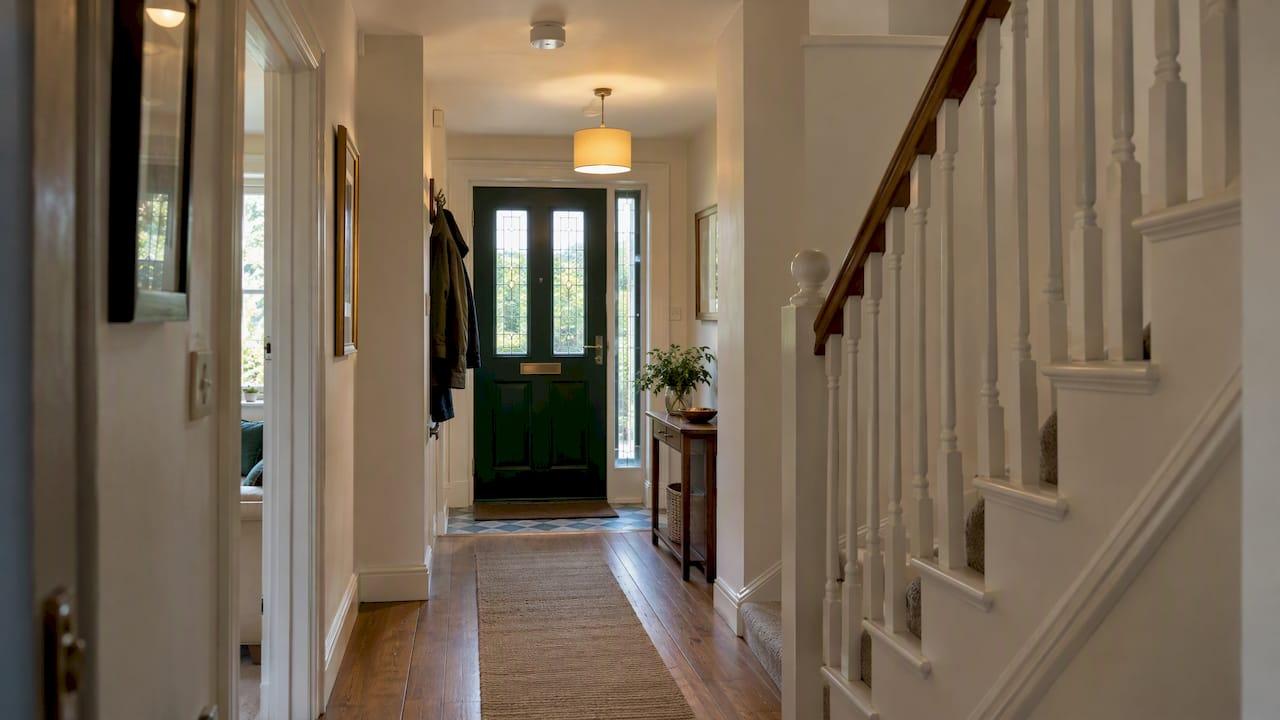
The hall is where many accidents begin. Keep it uncluttered, make sure it is well lit, and remove trailing wires. Dementia UK also suggests fitting a key safe and motion-sensor lighting, so that a neighbour, carer or emergency service can get in without your relative needing to find keys or open the door to someone unknown.
If you are also worried about falls, our guide to a personalised falls plan for carers goes into more detail.
Living room and kitchen
In the living room, tidy away anything that could be tripped over. Glass furniture can be hard to see and easy to walk into, and the NHS also notes that regular eye tests matter for people with dementia, because sight problems can be spotted and treated.
In the kitchen, think about what your relative still does safely and what has become risky. Keep cleaning products out of sight, and watch for signs that cooking is becoming a worry: pans left on, food left out, or meals being skipped. If eating and drinking have become a struggle, we have written about practical fixes for dementia dining.
Bedroom and bathroom
Night-time is when confusion often shows itself. A soft motion-sensor light between bed and bathroom can prevent a lot of worry. In the bathroom, grab rails, a non-slip mat and a clearly visible toilet seat all help. Pictures or labels on doors can help your relative find the right room without having to ask.

Good lighting does a great deal of work in a home with dementia. Our low-cost, room-by-room lighting fixes are a good place to start, and our wider room-by-room dementia-friendly design guide covers colour and contrast too.
A quick checklist
- Loose rugs removed or fixed down, and walkways clear.
- Lights on every route, including night lights to the bathroom.
- Grab rails in the bathroom, and a non-slip surface in the shower or bath.
- Key safe fitted, with the code shared only with people you trust.
- Cleaning products and medicines stored safely.
- Pictures or signs on key doors.
- A recent eye test.
Wandering and getting lost
Many families worry most about the front door. Wandering is often not aimless: the person may be looking for somewhere they used to go, or trying to get to work, or to a home they remember from years ago. Smart home and telecare technology can help. Dementia charities describe movement monitors and pressure pads that send an alert to a carer when the person gets up or leaves the house, and your local council can tell you what is available in your area.
Fill in a Herbert Protocol form now
The Herbert Protocol is a form completed by family, friends or carers. Cheshire Police explain that it records details about the person, their past, their habits and places they go, and that you can hand it over if the person goes missing to save time at the start of a search. Another force describes the form as helping police start searching sooner.
It is far easier to fill it in on a quiet afternoon than in a panic. Include a recent photograph, favourite walking routes, former addresses, and the names of people they might head towards. Keep a copy somewhere easy to reach. Our article on wandering and the Herbert Protocol takes you through it step by step.

Can someone with dementia be left alone?
This is one of the questions we hear most, and the honest answer is that it depends. Families on the Alzheimer's Society support forum say they are not aware of any law that bars leaving a person with dementia alone, and that it comes down to the person's stage, abilities and how they cope. That is one set of experiences rather than official guidance, but it matches what we see: someone who manages well for a few hours in the early stages may need company much sooner than you expect.
Some questions that help you decide:
- Can they use the phone, and would they know when to call for help?
- Do they recognise danger, such as a hot hob or an unknown caller?
- Are they eating and drinking without prompts?
- Do they take their medicines correctly?
- Have they ever left the house and been unable to find their way back?
- How do they feel when alone: calm, anxious or frightened?
If several answers worry you, it is time to put more support in place. The Alzheimer's Society advises that you can ask the local authority for an assessment of their care and support needs, which may identify local services, professional carers or community alarms. In Cheshire East, that means contacting the council's adult social care team.
The same applies if you are asking about an elderly parent who has no diagnosis. Telecare systems, such as remotely operated sensors linked to a call centre, can monitor movement and detect emergencies like falls for people living alone. Add a regular routine of calls and visits, and a neighbour who has your number.

Noticing changes: when to see a GP
Sometimes the first question is not how to make the home safe, but whether something has changed. Perhaps bills are going unpaid, meals are being skipped or the same question is asked again and again. The NHS suggests talking to a GP about memory problems and difficulty with everyday activities such as washing, dressing, cooking, shopping or paying bills. It recommends bringing someone who knows the person well, who can describe what they have noticed and help with recall.
What the diagnosis process looks like
In the UK the process usually runs like this:
- See your GP. They may examine you, arrange blood tests, ask about medicines and give memory and thinking tasks. These checks help rule out other causes, such as depression, anxiety, thyroid problems or medicine side effects.
- Referral to a specialist if needed. This may be an old-age psychiatrist, geriatrician or neurologist, who can arrange more detailed cognitive tests and sometimes a CT or MRI scan.
- Support after diagnosis. A diagnosis opens the door to local support, care planning and the assessments described below.
Before the appointment, jot down examples with dates: what happened, how often, and how your relative reacted. It helps the GP far more than general worries.
Support for families: assessments and respite
You are not meant to do this alone. A carer's own assessment is separate from the assessment of the person you look after, and both matter. Government guidance for social workers describes contingency plans for emergencies, written with social care professionals as part of the formal assessment, as part of effective carer support. It also stresses a strengths-based approach that recognises the value of what carers do and their need for respite.
In practice, ask for:
- a needs assessment for your relative,
- a carer's assessment for you,
- an emergency plan: who steps in if you are ill or stuck in traffic.
Our guide to two free assessments that can unlock respite funding explains what to ask for, and our overview of respite care options in the UK covers short breaks of different kinds.
Our perspective: safety is also about a good day
We see safety a little differently from a checklist. A home can have every grab rail in place and still be a lonely, quiet place at two o'clock in the afternoon. Boredom and isolation lead to restlessness, poor eating and drinking, and low mood, and these are the very things that tend to bring on wandering or accidents.
That is why we built The Alderley Clubhouse around a full day. Our days run from 9:30am to 4:30pm, Monday to Friday, an hour longer than most local provision. There is breakfast on arrival, a cooked two-course lunch, traditional afternoon tea and a hydration station that is there all day, so sipping little and often is easy. In between there are physical, creative, cognitive and social activities, weekly live entertainment, and visiting hairdressing and chiropody.
Our care team is fully qualified and trained to deliver Cognitive Stimulation Therapy, which NICE recommends as the only non-drug therapy for mild to moderate dementia. The building is purpose-designed, dementia-friendly and fully accessible, with secure parking and a drop-off point at the door. We cap attendance at 35 members each day, so everyone is known by name.
For families, that means a few hours when you know your relative is safe, stimulated and enjoying themselves, and you can rest, work or simply breathe. We find that people often come home calmer and sleep better. A day service will never replace the work you do at home, but it can make it easier to keep going.
— Scott @ The Clubhouse
Choosing daytime support that fits
When you look at day services, visit in person and watch how staff speak to members. Ask about qualifications, staffing, how the building supports people who get disoriented, and how your relative's likes and routines will be recorded. Our five evidence-backed steps for choosing a dementia day centre and our look at what makes accessible day centre design work can help you compare. If you are in Cheshire, our guide to what to book first is a good starting point.
Try a day with us
A day pass at The Alderley Clubhouse in Nether Alderley is £120 including VAT. We also offer a 10-Session Pass, which gives ten days for the price of nine. If you would like to see how it feels before you commit, our complimentary taster day lets your relative spend a day with us as our guest: book a taster day. When you are ready, you can view day pass options. Our FamilyNet app keeps you updated on their day.
Frequently asked questions
Is it safe to leave someone with dementia alone at home?
It depends on their stage, abilities and how they cope, and it can change over time. Ask your GP or local council for a needs assessment, and use the questions above about the phone, the hob, eating, medicines and finding their way back to guide your decision. If you have any doubts, arrange company or telecare rather than waiting for an incident.
What should I do if my relative goes missing?
Call 999 straight away and give police the Herbert Protocol form if you have completed one. It holds the details that save time at the start of a search, such as a photograph, habits and favourite places. Filling it in beforehand is the single most useful thing you can do.
How can I keep an elderly parent safe at home if there is no diagnosis?
Start with the same practical changes: clear walkways, good lighting, grab rails and a key safe. Consider telecare sensors linked to a call centre, and arrange regular calls and visits. If you notice memory or everyday-task changes, encourage a GP visit and offer to go along.
What happens at a dementia assessment?
The GP will usually examine your relative, arrange blood tests, ask about medicines and give memory and thinking tasks. If dementia is still suspected, they may refer to a specialist for more detailed tests and possibly a scan. Take someone who knows your relative well to help describe changes.
Sources
- Making the home safe for a person with dementia, Dementia UK
- How to make your home dementia friendly, NHS
- Keeping safe and independent at home, Alzheimer's Society
- Vulnerable people at risk of going missing, Cheshire Police
- Herbert Protocol, Surrey Police
- Being left alone with Alzheimer's, Dementia Support Forum
- Living alone, Alzheimer's Society
- How to get a dementia diagnosis, NHS
- Alzheimer's disease diagnosis, NHS
- Supporting adults with dementia: a manual for good social work practice, GOV.UK