
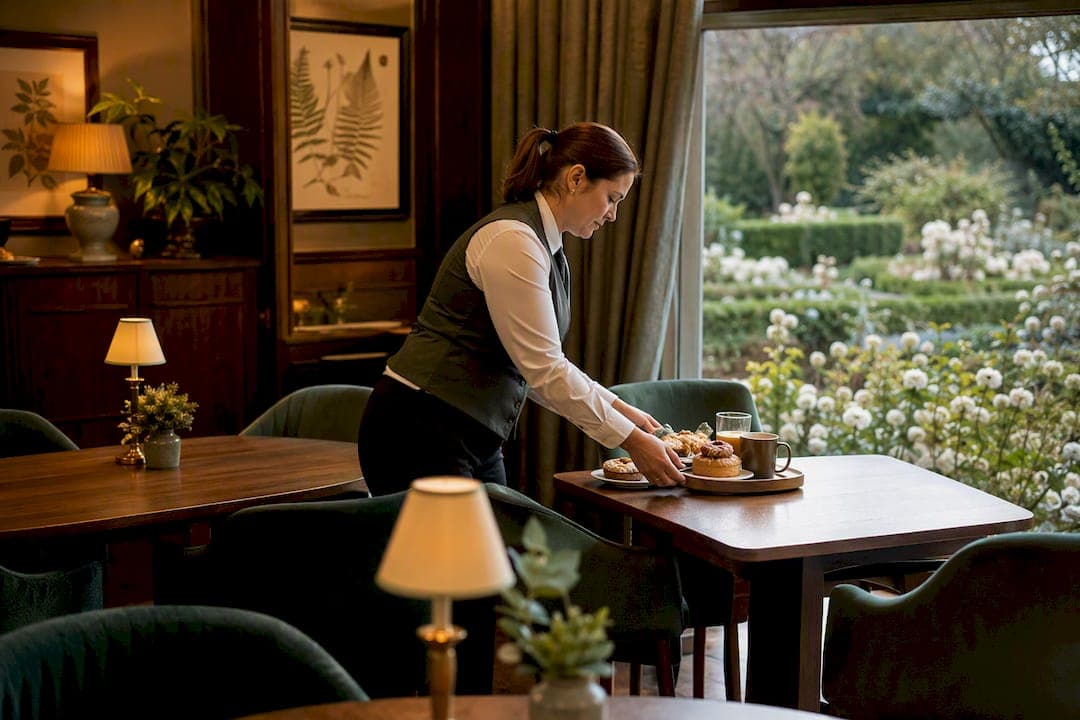
If you're looking for a premium, dementia-friendly day service in Cheshire, book a welcome tour at Alderley Clubhouse first, then arrange a trial day before committing to a package. Look for CQC-relevant standards, staff with specialist dementia training, and capped daily numbers, all of which Alderley Clubhouse offers.
Pro Tip: On your first call, ask what happens on day one. A good service will describe a settling-in visit, not just a schedule.
Three things to do this week:
- Phone to book a welcome tour and meet the team in person.
- Ask for a short trial day before booking a full package.
- Bring a familiar item (a photo, a favourite jumper, a card game) for the first visit.
Key Takeaways
Premium dementia day services work best when families treat the first few visits as a settling-in process, not an immediate test, and choose a provider with capped numbers, trained staff, and a documented care plan.
| Point | Details |
|---|---|
| Book a tour first | Arrange a welcome tour before committing to any package, so your relative can meet staff in a low-pressure setting. |
| Treat day one as settling-in | Expect the first sessions to focus on comfort and familiarity, not full activity participation. |
| Bring something familiar | A photo, jumper, or favourite game helps staff learn preferences and eases early anxiety. |
| Check coordination habits | Ask how the service documents care plans and communicates changes to you and any GP involved. |
| Choose Alderley Clubhouse locally | Cheshire families get capped daily numbers, dementia-trained staff, and named recognition from day one at Alderley Clubhouse. |
Table of Contents
- What are the benefits for someone with dementia and their family carer?
- What do costs and booking look like in Cheshire?
- How do day services coordinate with other care professionals?
- How can you help your relative settle into a new day service?
- What settling in actually feels like from inside the Clubhouse
- How do you book a welcome tour or trial day?
- Frequently asked questions
- Sources
What are the benefits for someone with dementia and their family carer?
A well-run day service gives your relative something a home routine often can't: company, conversation, and a reason to get dressed and look forward to the day. For someone with dementia, social contact in a calm, structured setting can lift mood and reduce the isolation that so often creeps in after diagnosis. Care Choices describes this as a "new family" atmosphere, where regular attendance builds real familiarity between staff and attendees, not just a rota of activities.
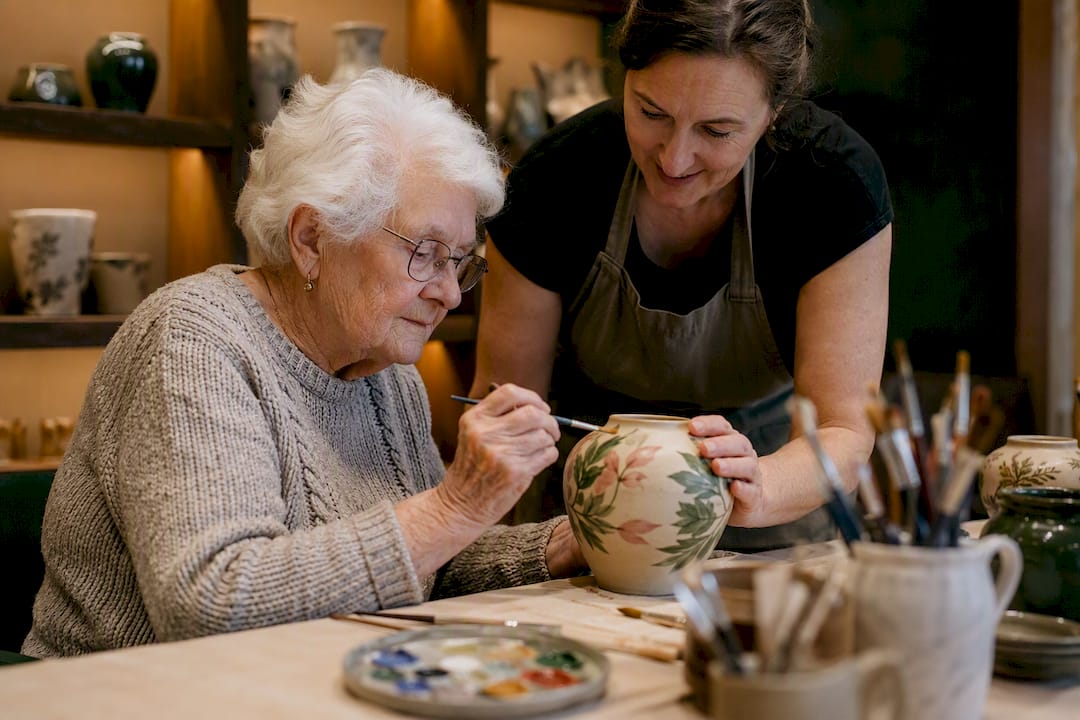
For you, the benefit is different but just as real: time. A systematic review of day-care effectiveness found that programmes can offer meaningful social and emotional support, though the evidence on measurable carer outcomes varies considerably between studies. That's an honest caveat worth holding onto. Not every day service delivers the same quality, which is exactly why capped numbers and named recognition matter so much.
A 2017 study in BMC Geriatrics found dementia-specific day centres can ease caregiver burden and, for some families, delay a move into residential care, though results depend heavily on the programme and the family's circumstances. The NIHR's evidence review reaches a similar conclusion: many carers value day care highly, even where the research on outcomes stays mixed. That gap between lived experience and clinical measurement is precisely why choosing quality over convenience matters.
What do costs and booking look like in Cheshire?
Premium dementia day services in Cheshire are typically paid for privately, either as single day passes or as multi-session packages bought upfront. This is a private-pay arrangement between you and the provider, not something routed through a council budget, so the pricing structure tends to be more flexible than a statutory service.
A day pass suits families who want to try things gradually, perhaps once a week while you see how your relative settles. A package, usually sold as a block of sessions, works out better value if you already know day care will become a regular part of your routine, and it secures a place on busier days. At Alderley Clubhouse, both day passes and packages can be booked online, with the team on hand to talk through which option suits your relative's needs and your budget.
Booking itself is straightforward: a phone call or online enquiry, a conversation about care needs, then a welcome tour before any payment for a full package. Ask upfront about what's included in the price, whether transport is separate, and whether there's a minimum commitment. A transparent provider will answer all of this before you've even visited.
How do day services coordinate with other care professionals?
A well-run day service doesn't operate in isolation. Staff typically build a documented care plan after your relative's first visits, drawing on information from you, from GPs where relevant, and from any existing care package already in place at home. This plan covers dietary needs, mobility, medication timing, and behavioural triggers, so the team knows what "a good day" looks like for your relative specifically.
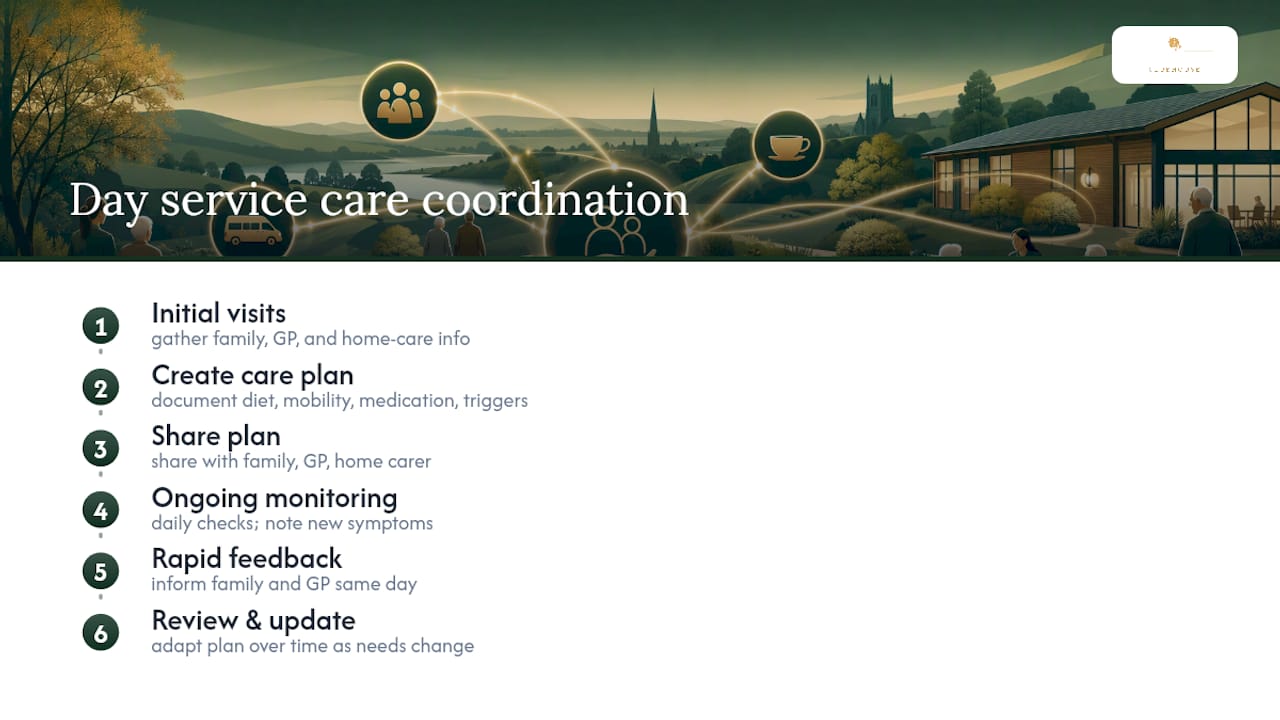
Good coordination also means the day service communicates back to you. If your relative has a difficult afternoon, or shows a new symptom, you should hear about it that day, not weeks later. Some families find it useful for the day service to liaise directly with a home carer or district nurse, particularly around medication schedules or mobility aids. Ask any provider you're considering how they document and share this information, and how quickly they'd flag a concern to you or a GP.
This coordination matters more as dementia progresses. A service that adapts its care plan over time, rather than treating the first assessment as fixed, is far better placed to support your relative through changing needs.
How can you help your relative settle into a new day service?
Settling in works best as a gradual process, not a single leap. Alzheimer's Society guidance recommends treating the first sessions as an exploration period, where the priority is helping your relative feel secure and familiar with the space, rather than expecting full participation in activities straight away.
Accompanying your relative for their first visit or two makes a genuine difference. Age UK suggests this as standard practice, and it gives staff a chance to observe how your relative responds to new faces and surroundings with you nearby as reassurance.
Bringing a familiar object, whether that's a photo album, a favourite card game, or a well-worn cardigan, helps enormously too. It gives staff a natural conversation starter and helps them learn your relative's life history and preferences faster than any form ever could.
Start with a shorter session rather than a full day, and build up gradually as confidence grows on both sides.
What settling in actually feels like from inside the Clubhouse
We treat every new member's first weeks as a settling-in period, not a test to pass. Our team accompanies early visits, welcomes familiar photos and keepsakes, and builds each day around genuine interests rather than a fixed timetable. With capped daily numbers, every member is known by name from day one, and that recognition is what turns a visit into something they look forward to.
How do you book a welcome tour or trial day?
Ready to see it for yourself? Booking a welcome tour is the natural next step once you've had that first phone conversation, and it costs nothing to look around.
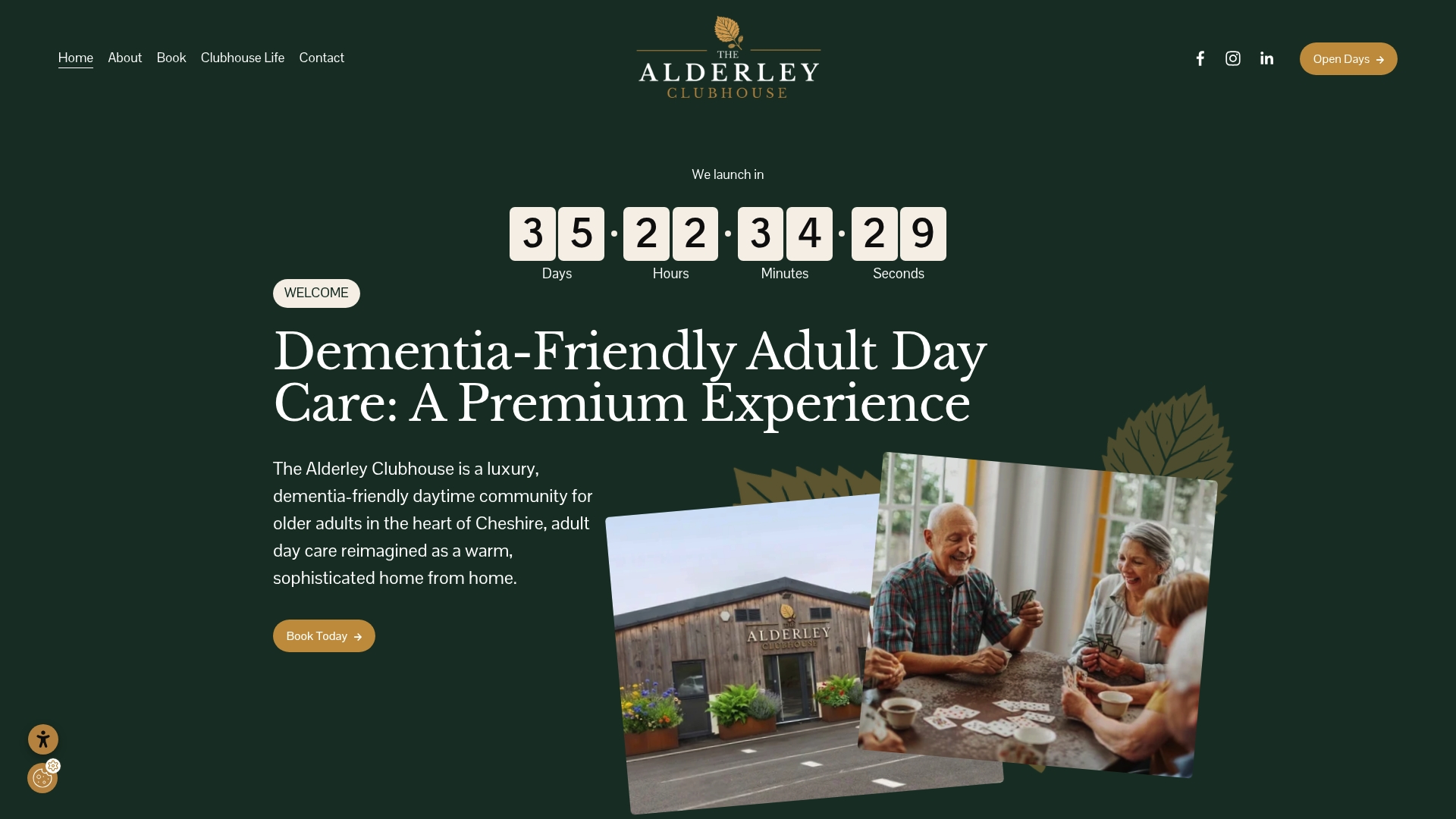
A welcome tour at Alderley Clubhouse gives you a proper look at the building, the sensory garden, and the activity spaces, plus a chance to meet the staff who'd be caring for your relative. Most families follow this with a short trial session before committing to a full package, which gives your relative a low-pressure taste of a real day without any long-term commitment. During the trial, staff observe how your relative settles, note their preferences, and begin drafting a personalised care plan around real observations rather than a form filled in over the phone.
A typical day runs across standard daytime hours, with sessions structured around meals, activities, and quieter rest periods, so you can plan your own time with confidence. Transport pickup and drop-off can be arranged for many parts of Cheshire and Macclesfield, and the team will talk through accessibility needs, timings, and any additional cost when you book. If you're weighing up transport logistics more broadly, services like Seattle Car Services' senior transportation guidance offer a useful sense of how dedicated pickup arrangements for older adults are typically staffed and run, even though Alderley Clubhouse organises its own local transport directly.
Once you're ready, browse day passes and packages or explore the facilities and activities on offer before you call.
Frequently asked questions
What is included in a premium dementia day service? Expect personalised activities, dementia-trained staff, chef-prepared meals, a capped number of daily attendees, and often transport, all built around a documented care plan tailored to your relative.
How long does a typical day last? Sessions generally run across standard daytime hours, with structured periods for meals, activities, and rest, giving you a predictable window to plan your own day around.
Do I need to stay for the first visit? Many providers, including Alderley Clubhouse, welcome you accompanying your relative for early sessions, as Age UK recommends, to help them settle with familiar reassurance nearby.
Is a day pass or a package better value? A day pass suits trying things out gradually; a package suits families who already know regular attendance will help, and it typically secures preferred days more reliably.
Will the day service talk to my relative's GP or home carer? A good provider documents care needs and flags concerns promptly, and many will liaise with existing care professionals when it genuinely benefits your relative's wellbeing.
This article is general information, not a substitute for advice from a qualified doctor. Consult a qualified healthcare professional about your own circumstances before acting on anything here.
Sources
- Replacement care (respite care) in England
- Dementia day services | Care Choices
- Respite care and short-term breaks: evidence review (NIHR)
- Effectiveness of day care in supporting family caregivers of people with dementia: A systematic review - PMC
- Caring for someone with dementia (Age UK)