
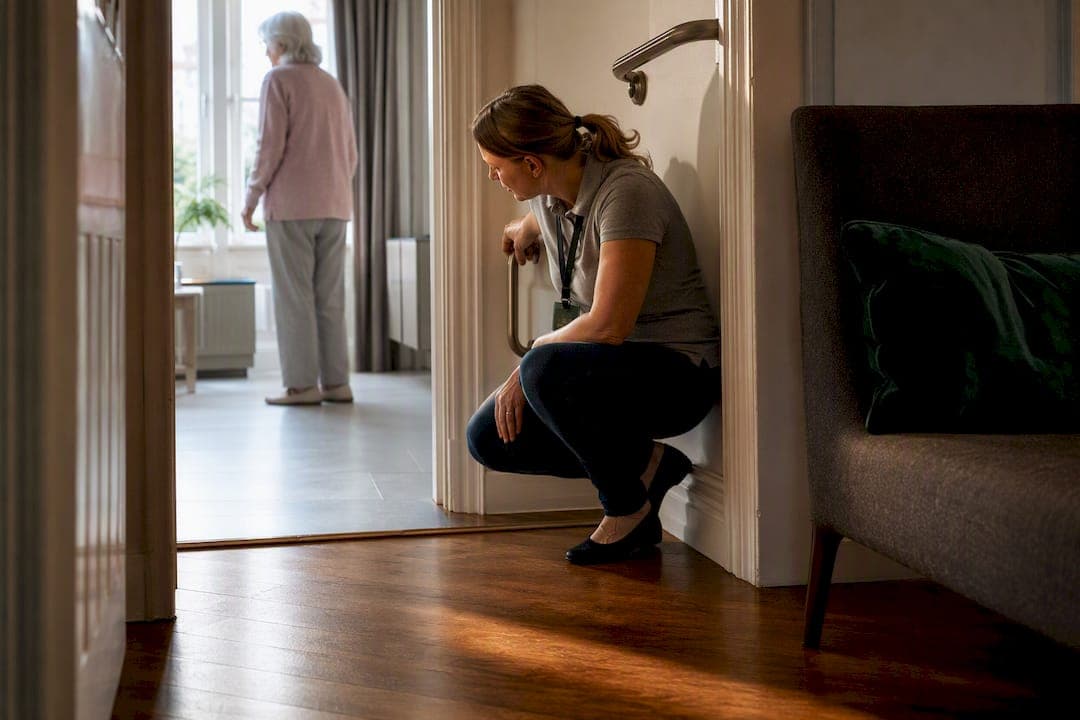
Most falls in people living with dementia can be reduced through a personalised plan that combines risk assessment, home adaptations, medicine review, targeted exercise and safer daily routines. No single fix works on its own. What matters most is getting each pillar right for that specific person, because the causes of falls vary enormously from one person living with dementia to the next, and a professional assessment usually helps pinpoint which pillar needs attention first.
TL;DR:
- Personalized fall prevention plans should target specific risk factors like medicine review, home adaptations, and exercise, since causes vary widely among individuals with dementia.
- Visual, cognitive, and physical changes such as visuo-spatial difficulties, slower gait, and medication effects significantly increase fall risk in dementia.
- Small, low-cost home modifications like better lighting, contrast strips, and removing loose rugs can rapidly reduce fall hazards, especially when combined with professional assessments.
- Regular medication reviews focusing on sedatives, blood pressure drugs, and polypharmacy are crucial, as these medicines frequently contribute to unsteadiness and falls.
- Supervised, structured daytime care that integrates routines like timed toileting, hydration, and gentle activity offers effective fall risk reduction and respite for families.
Table of Contents
- Why is falls prevention so important in dementia?
- How do you assess fall risk in someone with dementia?
- What home changes reduce fall risk fastest?
- Which medicines increase fall risk in dementia?
- Does exercise actually help prevent falls in dementia?
- Can technology and assistive devices prevent falls?
- What daily routines lower fall risk?
- When should you seek professional help after a fall?
- How does the Alderley Clubhouse build falls prevention into daily care?
- What matters most in falls prevention, and what the guidance gets wrong
- A supervised day at the Alderley Clubhouse
- Sources
Why is falls prevention so important in dementia?
People living with dementia fall far more often than other older adults. Annual fall rates sit between 60% and 80% for people with dementia, compared with roughly 30% for older adults without it. That gap isn't just about frailer bodies. It reflects how dementia changes the way someone processes the world around them.
Nearly two in three to four in five people with dementia fall each year — more than double the rate seen in older adults without the condition.
Cognitive and perceptual changes play a huge part. Visuo-spatial difficulties mean a patterned rug can look like a step, or a dark doormat can look like a hole in the floor. Reduced attention makes it harder to notice a trailing cable while thinking about something else. Wandering, often driven by confusion or a search for something familiar, puts someone on the move at exactly the moments they're least oriented to their surroundings.
Physical and medical factors compound this. We see it constantly in families we support:
- Slower gait speed reduces the ability to correct a stumble before it becomes a fall.
- Postural hypotension (a sudden blood pressure drop on standing) causes dizziness, especially after meals or first thing in the morning.
- Vision impairment, common but under-treated in dementia, hides trip hazards.
- Depression, present in many people with dementia, is linked to reduced activity and slower reactions.
- Polypharmacy, taking multiple medicines at once, raises the odds that at least one is affecting balance.
Environmental triggers, poor lighting, loose flooring, unfamiliar rooms, tend to interact with all of the above rather than acting alone. And once someone has fallen, they're significantly more likely to fall again, which is why every fall deserves a proper look rather than a shrug and a plaster.
How do you assess fall risk in someone with dementia?
Screening and assessment are two different jobs. Screening is a quick, low-burden check that flags whether someone needs a closer look. Assessment is the deeper, professional-led process that works out why they're at risk and what to do about it. Many standard tools built for the general older population assume a level of instruction-following and memory that people living with dementia may not have, so they can under or over-estimate risk if used unmodified.
A short carer-led screen, repeated periodically, is often more useful than a one-off formal test. Here's a practical sequence to work through:
- Note recent falls or near-misses, including the time of day, location, and what the person was doing.
- Watch balance and gait during normal activity, rather than asking them to perform on demand, which can mask real difficulties.
- Check for muddled navigation, such as hesitating at doorways, misjudging step edges, or getting lost in familiar rooms.
- List current medicines, flagging anything sedating or blood-pressure lowering.
- Ask about vision changes, including missed appointments for glasses or cataract checks.
When professional assessment is needed, tools such as the FROP-Com (Falls Risk for Older People in the Community) and dual-task variants of the Timed Up and Go test are better suited to dementia because they factor in cognitive load, not just physical performance. Even these have limits and work best alongside clinical judgement rather than as a standalone score.
Write down exactly what happened around each fall, footwear, lighting, time since last meal or medicine dose, because that detail helps a GP or occupational therapist spot patterns faster. If falls are frequent, unexplained, or getting worse, ask for a referral to occupational therapy (OT) or physiotherapy rather than waiting for the next review.
What home changes reduce fall risk fastest?
Small, unglamorous changes tend to deliver the biggest wins here, and most cost very little. Walk the home room by room with fresh eyes rather than familiarity.
In hallways and living areas: clear walking routes of furniture, remove loose rugs entirely rather than taping them down, and secure trailing cables against skirting boards. Swap unstable occasional tables for anything a person might lean on. In the kitchen and bathroom: fit non-slip mats specifically rated for wet floors, and consider a raised toilet seat or bath board if getting up and down has become difficult.
Lighting and contrast matter more than most families expect:
- Use bright, even lighting rather than dim mood lighting, particularly on stairs and landings.
- Add plug-in path lighting for night-time trips to the bathroom.
- Fit contrast strips on step edges and consider a toilet seat in a colour that stands out clearly from the floor and walls.
- Avoid highly patterned flooring, which can read as uneven ground to someone with visuo-spatial difficulties.
Grab rails belong wherever someone changes position: beside the toilet, in the shower, and at the top and bottom of stairs. Bed height should let feet reach the floor fully when sitting on the edge, and a raised chair with arms makes standing up far less precarious than a low sofa. Our room-by-room design guide covers this in more depth.
Pro Tip: Photograph each room before and after making changes. It helps you spot hazards you've become used to, and gives an OT a clear starting point if you request a home assessment.
For anything beyond basic hazard removal, request a home assessment through your local council's adult social care team. Many councils fund or subsidise small adaptations, grab rails and minor fittings typically costing under a few thousand pounds, usually covered by local council funding after assessment, following that assessment. Larger works, such as a wet room or stairlift, usually go through the Disabled Facilities Grant process, which is means-tested but worth exploring even if you expect to pay privately, since the assessment itself is free.
Which medicines increase fall risk in dementia?
Medication review is one of the fastest, cheapest interventions available, and it's frequently overlooked because families assume the prescriptions are fixed. They rarely are without good reason to keep them.
Certain medicine classes are consistently linked to higher fall risk:
- Antipsychotics, sometimes prescribed for agitation or distress, affect balance and alertness.
- Benzodiazepines, used for anxiety or sleep, slow reaction time significantly.
- Some antidepressants, particularly older tricyclic types, can cause dizziness on standing.
- Blood pressure medicines, when doses haven't been reviewed as weight or health status changes.
Polypharmacy, taking several of these alongside other routine medicines, multiplies risk rather than simply adding it up. Each additional medicine increases the chance that at least one is contributing to unsteadiness, and interactions between drugs are harder to predict than any single medicine's effect.
Ask your GP for a structured medicine review, and be specific: mention any dizziness on standing, drowsiness, or falls since the last prescription change. It helps to bring a written list of everything currently taken, including over-the-counter items, and a note of when falls have happened relative to dosing times. Ask specifically whether blood pressure has been checked lying down and standing up, since postural hypotension is easy to miss on a single seated reading. Vision and hearing checks are worth booking separately if it's been over a year, as both decline quietly and both affect balance more than people expect. Mood and sleep problems deserve the same attention. Untreated depression and disrupted sleep both reduce alertness and slow reaction time, feeding directly back into fall risk.
Does exercise actually help prevent falls in dementia?
Yes, targeted strength and balance work genuinely helps, but generic advice to "stay active" undersells what makes it effective. Structured exercise improves balance in people with Alzheimer's disease, and the results are markedly better when a clinician tailors the programme and a caregiver supports the person through it consistently, rather than leaving them to exercise unsupervised.
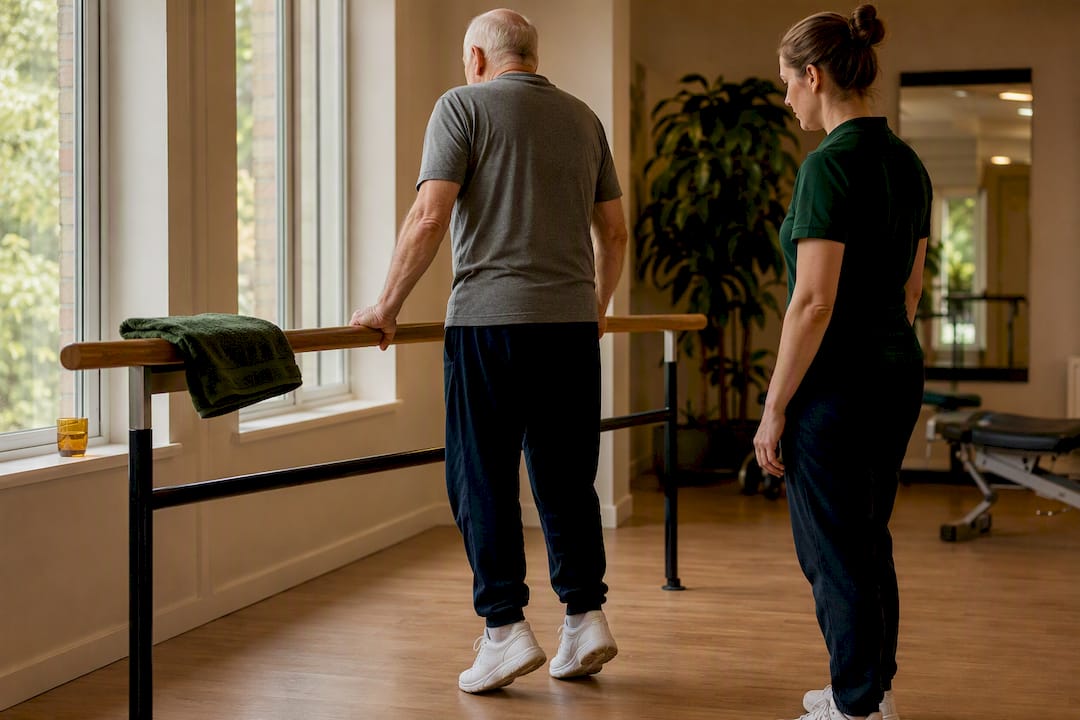
Physiotherapists and occupational therapists play different but complementary roles. A physiotherapist typically designs the strength and balance component, adjusting difficulty as cognitive ability allows. An OT looks at how that translates into real daily movements, transfers, getting up from a chair, navigating stairs, and adapts the environment to match.
In practice, this usually means:
- Short, cue-driven repetitions rather than long sessions; five minutes done well beats twenty minutes of confusion.
- Group classes designed for cognitive impairment, where instructors demonstrate movements rather than relying on verbal instruction alone.
- Supervised sessions at a day centre or clinic, where trained staff can adjust pace and spot fatigue before it becomes a hazard.
Pro Tip: Pair exercise with something familiar, music from their younger years, a favourite chair to sit in afterwards, or a regular time of day. Predictability increases participation far more than persuasion does.
Ask your GP or memory clinic for a referral to community physiotherapy or a local falls clinic. Expect an initial assessment covering gait, strength and balance, followed by a home or clinic-based programme reviewed every few weeks.
Can technology and assistive devices prevent falls?
Bed-exit alarms, floor movement sensors, wearable fall detectors and door sensors all promise to catch falls before or as they happen. The honest picture is more mixed than the marketing suggests. Evidence on digital and sensor technology in dementia care is inconsistent, and carers frequently disable devices after a few weeks because of false alarms, night-time disruption, or the person finding a wearable irritating enough to remove it.
That doesn't make technology worthless. It means the choice needs the same personalisation as everything else here:
- Start with a trial period rather than committing to expensive kit outright.
- Choose the simplest device that solves the specific problem, a bed sensor for nighttime wandering, not a bundle of features nobody uses.
- Train every carer on the household, including visiting family, so alarms get a consistent response.
- Check consent and privacy, particularly for cameras or location tracking, and talk it through with the person where they can still take part in that decision.
Technology works best as one supporting layer within a wider plan, not a replacement for supervision, home adaptation or medicine review.
What daily routines lower fall risk?
Rushing is one of the most common, and most preventable, triggers for falls in dementia. A structured toileting schedule, offering the toilet at predictable times rather than waiting for urgency, reduces the frantic dash that so often ends in a stumble. Pair it with regular drinks offered at set points in the day; dehydration worsens confusion and dizziness, and a thought-through hydration routine helps on both fronts.
Safe transfers matter just as much as scheduling:
- Cue each movement with simple, consistent language: "feet flat, lean forward, up we go" said the same way every time.
- If a fall begins, guide the person down rather than trying to catch or hold them upright; a controlled lower onto the floor causes far less injury than a struggle to stay standing.
- Use signage and visual prompts, a picture of a toilet on the bathroom door, contrasting tape marking a step, to support navigation without relying on memory.
Wandering, agitation and nocturnal restlessness respond better to structured activity and distraction than to correction. A predictable evening routine, calm activity such as gentle gardening or simple games earlier in the day, tends to settle restlessness before it turns into a nighttime hazard.
When should you seek professional help after a fall?
Some situations need immediate attention. Call 999 or head to A&E if there's any sign of head injury (confusion beyond their usual baseline, vomiting, loss of consciousness), severe pain, an inability to move a limb normally, or if the person can't get up at all. Don't attempt to lift someone yourself if you suspect a hip or head injury; keep them warm and still and wait for help.
For everything short of an emergency, several services can help:
- Your GP for a general health check and medicine review after any fall.
- A community falls service or falls clinic, if your area has one, for a full multifactorial assessment.
- Occupational therapy, via GP referral or self-referral in some areas, for home adaptations and equipment.
- The memory clinic or community mental health team for older people, if cognitive changes seem to be accelerating alongside fall frequency.
For home adaptations and funding, start with your local council's adult social care team, who can arrange a needs assessment. Smaller adaptations are often funded or subsidised below the roughly £1,000 threshold councils typically apply, while larger works go through the means-tested Disabled Facilities Grant. Dementia UK's helpline and local Age UK branches are worth contacting too; a formal needs assessment is often the fastest route to the right equipment and support once you know which door to knock on.
How does the Alderley Clubhouse build falls prevention into daily care?
Prevention works best when it's built into the rhythm of a day rather than bolted on as an afterthought. That's the thinking behind how a structured day service should run. At the Alderley Clubhouse, timed toileting and a steady hydration station run alongside supervised physical activity, so the routines that reduce fall risk happen naturally rather than needing to be remembered.
Our care team is trained to deliver Cognitive Stimulation Therapy, the only non-drug therapy recommended by NICE for mild to moderate dementia, which supports cognitive function alongside the physical side of fall prevention.
If you're weighing up a day service for a family member, look past the brochure and check the fundamentals: are staff genuinely qualified in dementia-specific approaches, is attendance capped so supervision stays close, and is the building actually designed around accessibility rather than merely wheelchair-accessible on paper? A well-run day service isn't a substitute for the medicine review or home assessment covered above. It's another pillar in the same personalised plan.
What matters most in falls prevention, and what the guidance gets wrong
The conventional advice on falls prevention leans heavily on generic checklists, remove rugs, fit rails, exercise more, as though every person with dementia faces the same risk profile. They don't. The research on personalised prevention makes a sharper point: multifactorial interventions show weak or mixed results precisely because they aren't tailored to each person's actual predictors, whether that's slow gait, depression, or a specific medicine.
Where the guidance falls short is in sequencing. Families are often handed a long list of changes to make at once, when the evidence points to starting with whichever pillar is actually driving that person's risk, medicines first if polypharmacy is present, vision first if navigation is the problem.
Our honest view: get the professional assessment before you spend money on equipment. A home visit from an OT or a proper medicine review with the GP costs nothing and tells you where your effort will actually pay off. Exercise and supervision matter enormously, but only once you know what you're correcting for.
— Scott @ The Clubhouse
A supervised day at the Alderley Clubhouse
Families juggling medicine reviews, home adaptations and exercise referrals often find the missing piece isn't another checklist, it's consistent, supervised daytime structure that puts all of it into practice. The Alderley Clubhouse gives you exactly that: qualified staff, capped daily attendance of 35 members, and a purpose-built, dementia-friendly space where timed toileting, hydration and gentle activity happen as routine rather than as extra effort for you to manage.
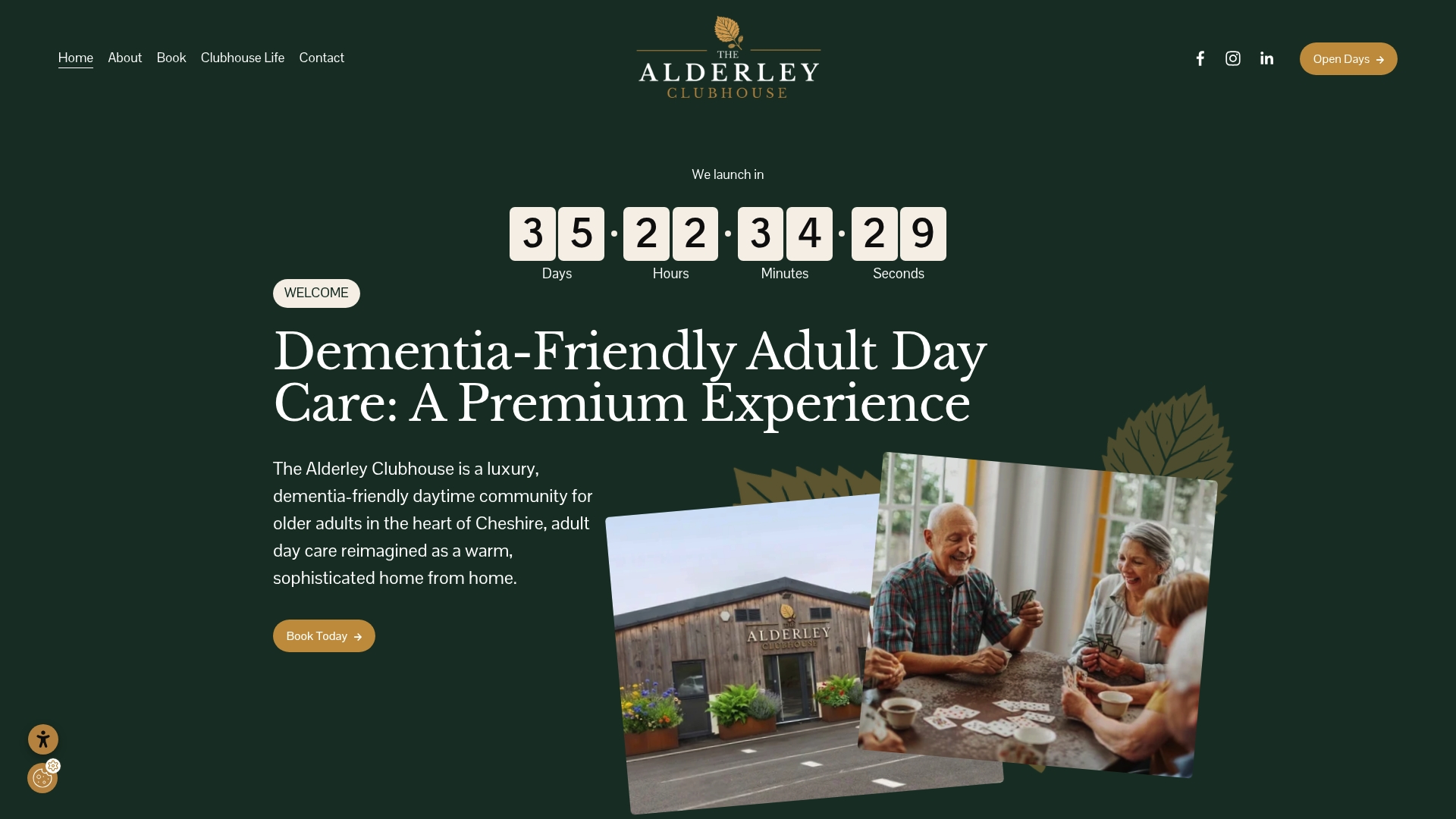
Days run 9:30am to 4:30pm, Monday to Friday, a full hour longer than most local provision, with breakfast, a cooked two-course lunch and afternoon tea included. It suits families wanting dependable respite alongside genuine fall-prevention benefit, not just a few hours of company. Day passes cost £120 including VAT, with a 10-Session Pass offering ten days for the price of nine. Visit the Alderley Clubhouse to check availability and book a day pass for your family member.
This article is general information, not a substitute for advice from a qualified doctor. Consult a qualified healthcare professional about your own circumstances before acting on anything here.