

Adult day care benefits older people and the family carers who look after them, through reduced loneliness, better mood, safer daily routines, and dependable respite. A systematic review of adult day services from 2015 to 2025 links regular attendance to lower caregiver stress and improved mood on the days a person attends. For anyone caring for someone with mild to moderate dementia, that evidence base includes Cognitive Stimulation Therapy, the only non-drug therapy NICE recommends for this stage of dementia.
The benefits break down into four connected areas:
- Emotional: reduced loneliness, better mood, a sense of belonging
- Cognitive: structured stimulation that supports memory, language, and engagement
- Practical and physical: health monitoring, mobility support, proper nutrition
- Carer wellbeing: reliable respite that protects sleep, work, and mental health
We'll walk through the evidence for each, what a typical day looks like, and how UK families fund it.
TL;DR:
- Early and regular attendance at adult day centres can lower caregiver stress and potentially delay the need for institutional care.
- Genuine cognitive stimulation therapy delivered by trained staff is linked to better engagement and calmer behaviour in people with dementia.
- Costs can be offset by Attendance Allowance and local council assessments, making affordable options more accessible.
- A trial visit, such as a single lunch or day, provides clearer insight into a centre's quality and suitability before full commitment.
- Centres built around structured programmes like CST and small groups, such as The Alderley Clubhouse, show better outcomes for attendees and carers.
Table of Contents
- What are the emotional benefits of adult day care?
- How does day care support health and daily living?
- Does cognitive stimulation therapy really help with dementia?
- How does adult day care help family carers?
- What does a typical day at a day centre look like?
- What does adult day care cost, and what funding is available?
- How do you choose and trial the right day centre?
- How does The Alderley Clubhouse deliver on this evidence?
- Editorial take: what carers should prioritise first
- Ready to see whether The Alderley Clubhouse fits your family?
- Key Takeaways
- Sources
What are the emotional benefits of adult day care?
Loneliness in later life is not a mood problem. It's a health problem, and regular social contact is one of the few interventions that reliably improves it. Harvard Health's review of adult day care found that structured group interaction reduces loneliness and lifts wellbeing in older adults, including those living with dementia. The mechanism is straightforward. conversation, shared meals, and group activity give people a reason to look forward to the day ahead.
Look for centres that build emotional connection into the timetable rather than leaving it to chance:
- Small group sizes so staff and attendees know each other by name
- Music, reminiscence sessions, and creative activities that invite conversation
- Weekly entertainment or visitors who break up the routine
- Staff trained to notice mood changes, not just physical needs
How does day care support health and daily living?
A good day centre does more than fill time. It keeps a watchful eye on the things that quietly go wrong at home: missed medication, poor hydration, reduced mobility, and skipped meals.
Health checks and light monitoring throughout the day mean changes in condition get noticed early, often before a family carer would spot them. Physical activity programmes, from seated exercise to short walks, help maintain mobility and reduce fall risk. Meals matter more than people expect. A cooked lunch, proper hydration, and regular snacks address a real problem: many older adults living alone under-eat and under-drink, which worsens confusion and fatigue.
What to check when comparing centres:
- Are medications managed or simply reminded?
- Is there a nutritionally balanced hot meal, not just sandwiches?
- Is hydration actively encouraged throughout the day, not just at lunch?
- Are mobility and seated exercise sessions built into the programme?
Does cognitive stimulation therapy really help with dementia?
Cognitive Stimulation Therapy, or CST, is a structured group programme of themed sessions, built around discussion, sensory activity, and orientation exercises, designed specifically for people with mild to moderate dementia. It's the only non-drug therapy NICE recommends for this stage of the condition, which matters because it means the evidence has cleared a formal bar most wellbeing activities never face.
Pro Tip: When you ring a day centre, ask directly whether staff are trained to deliver CST, not just "cognitive activities." The two are not the same, and only trained delivery matches the evidence NICE reviewed.
The strength of CST is that it's structured, not incidental. Sessions build on each other week to week, targeting language, memory, and problem-solving through repeated group engagement, rather than offering one-off puzzles or quizzes.
Centres delivering genuine CST tend to report better engagement, calmer behaviour, and steadier day-to-day functioning in attendees, which is precisely why the Alderley Clubhouse trains its care team to deliver it.
How does adult day care help family carers?
Respite is not a luxury. It's what stops caregiving from becoming unsustainable. The same systematic review of adult day services found regular use reduces caregiver stress and lifts mood, with some evidence pointing to delayed institutionalisation and lower long-term care costs.

For working carers, the case is practical as much as emotional. AARP's research on caregiving notes that many family carers hold down paid work alongside caring, and day services help them keep doing both without burning out.
Ways to use day care flexibly rather than all-or-nothing:
- Book a single day a week first, then adjust once you see how your relative responses
- Use day care on your working days, keeping weekends free for family time
- Mix a day centre with other support, such as a home carer, rather than relying on one solution
- Treat sleep as a benefit too. Carers and attendees often sleep better the night after an activity-filled day, according to ARCH's research on sleep and adult day services
What does a typical day at a day centre look like?
Most quality centres follow a similar rhythm, even if the exact activities differ.
- Arrival and breakfast, often with a settling-in period and informal chat
- Morning activity, which might be physical (seated exercise, gentle movement) or cognitive (CST, reminiscence, discussion groups)
- Lunch, ideally a proper cooked meal rather than something reheated
- Afternoon programme, mixing creative activities, entertainment, or visiting services such as hairdressing or chiropody
- Afternoon tea and wind-down, before transport or family collection
When comparing centres, check whether attendance is capped (smaller numbers mean more personal attention), whether transport is included, and whether the centre is a purely social model or one built around structured therapeutic input like CST. The two can look similar on a website and feel very different in practice.
What does adult day care cost, and what funding is available?
Private day care fees in the UK vary by region and by what's included, so always ask exactly what a quoted price covers: meals, transport, and therapies, or extras on top.
Attendance Allowance is the funding most families overlook first. It's a non-means-tested benefit for people over State Pension age who need help with personal care, and it isn't affected by savings or income. It can be put directly towards day care fees. Beyond that, a needs assessment from your local council may unlock funded or subsidised places, particularly where a diagnosis like dementia is involved. Councils publish their own day services pages explaining local eligibility and how to apply.
Ways to manage the cost:
- Ask about a single trial day before committing to a regular pass
- Check whether a multi-session pass reduces the per-day rate
- Apply for Attendance Allowance early. It often takes weeks to process
- Ask your council for a needs assessment even if you expect to pay privately, since eligibility can surprise people
How do you choose and trial the right day centre?
Choosing well comes down to asking the right questions before you visit, then testing the fit gradually rather than committing on day one.
- Ask about staff training: are staff qualified to deliver CST, and what safeguarding training do they hold?
- Ask about ratios and attendance caps: a capped number of attendees per day usually means more consistent, personal care
- Ask what's included: meals, transport, personal care, and therapies should all be clearly listed, not vague
- Arrange a trial: a single lunch visit first, then a full day, works better than committing to a weekly pass immediately
- Watch for red flags: unclear pricing, reluctance to answer safeguarding questions, or no visible activity programme
Pro Tip: If a centre can't tell you clearly what a typical Tuesday looks like, that's worth noting. A well-run centre should describe its day without hesitation.
If red flags appear, trust that instinct and keep looking. A short trial period elsewhere costs far less than months of an unsuitable placement.
How does The Alderley Clubhouse deliver on this evidence?
The Alderley Clubhouse in Nether Alderley, Cheshire, was built around the evidence above rather than around a generic day-out format. Days run 9:30am to 4:30pm, Monday to Friday, a full hour longer than most local provision, giving families a genuinely useful respite window rather than a token few hours.
Attendance is capped at 35 members a day, so staff and attendees know each other by name, and the care team is trained to deliver Cognitive Stimulation Therapy. Each day includes breakfast on arrival, a cooked two-course lunch, traditional afternoon tea, and an all-day hydration station, alongside physical, creative, and cognitive activities, weekly live entertainment, and visiting hairdressing and chiropody.
The building itself is purpose-designed and dementia-friendly, with secure parking and a drop-off point at the door, so the environment supports the therapy rather than working against it.
Editorial take: what carers should prioritise first
Most advice on this topic treats adult day care as a last resort, something to consider once caring at home has become unmanageable. The evidence doesn't support that framing. The systematic review of adult day services suggests regular, early use correlates with lower caregiver stress and, in some cases, delayed institutionalisation. Waiting until crisis point wastes the years when the benefits compound most.
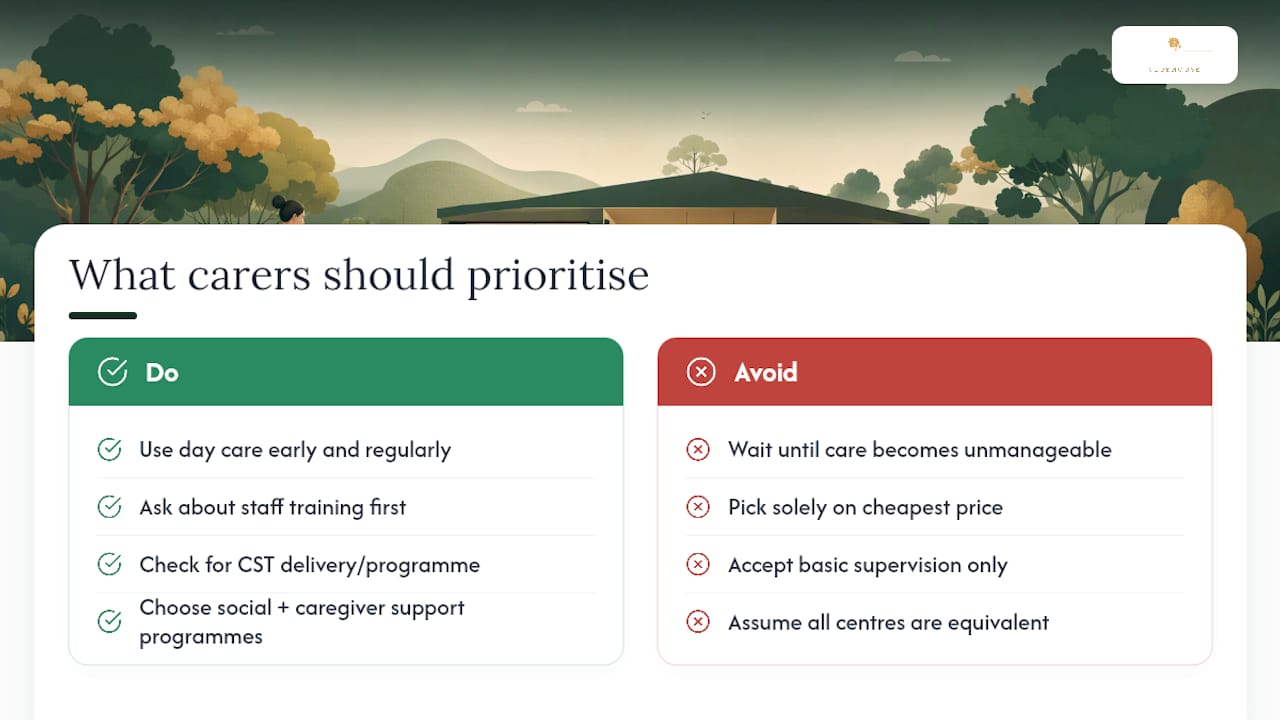
The conventional advice also underplays quality differences between centres. Not every day centre delivers the same outcomes. Scoping research on adult day centres suggests programmes combining social activity with genuine caregiver support produce meaningfully better results than basic supervision alone. A centre that fills time is not the same as one built around structured cognitive work like CST.
If you take one thing from this, prioritise asking about staff training and CST delivery before you ask about price. Cost matters, but a centre without trained staff and a real programme behind it won't deliver the outcomes the research describes, however affordable it looks on paper.
— Scott @ The Clubhouse
Ready to see whether The Alderley Clubhouse fits your family?
If everything above sounds right in principle but you're wondering how it works day to day, that's exactly what a visit answers. The Alderley Clubhouse offers the extended hours, capped attendance, and trained CST delivery this article has described, built specifically for families supporting a relative with mild to moderate dementia or simply seeking companionship and structure.
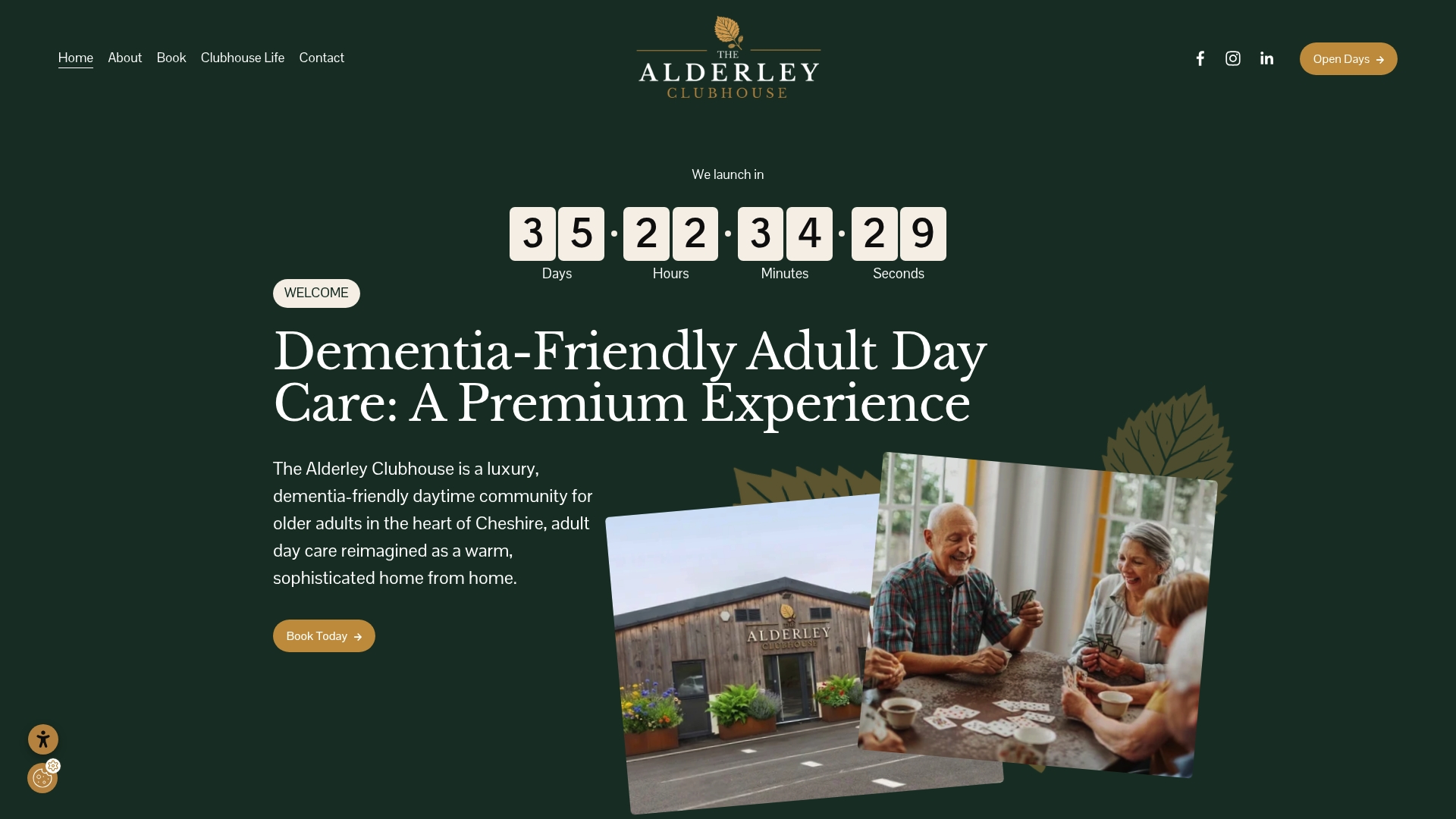
A single day pass costs £120 including VAT; multi-session passes may offer a discount on per-day costs, which makes a short trial genuinely low-risk rather than a leap of faith. The best next step is simple: book a welcome tour to see the building, meet the team, and ask the staffing and CST questions covered above in person. If you'd rather start with a single day, you can secure a day pass directly and judge the fit for yourself.
Key Takeaways
Adult day care improves mood, reduces loneliness, and lowers caregiver stress, with the strongest outcomes coming from centres that deliver structured therapy like CST rather than basic supervision.
| Point | Details |
|---|---|
| Evidence backs early use | Regular attendance correlates with lower caregiver stress and possible delayed institutionalisation. |
| CST matters most | NICE recommends CST as the only non-drug therapy for mild to moderate dementia; confirm it's genuinely delivered. |
| Funding often overlooked | Attendance Allowance and council needs assessments can offset private day care fees. |
| Trial before committing | A single lunch visit or day trial reveals more than any brochure or phone call. |
| The Alderley Clubhouse fits the evidence | Capped 35-person attendance, extended 9:30am to 4:30pm hours, and trained CST delivery in Cheshire, from £120 a day. |
Sources
For UK-specific guidance, Age UK's day centre pages list local services, and your council's own day services page explains eligibility for funded places. For the underlying evidence, the systematic review on adult day services is the most thorough summary available.
This article is general information, not a substitute for advice from a qualified doctor. Consult a qualified healthcare professional about your own circumstances before acting on anything here.
- Respite care in adult day services: An updated systematic review from 2015 to 2025 (PMC)
- Adult day care can benefit older adults and their caregivers — Harvard Health
- What is adult day care and how can it help caregivers? — AARP