

Dementia day centres offer social contact, structured stimulation and safe daytime care, and they give carers reliable respite. For the person living with dementia, that means company, routine and gentle activity in a secure setting. For carers, it means a dependable break, whether that's for rest, work or simply catching up on life. Research also links regular attendance to better mood and steadier cognition, and some centres offer NICE-recommended Cognitive Stimulation Therapy alongside their day programme.
TL;DR:
- Regular attendance at a dementia day centre can improve mood and help maintain cognitive function, especially with consistent participation over six months.
- Centres that offer Cognitive Stimulation Therapy and personalized activities tailored to individual interests tend to produce better outcomes.
- Choosing a centre with small, familiar groups, structured routines, and staff trained in dementia care enhances engagement and reduces anxiety.
- Practical factors like transportation, medication support, and funding options significantly influence the suitability and accessibility of a day centre.
- A trial visit allows families to assess staff engagement, activity relevance, and overall comfort before committing long-term.
Table of Contents
- What direct benefits do day centres offer attendees?
- How strong is the research evidence for dementia day centres?
- What does a typical day at a dementia day centre look like?
- How do dementia day centres support family carers?
- How do you choose and trial a dementia day centre?
- Why we built The Alderley Clubhouse around these benefits
- Book a Day Pass or welcome tour at The Alderley Clubhouse
- Sources
- FAQ
What direct benefits do day centres offer attendees?
Good day centres work because they combine company, purpose and gentle challenge into an ordinary day. A shared breakfast or lunch table does more than feed people: it creates small, familiar groups where conversation happens naturally, which reduces the isolation that so often follows a dementia diagnosis.
Structured activities give shape to the day and something to look forward to. Group discussions, reminiscence sessions and, where a centre offers it, Cognitive Stimulation Therapy give the brain regular, appropriate exercise. Routine itself matters too: knowing what happens next, and seeing the same reassuring faces, tends to settle anxiety and reduce agitation for many attendees.

Physical wellbeing gets attention as well. Gentle exercise sessions, help with mobility, and steady hydration and nutrition through the day all support general health, something that's easy to overlook at home when routines slip.
Typical activities that deliver these benefits include:
- Seated exercise or gentle movement classes to support strength and balance.
- Arts, crafts and music sessions that encourage self-expression without pressure.
- Reminiscence and sensory activities using photographs, objects or scent.
- Small-group discussions and games that keep the mind engaged.
- Shared meals and afternoon tea that anchor the day and encourage appetite.
Regular attendance at a day centre is associated with higher self-reported quality of life and maintained cognitive function for people with mild-to-moderate dementia, according to a research evidence review on day centres. That's a meaningful finding for families weighing up whether a centre is worth trying.
How strong is the research evidence for dementia day centres?
The evidence base is encouraging, though it comes with sensible caveats. Reviews summarised by the NIHR evidence hub link regular attendance to improved mood and maintained cognitive function after six months in some studies. Separately, NICE guideline NG97 specifically recommends group Cognitive Stimulation Therapy for people with mild to moderate dementia, describing it as structured activities and discussions aimed at improving cognitive and social functioning.
It's worth being realistic about the limits of this evidence:
- Outcomes vary considerably between programmes, so not every centre delivers the same results.
- How much benefit someone gets often depends on attendance frequency and consistency, not a single visit.
- Long-term evidence beyond a year or two of attendance remains thinner than researchers would like.
A systematic review of psychosocial interventions in day care reinforces this: benefits depend heavily on programme content and how consistently someone attends. The practical takeaway is straightforward: look for a centre with steady, person-centred programming rather than a loosely structured drop-in.
What does a typical day at a dementia day centre look like?
A well-run day tends to follow a gentle, predictable rhythm, which is part of what makes it reassuring rather than disorientating.
- Arrival and welcome: staff greet each person by name, offer breakfast and settle everyone into the morning's routine.
- Morning activity block: physical, creative or cognitive sessions, chosen to suit the group and individual preferences.
- Lunch and rest: a proper sit-down meal, followed by quieter time for those who need it.
- Afternoon activity block: social games, music or further creative sessions, often lighter in pace than the morning.
- Afternoon tea and wind-down: a final shared moment before transport or family collection.
Throughout the day, staff assist with personal care where needed, keep hydration topped up and manage transport or drop-off arrangements. Attendance numbers are often capped deliberately, because smaller, familiar groups help attendees engage more confidently than large, anonymous ones.
How do dementia day centres support family carers?
The benefits for carers are just as real as those for the person attending, and they're easy to underestimate until you've lived without them. Regular sessions free up time for rest, medical appointments, paid work or simply an ordinary afternoon, which matters enormously for someone providing daily care.
- Scheduled respite gives carers predictable breaks rather than snatched moments.
- Reviews of adult day programmes report reduced caregiver stress and improved coping among carers whose relatives attend regularly.
- The same evidence suggests regular attendance can, for some families, delay the need for residential care.
- Day centres that involve carers through updates and planning meetings tend to see better sustained attendance and outcomes.
Financial support is worth checking before assuming you'll cover everything privately. Attendance Allowance guidance explains eligibility and how payments can help meet extra care costs, while Carer's Allowance may also apply depending on your circumstances; rules differ across the UK's nations, so check the relevant gov.uk page for your situation.
Pro Tip: Ask the centre for a brief update after each visit. Small details, like what made your relative smile that day, help you spot what's working and plan future sessions around it.
How do you choose and trial a dementia day centre?
Choosing the right centre is easier with a clear checklist in hand, and a trial day tells you far more than any brochure.
- Check staff training, particularly whether the team delivers Cognitive Stimulation Therapy and holds recognised dementia care qualifications.
- Look at the building, checking for dementia-friendly design, secure entry and safe outdoor space.
- Ask about personalisation, including how activities are matched to individual interests and abilities.
- Confirm practicalities: transport, mealtimes, medication support and safeguarding procedures.
- Book a trial day before committing, and observe how staff greet and engage your relative.
| What to ask | Why it matters |
|---|---|
| Staff dementia training | Confirms whether CST or similar approaches are genuinely available |
| Transport and drop-off | Affects daily logistics and independence |
| Medication and emergency procedures | Confirms safeguarding and clinical readiness |
| Attendance numbers | Smaller groups often mean more personalised attention |
| Costs and funding options | Clarifies what's payable privately versus what benefits might cover |
Why we built The Alderley Clubhouse around these benefits
We designed The Alderley Clubhouse with these exact benefits in mind. Our care team is trained to deliver Cognitive Stimulation Therapy, and the building is purpose-designed to be dementia-friendly and fully accessible. A full daily programme, breakfast, a cooked lunch and afternoon tea bring structure and hospitality together in one place.
— Scott @ The Clubhouse
Book a Day Pass or welcome tour at The Alderley Clubhouse
If you'd like to see these benefits in practice, a Day Pass lets your relative try a full day at The Alderley Clubhouse, from breakfast through to afternoon tea, with our CST-trained team and a full activity programme.
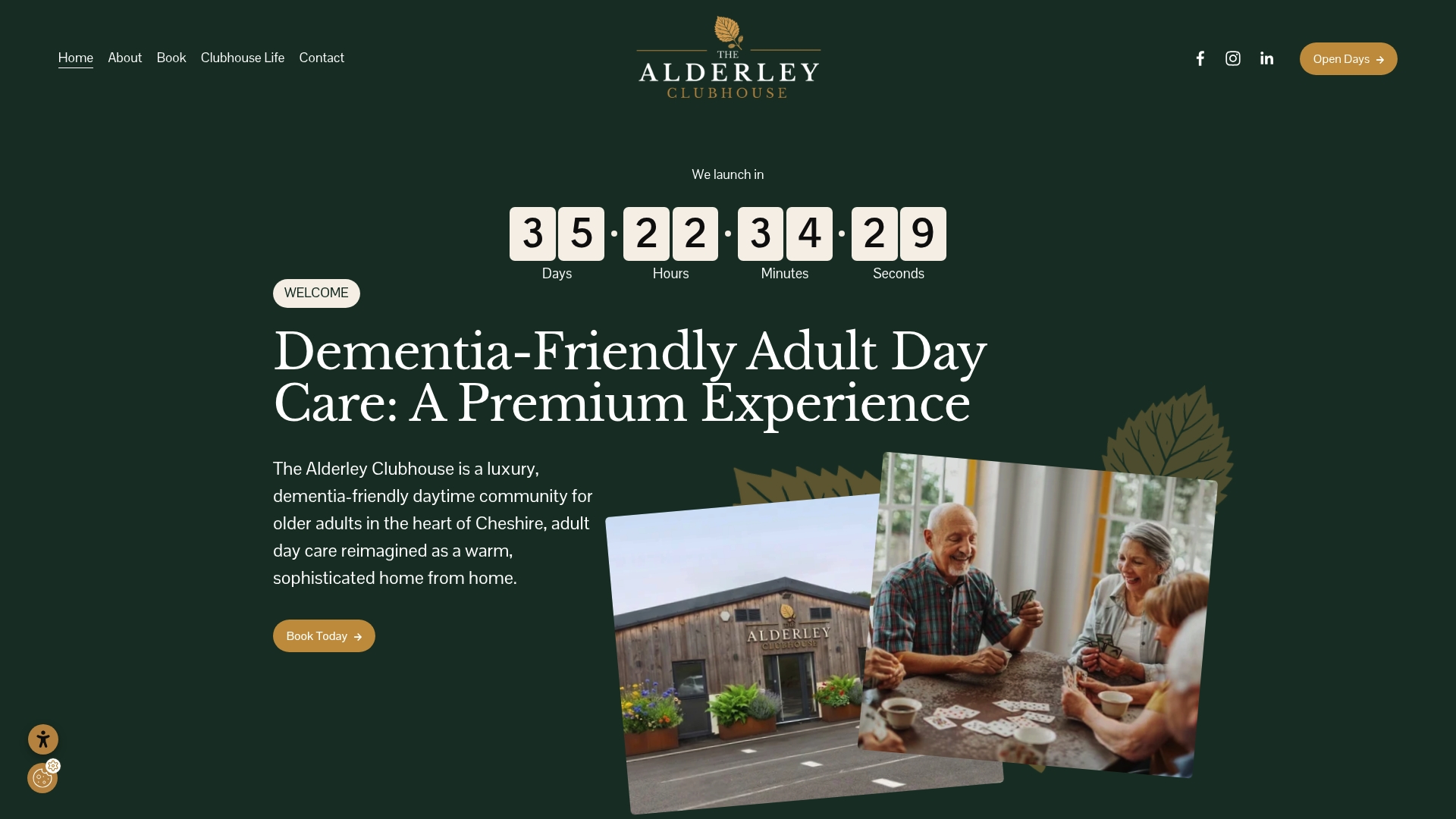
You're welcome to arrange a welcome tour first, so you can see the building, meet the team and ask any questions before booking a trial day. Days run during daytime hours, Monday to Friday, in a location in Cheshire.
Sources
- Research evidence on day centres for older people
- Dementia: assessment, management and support for people living with dementia and their carers (NICE guideline NG97)
- Realist review and related literature on adult day programmes (PMC article)
- How to communicate with someone with dementia — Alzheimer’s Society
- Attendance Allowance claim form notes (DWP)
This article is general information, not a substitute for advice from a qualified doctor. Consult a qualified healthcare professional about your own circumstances before acting on anything here.
FAQ
What are the benefits of attending a day centre?
Attending a day centre offers social contact, structured activities and safe daytime supervision, which together support mood and cognitive function. Research reviewed by the NIHR evidence hub links regular attendance to higher self-reported quality of life for people with mild-to-moderate dementia.
What benefits can I claim if I have dementia?
People with dementia may be able to claim Attendance Allowance, which helps with extra costs related to care needs, while carers may separately be eligible for Carer's Allowance. Eligibility rules differ depending on circumstances, so it's worth checking the official guidance before assuming what applies to you.
What should you avoid saying to someone with memory loss?
Avoid testing someone's memory directly, correcting them sharply, or using simplified "elderspeak" that can feel patronising. Alzheimer's Society guidance recommends emotional validation, calm presence and reminiscence prompts instead, which reduce distress and encourage engagement.
What are some unusual early signs of dementia?
Unusual signs can include changes in judgement around money or safety, difficulty following a familiar recipe, or losing track of conversations more than memory lapses alone would suggest. These signs vary considerably between individuals, so any noticeable change in behaviour or reasoning is worth discussing with a GP rather than assumed to be normal ageing.
How do I know if a dementia day centre is a good fit?
A trial day is the clearest way to judge fit. Watch how staff greet your relative, how activities are matched to their interests, and whether they seem settled and engaged by the end of the visit.