

A day care trial day is a single paid demo attendance at an adult day centre, letting you and your relative test the fit before committing to anything longer. It works well for family carers who need dependable daytime respite and for older relatives, including those with mild to moderate dementia, who could benefit from company and gentle stimulation. Some adult day centres offer single day passes and multi-session passes precisely so families can try before they commit. If you're weighing up whether day care suits your relative, booking a trial is the most reliable way to find out.
TL;DR:
- Most adult day centres run from mid morning to late afternoon, with a longer option from 9:30am to 4:30pm available at some centres like The Alderley Clubhouse.
- Preparation should focus on framing the day as enjoyable and social to reduce resistance, with items from home and a brief visit beforehand, especially for those with dementia.
- During the trial, observe staff engagement, environment design, activity appropriateness, and communication, as these are key indicators of quality care.
- Ask detailed questions about staff qualifications, dementia care approaches, medication management, and costs, and request written follow-up from staff after the visit.
- A single bumpy trial day is normal, but repeated distress suggests the fit might not suit, so consider multiple short visits or phased attendance before making a decision.
Table of Contents
- What happens on a day care trial day
- How do you prepare your relative for a trial day?
- What should you watch for during the visit?
- What questions should you ask staff during the tour?
- How do you read the results of the trial?
- Does the research actually support day care for people with dementia?
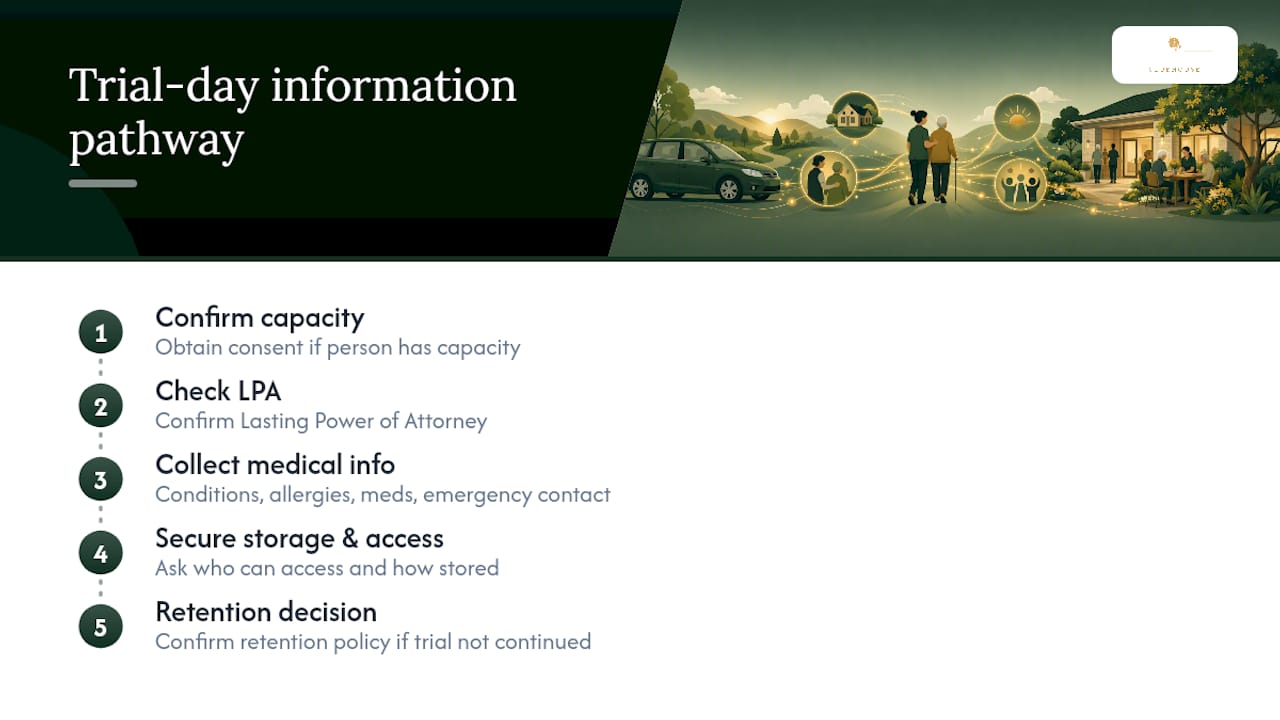
- What are the legal and consent considerations?
- An operational view from The Alderley Clubhouse
- Booking a trial day at The Alderley Clubhouse
- Sources
- FAQ
What happens on a day care trial day
Most adult day centres run from mid morning to late afternoon, though some extend from 9:30am to 4:30pm, a full hour longer than typical local provision. Arrival routines matter more than people expect: a warm welcome, a hot drink, and a few minutes to settle before anything structured begins can make the difference between a good first day and a shaky one.
Food and drink form the backbone of the day, not an afterthought. A properly run trial should include:
- Breakfast or a welcome drink on arrival
- A cooked, two-course lunch
- Traditional afternoon tea
- Water or squash available throughout the day, since older adults often under-drink without realising it
Activities are usually grouped by ability rather than age, mixing cognitive stimulation sessions, gentle movement, arts and crafts, and simple social games. Staff should ask in advance about any medication timings or existing therapies so nothing gets missed during the visit. This kind of guide to what a Clubhouse trial day includes is worth reading before you book, so you know roughly what your relative will be doing hour by hour.
How do you prepare your relative for a trial day?
Preparation shapes how the day goes far more than most families expect. A trial framed as something enjoyable, rather than a test or a chore, tends to go better on both sides.
- Choose your words carefully. Call it a "club," an "activity day," or a "day out" rather than "day care." Framing it as social rather than clinical reduces resistance and improves uptake, particularly with people who feel sensitive about needing help.
- Visit together first, if you can. A short look around beforehand, even just for tea and a chat with staff, makes the actual trial day far less unfamiliar.
- Pack familiar items. A favourite jumper, a photo, a puzzle book, whatever brings comfort. Share medication lists and daily routines with staff in writing, not just verbally.
- Keep the goodbye brief. A short, confident farewell reduces anxiety; lingering or emotional goodbyes tend to unsettle people with dementia rather than reassure them.
- Start smaller if needed. A half-day visit, or two short trial sessions rather than one long one, often suits people who find change difficult. Involving a GP or trusted professional in that first conversation can help too.
Pro Tip: If your relative asks the same question about the day several times in the run up, that's not a sign it's going badly, it's just how anxiety about something new tends to surface. Answer patiently each time rather than reminding them they've already asked.
What should you watch for during the visit?
A trial day is your chance to observe, not just hand your relative over and hope. Pay attention to how staff behave when they think no one important is watching, not just during the formal tour.
- Staff manner and training. Are staff genuinely engaged, using eye contact and first names, or managing people at arm's length? Ask whether the team has dementia-specific training.
- The environment. Is the layout easy to navigate, with clear signage, secure doors, and comfortable seating? A well-designed space supports engagement rather than confusion.
- Activity quality. Are sessions matched to ability level, with real choice on offer, or is everyone funnelled into the same activity regardless of interest or capability?
- Communication. Does staff explain how they'll report back to you: what went well, what didn't, any incidents?
Peer-reviewed research on quality indicators for adult day services consistently points to the same four markers: dementia-trained staff, a safe and clean environment, activities matched to ability, and proactive communication from staff to families. If a centre falls short on more than one of these during your trial, treat that as a genuine warning sign rather than a one-off.
What questions should you ask staff during the tour?
Bring a written list. Trial days move fast, and it's easy to forget half your questions once you're actually there.
- Staffing and safety: What qualifications do staff hold? What's the staff to guest ratio, and what's the plan if someone needs urgent medical attention?
- Dementia-specific care: Is Cognitive Stimulation Therapy or a similar structured approach used, and how is it delivered? How does the team handle distress or agitation?
- Medication and health: How are medication times managed, and who's responsible for administering them?
- Practicalities: What does a single day pass cost, is there a multi-session discount, what's the cancellation policy, and is transport or pick-up available?
Guidance from carer organisations consistently recommends sampling a meal or activity and asking about gradual attendance patterns before committing beyond a single visit, rather than relying on a brochure or a phone call alone.
How do you read the results of the trial?
Don't rely solely on what your relative tells you about how the day went. Dementia can blur or reshape memory of events within hours, so a cheerful "it was fine" or a distressed "I hated it" isn't the whole picture on its own.
Ask staff for a proper debrief: written notes on mood, engagement, appetite, and any incidents, plus a promise of follow-up contact in the days after. Combine that with what you observed yourself during drop-off and collection.
- One bumpy day, especially the first, is often normal. Anxiety about anything new tends to fade with repetition, not disappear after a single success.
- A pattern of distress across two or three attempts, rather than one difficult afternoon, is a stronger signal the fit isn't right yet.
- Consider a phased return: another short trial, then a half-day, before committing to a regular pattern.
A decision checklist combining your relative's mood at collection, staff's written notes, and your own gut feeling about the environment will serve you better than judging on a single afternoon alone.
Does the research actually support day care for people with dementia?
Yes, though the evidence comes with sensible caveats. Within-person studies, where the same family is compared on days their relative attends a centre versus days they don't, found that caregiver stress and exposure to care-related stressors fell noticeably on attendance days, alongside improved evening behaviour and sleep for the person with dementia.
That's a meaningfully strong signal, because it compares the same family against themselves rather than different families against each other. But outcomes aren't uniform: a realist review of adult day programmes found that context and consistency both shape results, meaning a poor match between programme and person can blunt the benefit considerably.
One marker of quality worth checking specifically is whether a centre delivers Cognitive Stimulation Therapy, a non-drug intervention recommended by NICE for people with mild to moderate dementia. Its presence on the programme is a reasonable proxy for how seriously a provider takes evidence-based dementia care, rather than treating activities as simple time-filling.
What are the legal and consent considerations?
Consent matters more in dementia care than families sometimes realise, and it isn't always as simple as a signature. If your relative has mental capacity to understand and agree to attending a trial day, that consent should come from them directly wherever possible, not just from you as next of kin.
Where capacity is in question, the Mental Capacity Act 2005 sets out how decisions should be made in someone's best interests, and any reputable centre should ask about existing Lasting Power of Attorney arrangements for health and welfare before a trial begins. Bring documentation if you hold one; a good provider will ask rather than assume.
Data protection is worth a mention too. Centres will need basic medical and next-of-kin information before a trial day, and you're entitled to ask exactly how that information is stored and who can access it. GDPR obligations apply to day centres just as they do to any other care provider handling personal health data.
Practically, most reputable providers ask you to complete a short registration and consent form ahead of the trial, covering medical conditions, allergies, medication, and emergency contacts. It's reasonable to ask what happens to that information if you decide not to continue after the trial, and reputable providers will confirm they don't retain it indefinitely without reason.
An operational view from The Alderley Clubhouse
New arrivals settle fastest when staff greet them by name from the first minute and pair them with someone who shares an interest, be it gardening, music, or a shared corner of the country they grew up in. Most early wobbles we've seen come down to timing, not fit: a lunchtime trial rather than a full day gives someone their first taste without overloading them.
We always follow up after a trial with a short call, because the honest picture usually comes from combining what staff observed with how the family felt at collection. Booking details and pricing sit on our Clubhouse booking page.
— Scott @ The Clubhouse
Booking a trial day at The Alderley Clubhouse
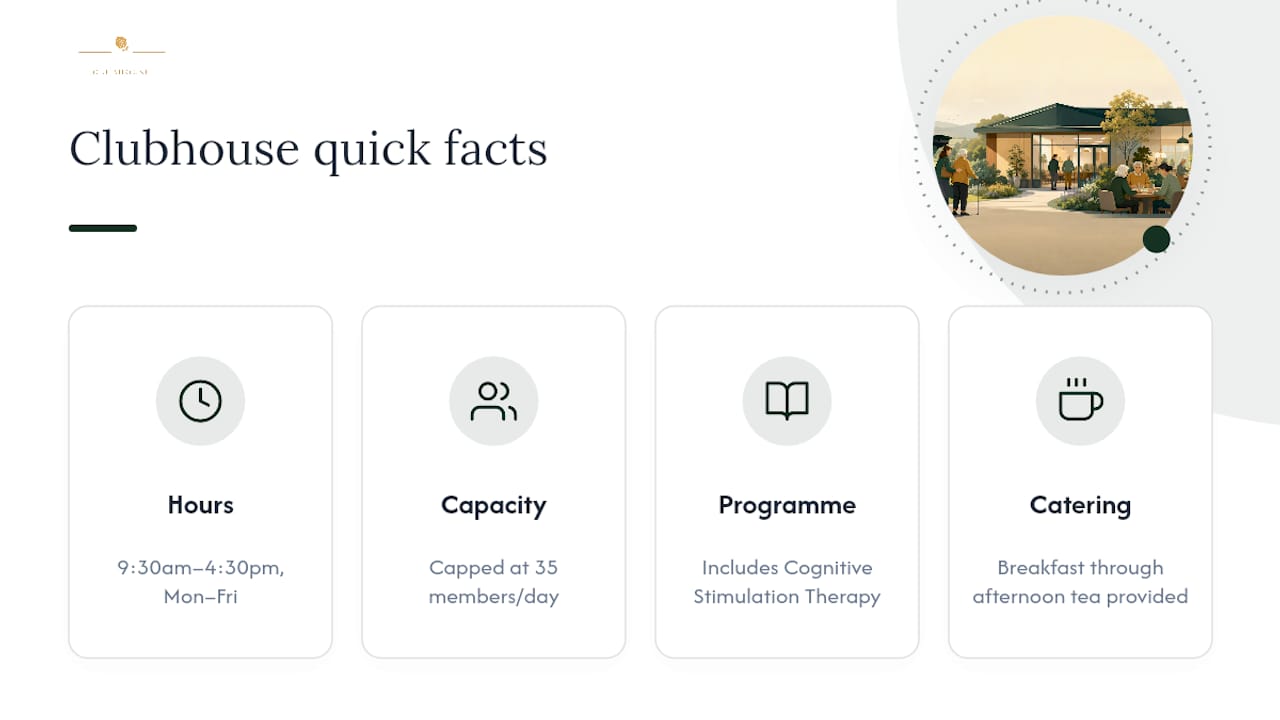
The Alderley Clubhouse is a genuine alternative to trying to piece together informal respite from friends, agencies, or ad hoc arrangements. It's a purpose-built, dementia-friendly day club in Nether Alderley, Cheshire, with Cognitive Stimulation Therapy built into the programme, attendance capped at 35 members a day so staff know everyone by name, and a full day of catering from breakfast through to afternoon tea.

Days run from 9:30am to 4:30pm, Monday to Friday, providing a longer respite period than many local alternatives, allowing carers a genuinely useful break rather than a brief morning session. Pricing varies by provider; contact the provider directly or visit their booking page for up-to-date information on day passes and multi-session discounts. High-quality providers that offer flexible passes rather than long contracts make experimenting far easier for families who aren't ready to commit.
If you're weighing up whether a trial day makes sense for your relative, get in touch to arrange a visit or book a single day pass directly through the Clubhouse booking page. Bring any medication details and a favourite item from home, and we'll take care of the rest for the day.
Sources
For further verification and reading beyond this guide:
- Research evidence: day centres for older people (NIHR ARC SL)
- Evidence on quality indicators for adult day services (PMC article)
- Choosing an adult day centre (Alzheimer's Association / practical guide)
This article is general information, not a substitute for advice from a qualified doctor. Consult a qualified healthcare professional about your own circumstances before acting on anything here.
FAQ
What is a day care trial day?
It's a single paid attendance at an adult day centre, letting a family assess activities, staff, meals, and overall fit before booking further sessions.
How long does a typical trial day last?
Most run from mid morning to mid afternoon, though some centres, including The Alderley Clubhouse, offer a longer day from 9:30am to 4:30pm.
Is Cognitive Stimulation Therapy available during a trial?
Some providers include Cognitive Stimulation Therapy as part of their regular programme; it's the only non-drug therapy recommended by NICE for mild to moderate dementia, so it's worth asking about directly.
How do I know if the trial went well?
Combine your relative's mood at collection with a written debrief from staff on engagement, appetite, and any incidents, since dementia can affect how accurately someone recalls their own day.
What does a trial day typically cost?
Pricing varies by provider; contact the provider directly or visit their booking page for up-to-date information on day passes and multi-session discounts.
Should I try more than one trial day before deciding?
A phased approach, starting with a half-day or two short visits rather than one full day, tends to give a fairer picture than judging on a single attendance.