

For most families, the right first step is a short welcome or taster session rather than a full day. Book a welcome tour first, flag any mobility or medical needs when you call, and let staff take it from there. A half-day trial gives your relative time to settle without becoming tired or anxious, and it gives you a chance to see the environment and ask questions in person.
Here is what a typical day centre trial day usually includes:
- A warm, named welcome from a dedicated staff member at the door
- A brief settling period with light conversation or a familiar activity
- Refreshments and, if staying for lunch, a chef-prepared meal
- A structured activity suited to the person's interests and cognitive stage
- A short debrief with you at pick-up, covering mood, appetite and participation
If your relative is already sociable and has attended similar groups before, a full first day is perfectly reasonable. When in doubt, start shorter.
Key takeaways
Starting with a short welcome or taster session is the most effective first step for most families arranging dementia-friendly day care for an older relative.
| Point | Details |
|---|---|
| Start with a taster session | Book a half-day or welcome tour first unless your relative is already sociable and settled. |
| Prepare an "all about me" sheet | Bring a one-page summary of your relative's history, preferences and comforts to hand to staff at drop-off. |
| Use a brief, confident goodbye | Short, calm goodbyes work better than extended reassurances; leave while your relative is engaged. |
| Mood benefits outlast memory | Your relative may not recall the day, but calmer evenings and reduced agitation are commonly reported. |
| The Alderley Clubhouse | Offers capped daily membership, personalised care plans and a structured activities calendar in Cheshire. |
Table of Contents
- What does a first visit to a day centre actually look like?
- Should you book a short introductory visit or a full first day?
- Practical checklist: what to sort before the day
- How to introduce the visit and say goodbye without distress
- What if your relative refuses or becomes upset on the day?
- Questions to ask before you book or on your welcome tour
- What to expect after the first visit
- How to book, pay and where to check for funding in the UK
- What families commonly learn from the first few visits
- The Alderley Clubhouse: a premium welcome for your relative
- Sources
What does a first visit to a day centre actually look like?
Adult day centres provide a safe, supportive daytime setting with trained staff, activities tailored to individual interests, and refreshments throughout the day. You do not need to stay.
A typical timeline runs roughly like this. Arrival is usually between 9:00 AM and 10:00 AM. A named staff member greets your relative at the door, takes their coat, and introduces them to one or two other guests before anything else happens. The first thirty minutes are deliberately unhurried: a cup of tea, a comfortable chair, a gentle conversation about something familiar.
From mid-morning, light activities begin. In a dementia-friendly centre these might include reminiscence, gentle movement, music, or a craft session. Lunch is the social centrepiece of the day, often chef-prepared and served at a proper table. A quieter period follows, then perhaps another activity before later afternoon pick-up.
Staff at specialist centres are dementia-trained and often include activity leads alongside care workers. Some centres have a nurse on-call or on-site. The Alzheimer's Society advises arriving in daylight and leaving plenty of time, both of which reduce disorientation at drop-off.
Worth knowing: Staff will call you if your relative becomes distressed and cannot be settled within a reasonable period. Most centres agree a contact threshold with you at booking, so you are never left guessing.
Should you book a short introductory visit or a full first day?
The honest answer depends on four things: cognitive stage, current anxiety levels, travel tolerance, and how urgently you need a full day of respite.
A half-day or welcome visit works best when your relative is in a moderate-to-advanced stage of dementia, becomes agitated in new environments, finds car or minibus journeys tiring, or has had a recent health change. The lower commitment reduces pressure on everyone. Care UK's guidance recommends using tours and trial visits to normalise the environment before committing to longer stays.
A full first day is reasonable when your relative is still fairly sociable, has attended clubs or groups recently, and is physically well. It also makes sense when you have a pressing carer need, such as a medical appointment, that a half-day would not cover.
| Situation | Recommended first booking |
|---|---|
| Moderate-to-advanced dementia, anxious in new places | Welcome tour, then a half-day taster |
| Mild dementia, sociable, previously attended groups | Full first day |
| Recent health change or new medication | Welcome tour only; rebook when stable |
| Carer urgency (appointment, rest needed) | Full day with staff aware of context |
| Very reluctant; previous refusals | One-to-one familiariser visit first |
Practical checklist: what to sort before the day
Being organised at drop-off makes a real difference. Staff can deliver person-centred care from the first minute when they have the right information to hand.
Before you arrive, bring or send ahead:
- Emergency contacts (at least two) and GP details
- A current medication list with dosage, timing and any known side effects
- Dietary requirements, allergies and preferred drinks
- Mobility aids, hearing aids, glasses and spare batteries
- Continence products if used, clearly labelled
- Labelled clothing (name tags inside collars and waistbands)
- One or two small familiar items: a photograph, a favourite mug, a soft toy
The Alzheimer's Society factsheet specifically highlights familiar objects and photographs as tools that help with familiarisation. Pack them in a small named bag so nothing gets separated.
For transport: brief the driver or escort on your relative's name, any communication preferences, and whether they are likely to become anxious en route. A familiar piece of music playing in the car can help settle nerves before arrival.

Pro Tip: Write a one-page "all about me" sheet covering your relative's life history, preferred name, favourite topics and things that comfort them. Hand it to the key worker at drop-off. Good centres use it immediately.
How to introduce the visit and say goodbye without distress
The language you use in the days before the visit shapes how your relative feels on the morning. Avoid clinical framing. Words like "day centre" or "respite" can sound institutional. Instead, try "the club," "your coffee morning," or "the activity group." Lead with what they will enjoy: "They do a lovely lunch there," or "There's music on Tuesdays."
Penn Village's guidance on persuasion techniques recommends leading with enjoyable features and giving a small trial rather than presenting the visit as a care arrangement.
Three goodbye scripts that work across different memory stages:
- Mild dementia: "I'm just popping out for a couple of hours. [Staff member's name] will look after you, and I'll be back for lunch." Keep it matter-of-fact and warm.
- Moderate dementia: "Let's go and have a look at this lovely place together." Walk in with them, settle them with a drink, then say: "I'll just go and sort the car. Back in a moment." Leave while they are occupied.
- More advanced dementia: Hand them to a staff member with a warm, brief introduction: "This is [name], she'd love a cup of tea." Step away calmly. A prolonged goodbye increases distress rather than reducing it.
Pro Tip: Ask staff to redirect your relative to an activity or a drink the moment you leave. A staged exit, where you sit briefly, then slip away while they are engaged, is one of the most widely used and effective techniques.
Alzheimer's Society forum members consistently report that brief, confident goodbyes work better than extended reassurances, which can signal to the person that something worrying is happening.
What if your relative refuses or becomes upset on the day?
Resistance on the day is common and rarely means the placement is wrong. It usually means the approach needs adjusting.
Immediate steps when upset occurs:
- Sit with them calmly; do not rush or raise your voice
- Offer a familiar drink or a small snack
- Redirect attention to an object they have brought from home
- Ask a staff member to take over the greeting so you step back naturally
If resistance is strong, agree a shorter stay for that session. A half-day rather than a full day often removes enough pressure for the person to settle. DementiaNet notes that settling commonly takes several visits rather than a single trial, and that person-centred redirection is more effective than passive acceptance.
Red flags that suggest pausing and seeking medical review:
- Sustained agitation that does not ease within thirty minutes of arrival
- Signs of new or uncharacteristic pain
- Urinary symptoms or signs of infection
- Repeated vomiting or significant change in alertness
These may indicate an underlying health change rather than a reaction to the centre itself. Speak to the GP before reattempting.
Questions to ask before you book or on your welcome tour
Good centres welcome these questions. Hesitation or vague answers are worth noting.
Staff and training:
- What dementia-specific training do care staff hold?
- What is the staff-to-guest ratio on a typical day?
- Is a nurse on-site or on-call?
Safety and routines:
- How are medications handled and recorded?
- What is the safeguarding policy and how are incidents reported?
- How do staff manage a health change during the day?
Trial terms and communication:
- What are the cancellation terms for a trial day?
- Who contacts me if my relative is distressed, and within what timeframe?
- How is feedback given at pick-up?
- Is transport provided, and what does it cost?
What to expect after the first visit
Staff feedback at pick-up typically covers mood during the day, participation in activities, appetite at lunch, any toileting needs, and whether any incidents occurred. Listen carefully, but also watch your relative's face and body language when they leave.
Here is something many families find surprising: even when your relative cannot remember the day, the mood benefit often persists into the evening. Carers report repeatedly that reduced evening agitation and a calmer mood follow a good day at the centre, even with no conscious memory of it.
Deciding what to do next:
- If the day went well: book two or three sessions over the following fortnight to build familiarity before making it a regular arrangement.
- If there was mild upset but no red flags: repeat the trial with a shorter stay and a different activity focus.
- If resistance was significant: try a one-to-one familiariser visit, or ask whether a different day or a smaller group is available.
- If red flags were present: pause, seek a GP review, and rebook when the person is well.
How to book, pay and where to check for funding in the UK
Most premium day centres offer a welcome tour (usually free), followed by a trial day or half-day, and then a choice between single day passes and multi-session packages. When you call to book, mention any medical needs, mobility requirements and dietary preferences so the team can prepare.
Payment: private families typically pay per session or purchase a block of day passes. Many centres invoice monthly or take card payment. Ask about cancellation terms before committing to a package.
Where to check for funding support:
- Your local authority's adult social services team can carry out a needs assessment and may contribute to day care costs if your relative qualifies
- Attendance Allowance is a non-means-tested benefit for people over State Pension age who need help with personal care; it can be used toward day care costs
- Carers UK and local carers' centres sometimes hold information about short-term respite grants or transport subsidies
Pro Tip: Ask your local authority for a carer's assessment as well as a needs assessment for your relative. Carers are entitled to one, and it can unlock additional support.
What families commonly learn from the first few visits
The first day at a day centre rarely goes perfectly, and that is entirely normal. What we hear from families, again and again, is that the benefits become clear not on day one but by the third or fourth visit. Your relative may not remember the morning, but they often come home noticeably calmer, more talkative over dinner, or simply more settled.
The practical benefit for you as a carer is just as real. A few hours of uninterrupted time, whether for a GP appointment, a rest, or simply a quiet cup of tea, can restore the patience and energy that sustained caring requires. That is not a luxury; it is what makes the rest of the week manageable.
Settling takes time. Persistence, a consistent day of the week, and a centre whose staff genuinely know your relative by name all make the difference. Give it several visits before drawing conclusions.
The Alderley Clubhouse: a premium welcome for your relative
The Alderley Clubhouse in Cheshire offers exactly the kind of person-centred, hospitality-led welcome described throughout this guide. Membership is capped daily so every guest is known by name from their very first visit. A structured activities calendar and personalised care plans mean the day is shaped around your relative's interests, not a generic timetable. Chef-prepared meals, beautifully appointed spaces, and trained professional staff create an environment that feels warm and welcoming rather than clinical.
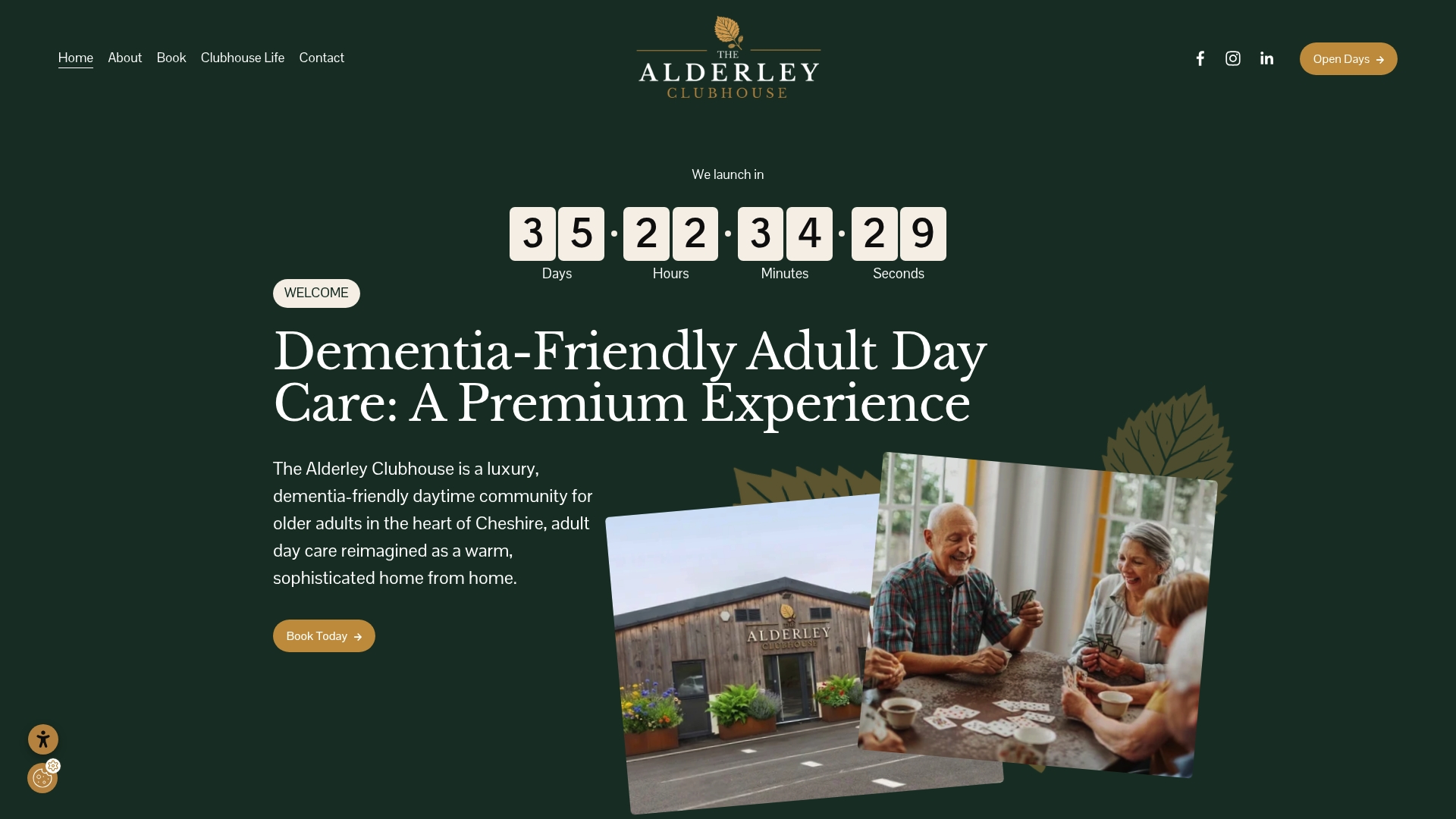
A welcome tour is the natural first step: it lets your relative see the space, meet the team, and have a cup of tea before committing to a full day. Book a welcome tour to arrange a visit, or explore day pass options if you are ready to book a trial session. The team is happy to discuss any specific needs when you get in touch.
Sources
The following UK-focused resources offer further reading on dementia day care, funding and practical preparation.
- Supporting a person with dementia in a care home (factsheet) | Alzheimer’s Society
- What is an adult day centre? A guide for dementia carers | DementiaNet
- Convince a Parent with Dementia to Try Day Care | Penn Village
This article is general information, not a substitute for advice from a qualified doctor. Consult a qualified healthcare professional about your own circumstances before acting on anything here.