

Small-group day care is a genuinely practical option for many families who need reliable daytime respite for an older relative, including someone living with mild to moderate dementia. Research links regular attendance to better self-reported quality of life for the person attending and real relief for carers. Look for a centre offering group Cognitive Stimulation Therapy and a capped daily attendance, then book a trial visit before committing.
TL;DR:
- Ensure the centre offers structured group Cognitive Stimulation Therapy with a trained staff team that can clearly explain its activities and benefits.
- Verify the attendance cap is consistent and the staff-to-member ratio is maintained, preventing overcrowding and staff turnover issues.
- Check that the environment is dementia-friendly with clear signage, proper accessibility, and a full-day catering service to support comfort and hydration.
- Confirm proper medical, mobility, and behavioral assessments are conducted before enrollment, with regular updates and tailored activity placement.
- Plan for a gradual adjustment period of several weeks with consistent attendance before judging the full benefits, and prioritize centres that promote trust through familiarity.
Table of Contents
- What to expect from a high-quality small-group day care
- How small-group day care helps people with dementia and their carers
- How to choose the right small-group day care: a checklist
- Practical first steps: visiting, trial booking and logistics
- Legal and safety regulations governing small-group adult day care centres
- How to assess and accommodate medical or behavioural needs
- Communication and reporting between staff and family
- What to expect during enrolment and assessment
- Tips for transitioning a relative to small-group day care
- A note from Scott @ The Clubhouse
- The Alderley Clubhouse: how to book a tour or day passes
- Sources
What to expect from a high-quality small-group day care
A good day feels ordinary, in the best possible way. Your relative arrives, has breakfast, joins a structured activity, eats a proper lunch, then settles into calmer afternoon company. It's not a waiting room with a television on. It's a rhythm, built deliberately around familiar faces and predictable moments.
That predictability matters more than most families realise at first. A Howbury evaluation found that the strongest small-group services swap out vague "lunch and bingo" programming for themed sessions that mix orientation, music, discussion and hands-on tasks, all aimed at keeping the mind engaged and conversation flowing.
The therapy on offer is where quality really shows. Group Cognitive Stimulation Therapy (CST) is the one to ask about by name. It's a structured programme, typically 14 sessions across seven weeks, and it's the only non-drug intervention NICE recommends for people with mild to moderate dementia. Reminiscence work and tailored cognitive or physical tasks often sit alongside it, but CST is the clinical backbone worth checking for.
Before you commit to a centre, look for these signals:
- Trained staff who can explain what CST involves and how often it runs, not just that it's "available"
- A capped daily number, so staff genuinely know every member by name rather than managing a rotating crowd
- A dementia-friendly building: clear signage, calm colour schemes, accessible bathrooms, no confusing corridors
- Full-day catering, including breakfast, a proper cooked lunch, and steady hydration throughout the day
- Visiting specialists, such as hairdressing or chiropody, and support with medication timing where needed
Pro Tip: Ask to see a sample weekly timetable before you visit. If every day looks identical, or the plan is vague ("games, chat, music"), that's usually a sign the programme isn't as structured as it should be.
Staffing continuity deserves particular attention. Evidence gathered by ARC South London points to consistent staff and stable small groups as the real driver of trust and engagement, not the range of activities on a leaflet. A centre that reshuffles its team weekly will struggle to deliver the person-centred care your relative actually needs.
How small-group day care helps people with dementia and their carers
The benefits aren't guesswork. The Howbury evaluation recorded higher self-reported quality-of-life scores among people attending specialist day centres, alongside carers reporting genuine, practical respite. A wider systematic review published in PLOS ONE reached a similar conclusion: day care delivers benefits across social, cognitive, physical and emotional domains, not just one.
Attendance at specialist day centres is linked to improved self-reported wellbeing and can help delay the need for full-time residential care, according to the Howbury evaluation.
For carers, the relief is often less about having free time and more about having dependable free time. Knowing your relative is somewhere safe, occupied and genuinely enjoying themselves, on the same two days every week, does something that occasional respite never quite manages: it lowers background stress rather than just pausing it temporarily.
Why does routine matter so much? Social contact and group-based activity appear to support cognition and mood in ways that solitary time at home simply can't replicate. Conversation, shared tasks, and the gentle structure of a themed session all give the brain something to work with. It's the difference between sitting in front of a television and being asked to help lay out cards for a memory game with three other people who remember your name.
That said, benefits rarely appear on day one. People with dementia typically need a settling-in period, and rushing that process undermines the whole point of trying day care in the first place. Consider these practical points before judging whether it's working:
- Expect an adjustment period of several weeks, not several days
- Aim for at least twice-weekly attendance during the first month, rather than one day here and there
- Watch for small signs of comfort, such as recognising staff, settling faster at drop-off, or talking about the day afterwards
- Don't judge success purely by mood in the car home. Some tiredness after a full, stimulating day is normal and often a good sign
Research from ARC South London backs this up directly: repeated, regular attendance produces far more measurable benefit than sporadic one-off visits. One trial day tells you very little. Two visits a week for a month tells you almost everything.
How to choose the right small-group day care: a checklist
Choosing well comes down to asking the right questions and trusting what you see on a visit over what you read in a brochure.
- Confirm CST is genuinely offered, not just "cognitive activities" in general terms.
- Ask about staff-to-member ratios and whether the same staff work the same days each week.
- Check the daily cap on attendance and how long that number has been stable.
- Ask what happens with medical needs, medication timing, mobility support, and behavioural changes.
- Ask about the trial policy, transport options, and whether costs are per day or in blocks.
- Request to sit in on part of a session, or at least sample a meal, before booking anything.
Pro Tip: During any trial, watch three things closely: whether your relative eats well, whether they engage with an activity rather than just sitting nearby, and how staff respond when something goes slightly wrong. That third one tells you more than either of the first two.
Consistency beats novelty here. A centre with the same core group and same core staff, week after week, tends to outperform one that offers more variety but less familiarity.

Practical first steps: visiting, trial booking and logistics
Start with a staff-only visit, without your relative present, so you can ask direct questions freely. Once you're satisfied, arrange a second visit together, ideally timed around a meal or activity so you both get a genuine feel for the day.
Book a short trial period rather than a single day. During it, note mood at pickup, how readily they joined in, and whether physical care (meals, mobility help, toileting support) was handled smoothly and respectfully.
On costs, ask directly whether pricing is per day or via a block pass, and whether a local authority carer's assessment might contribute towards funding, since eligibility and support vary by council.
Logistics matter more than families expect:
- Confirm drop-off and parking arrangements at the door
- Ask whether transport is available for relatives who can't be driven each day
- Prepare for a longer day than usual. It can take a few sessions before the length feels normal rather than tiring
Legal and safety regulations governing small-group adult day care centres
In the UK, adult day care services that provide personal care, such as help with washing, medication or mobility, generally need to be registered with the Care Quality Commission (CQC) in England, or the equivalent regulator in Scotland, Wales, or Northern Ireland. Registration brings inspection, published ratings, and a formal complaints process, so it's worth checking a centre's current CQC rating before booking.
Not every day care model requires this registration. Services offering purely social and recreational activity, without delivering regulated personal care, may sit outside CQC's direct remit, though good providers still follow safeguarding and health and safety obligations regardless of registration status.
Safeguarding is the area to press hardest on. Ask how staff are vetted (DBS checks are standard practice), how safeguarding concerns are reported, and how the centre handles incidents like falls or a resident becoming distressed. Fire safety, food hygiene ratings, and accessibility compliance under the Equality Act should also be visible, either on display or available on request.
Staff training standards matter too. NICE guidance is explicit that staff working with people living with dementia should receive proper training in person-centred care and dementia awareness, not just general care qualifications. A centre confident in its regulatory standing will usually volunteer this information without being asked twice.
How to assess and accommodate medical or behavioural needs
Every family should expect a proper pre-admission assessment, not a quick form filled in at reception. A thorough centre will ask about medical history, current medication, mobility limitations, swallowing difficulties, allergies, and any behaviours that tend to appear when someone is anxious, tired or overstimulated.
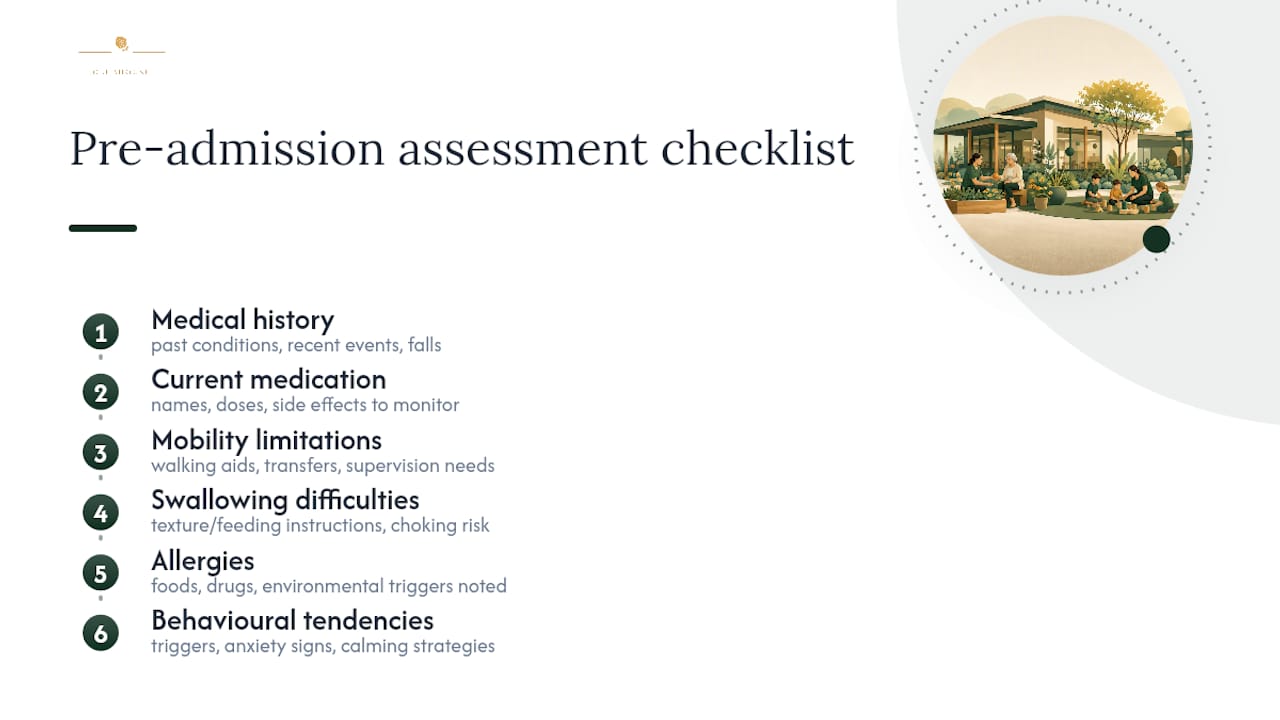
This assessment isn't a formality. It's what allows staff to plan seating, activity pacing, and even which other members your relative sits near. Someone who becomes anxious in loud environments needs a different placement to someone who thrives on group energy.
Behavioural changes, agitation, wandering, resistance to personal care, deserve a direct conversation before day one. Ask specifically how staff respond in the moment: do they redirect gently towards a calming activity, or is there a quiet space available if someone needs to step back from the group? A well-run centre will have clear, practised answers here, not vague reassurance.
Medical needs should be documented and reviewed regularly, not just noted once at enrolment. If your relative's needs change, whether that's new medication, a fall, or a shift in mobility, the centre should have a clear process for updating their care plan and communicating that change to you.
Communication and reporting between staff and family
Good day care runs on information flowing both ways. Before enrolling, ask exactly how the centre communicates: daily verbal handovers at pickup, a written log, a phone call for anything significant, or a combination of all three.
Daily handovers matter most in the early weeks, while you're both still learning what "normal" looks like for your relative in this new setting. Ask specifically what gets reported: appetite, mood, participation in activities, any medical observations, and anything unusual.
For medication or health changes, insist on same-day communication rather than a general update days later. This is a fair and standard expectation, and any centre worth choosing will treat it as such.
It's also worth asking how the centre handles two-way updates. If something changes at home, a new medication, a difficult night, a hospital appointment, staff need that information before the next visit, not after. The best providers make this exchange simple, whether through a quick call, a short written note, or a five-minute conversation at drop-off.
What to expect during enrolment and assessment
Enrolment typically starts with an initial enquiry call, followed by a formal assessment visit, usually carried out by a senior member of the care team. This is where the centre gathers medical history, personal preferences, family context, and any specific support needs.
Expect to be asked detailed questions, likely more than you anticipate. Favourite topics of conversation, past occupation, food preferences, sleep patterns, anything that helps staff build a genuine picture of who your relative is, not just their diagnosis.
Many centres will then propose a short trial period rather than committing you to a long-term booking straight away. This protects both sides. It gives your relative a low-pressure introduction, and it gives the centre a chance to confirm their assessment matches reality once your relative is actually in the room with other members.
Documentation at this stage should include a written care plan covering medical needs, mobility support, dietary requirements, and any behavioural considerations discussed during assessment. Ask for a copy. A transparent centre will hand this over without hesitation, and it becomes a useful reference point if anything needs reviewing later.
Tips for transitioning a relative to small-group day care
The emotional adjustment is often harder for the family than for the person attending. Guilt is common, and so is second-guessing the decision after a difficult first drop-off.
A few things genuinely help:
- Talk about it positively beforehand, framing it as a social outing rather than "somewhere you're being sent"
- Keep the first few drop-offs brief, avoiding lingering goodbyes that can heighten anxiety
- Expect a bumpy first week or two, then judge progress over the full month, not the first Tuesday
- Stay in light contact with staff during the settling-in period, without hovering or calling constantly
Confusion or resistance in the early days rarely means the placement is wrong. It usually means the routine hasn't taken hold yet. Give it the twice-weekly attendance practitioners recommend for a full month before drawing conclusions either way.
A note from Scott @ The Clubhouse
The families who see the biggest change aren't always the ones who chose the "best" centre on paper. They're the ones who committed to consistent attendance and stuck with it through an awkward first fortnight. Person-centred activity, delivered by the same familiar faces twice a week, does more for someone living with dementia than an impressive activities list ever will.
Carer guilt comes up in almost every conversation we have, and it's worth saying plainly: regular respite isn't a luxury you're taking for yourself. It's what makes long-term care sustainable for everyone involved, including the person you're caring for.
If you're weighing this up, come and see it in person before deciding anything.
— Scott @ The Clubhouse
The Alderley Clubhouse: how to book a tour or day passes
If you want to see genuine small-group, person-centred day care rather than read about it, The Alderley Clubhouse in Cheshire is built around exactly the standards this article has covered. Our care team is fully trained to deliver group Cognitive Stimulation Therapy, and we cap attendance at 35 members a day, so every member is known by name rather than lost in a crowd.
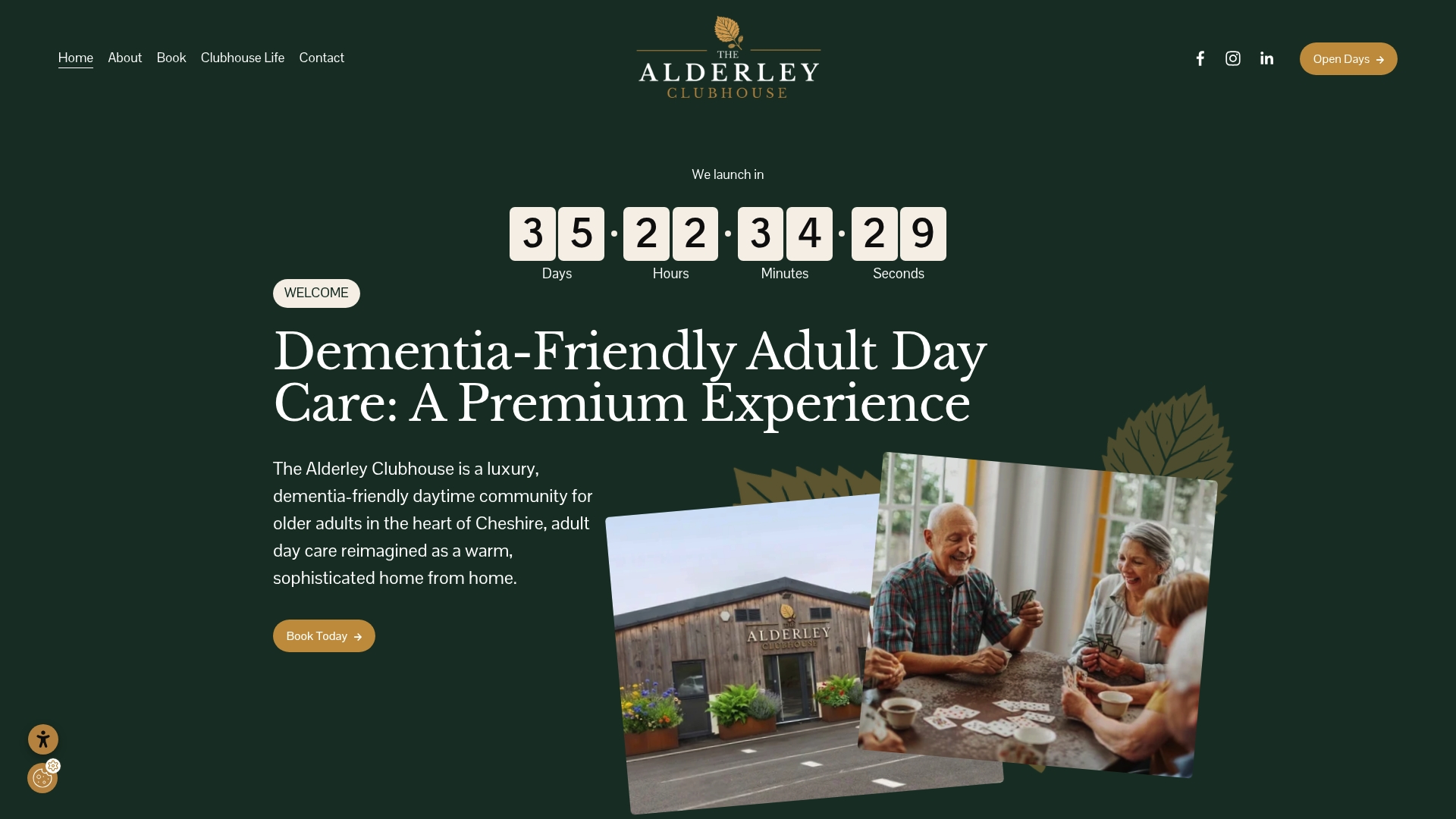
Days run mornings to late afternoon on weekdays, with breakfast on arrival, a cooked lunch, afternoon tea, and an all-day hydration station built in. The building is purpose-designed and dementia-friendly, with secure parking and a drop-off point right at the door, and our full programme of activities covers physical, creative, cognitive and social sessions alongside weekly live entertainment and visiting hairdressing and chiropody.
Day passes are £120 including VAT, and our 10-Session Pass gives you ten days for the price of nine, useful if you're planning the attendance at least twice a week, which tends to be associated with better results. The simplest next step is to book a welcome tour and see the space for yourself, or go straight to securing day passes if you're ready to start.
Sources
- NICE guideline NG97: Dementia assessment, management and support for people living with dementia and their carers
- Howbury evaluation report — Friends of the Elderly / Worcestershire (Howbury Lodge)
- Systematic review on day care services and dementia (PLOS ONE)
This article is general information, not a substitute for advice from a qualified doctor. Consult a qualified healthcare professional about your own circumstances before acting on anything here.