

Structured programmes built around Cognitive Stimulation Therapy, alongside social, physical and sensory activities, are an evidence-backed and appropriate option for people with mild to moderate dementia. A premium day-centre that combines all of these under one roof, delivered by trained staff, is the practical way to access them. The sensible next step is simple: book a trial or welcome tour and see how your relative responds.
TL;DR:
- Regular twice-weekly cognitive stimulation therapy sessions produce stronger cognitive and mood improvements than irregular attendance, with measurable benefits lasting several months.
- Day-centre programs combining cognitive, creative, physical, sensory, and social activities tailored to individual abilities yield the best outcomes for people with mild to moderate dementia.
- Trained facilitators following established protocols are essential, and small, capped groups improve engagement and reduce disorientation in dementia-friendly environments.
- Trial visits should include checking staff qualifications, activity schedules, progress reporting, and accessibility to ensure a high-quality experience.
- As dementia progresses, the focus shifts from group cognitive tasks to sensory, routine, and social engagement, requiring adaptable programs dedicated to long-term well-being.
Table of Contents
- What a day of advanced dementia activities looks like
- Does the evidence actually support Cognitive Stimulation Therapy?
- What activities should you actually expect on the programme?
- Choosing a premium day-centre: questions to ask and red flags to avoid
- Preparing for a trial day and judging whether it works
- Is this approach right for more advanced dementia too?
- A short note on why this matters to us
- Booking a welcome tour at the Alderley Clubhouse
- Sources
What a day of advanced dementia activities looks like
Ask any provider what "activities" actually means day to day, and you should get a proper timetable, not a vague promise. A well-run day-centre structures the hours so that cognitive effort comes when energy is highest, and quieter pursuits fill the afternoon lull.
A typical day runs something like this:
- Arrival and breakfast, giving staff time to check in with each member individually
- A morning Cognitive Stimulation Therapy session, usually the day's main structured activity
- Movement or gentle exercise before lunch, helping appetite and mood
- A cooked two-course lunch, eaten socially rather than at a desk or tray
- Calmer afternoon activities such as art, music or reminiscence work
- Afternoon tea and a wind-down period before collection
Staffing matters as much as the schedule. CST works best delivered by facilitators trained in the original protocol, in small groups where everyone gets a turn to speak. A capped daily attendance, rather than an open-door drop-in model, keeps groups at a size where quieter members are not lost in the noise. The building itself should be designed for dementia. Clear sightlines, contrasting colours for doors and handrails, and step-free access all reduce the disorientation that plain, clinical spaces tend to cause.
Does the evidence actually support Cognitive Stimulation Therapy?
Cognitive Stimulation Therapy is the most rigorously tested non-drug intervention for mild to moderate dementia, and the results hold up across multiple independent reviews. That is not a marketing claim. It is the reason NICE recommends structured group cognitive stimulation as standard practice for this stage of the condition.
The headline figure: trials using the original 14-session CST protocol show gains in cognition and quality of life roughly equivalent to a six-month delay in expected decline, delivered through 14 sessions of around 45 minutes each.
A separate meta-analysis using the same protocol found measurable improvements not just in memory, but in language, working memory, depressive symptoms and self-reported quality of life. That breadth matters. Families often assume "cognitive" activities only target memory, when the real value shows up in mood and communication too.
Two patterns are worth asking about directly when you visit a centre:
- Frequency counts. Reviews consistently find that twice-weekly group sessions produce stronger cognitive outcomes than occasional or irregular delivery.
- Day-centre attendance itself helps. Cohort data on people attending dementia-specific day care found measurable improvements in cognition, physical function and depressive symptoms at 3, 6 and 12 months after starting.
Long-term effects on daily living skills are less consistent across studies, so treat structured activity as a genuine support, not a cure. The short and medium-term gains, though, are well established.
What activities should you actually expect on the programme?
Programmes worth paying for combine several activity types, not just one. Reviews of day-centre interventions show that the strongest outcomes tend to come from a mix of cognitive, creative, physical, sensory and social elements, adapted to each person's ability rather than delivered identically to everyone.
- Cognitive: themed CST discussions, word association games, and reminiscence prompts using old photographs or objects, which support memory and language without the pressure of a test.
- Creative: music, singing and simple art or craft projects, which give people a way to express themselves when words become harder to find.
- Physical: chair-based movement, balance exercises and gentle dancing, which protect strength and reduce fall risk while staying safe for varied mobility levels.
- Sensory: multisensory stations, familiar scents and tactile items with personal meaning, useful for calming agitation or gently stimulating engagement depending on the person's mood that day.
- Social: small-group conversation, memory teas, visiting entertainers and occasional pet visits, which keep loneliness at bay in a way solitary activities cannot.
Pro Tip: Ask a centre how they adapt one activity across different ability levels in the same room. A good facilitator can run the same reminiscence session for someone recalling detailed stories and someone offering a single word, and both should leave feeling they contributed.
Choosing a premium day-centre: questions to ask and red flags to avoid
Price alone tells you nothing about quality. Two centres can charge the same and deliver entirely different experiences, so bring a proper checklist to any tour.
- Is CST delivered by trained facilitators, following a recognised protocol rather than an improvised version of "brain games"?
- What is the staff-to-member ratio, and how large are the activity groups themselves?
- Can they show you a sample weekly schedule, not just describe activities in general terms?
- How do they measure and report progress, and will you receive feedback after the first few weeks?
- What safeguarding and medication handling procedures are in place during the day?
- How does transport and drop-off work, and is the building genuinely accessible?
- What is included in the price for food, hydration and any extras such as hairdressing?
- Is a trial day available, and what are the cancellation terms if it is not the right fit?
Red flags are usually obvious once you know to look for them: no trained CST staff, no willingness to show a real schedule, vague or shifting pricing, groups too large for anyone to get individual attention, or reluctance to offer a trial at all. Good providers, by contrast, welcome the questions. They can point to structured programmes, regular family reviews and a track record of members who have attended for months, not weeks.
Preparing for a trial day and judging whether it works
Before booking, have your relative's medication list, GP details and any care plan ready to hand over. Most centres will ask for these alongside emergency contacts.
On the day itself, pack anything familiar and comforting: a favourite jumper, a small personal item for reminiscence activities, and comfortable clothing suited to movement sessions. Confirm arrival and collection times clearly, and ask whether transport can be arranged if driving is difficult.
Judging the visit afterwards comes down to a few honest signs:
- Did your relative engage with at least one activity, even briefly?
- Did staff know their name and something about them by the end of the day?
- Did they eat and drink well, and seem at ease during lunch?
- Is there a follow-up call or review offered to discuss how the day went?
A single trial rarely tells the whole story, so ask what a second visit or short block would involve before deciding.
Is this approach right for more advanced dementia too?
Structured CST-based programmes are designed and evidenced for mild to moderate dementia, and that is where the research support is strongest. As dementia progresses further, the group-based, discussion-heavy format that makes CST effective becomes harder to access. Verbal group discussion, working memory tasks and following a 45-minute structured session all assume a level of communication and sustained attention that later-stage dementia often makes difficult.
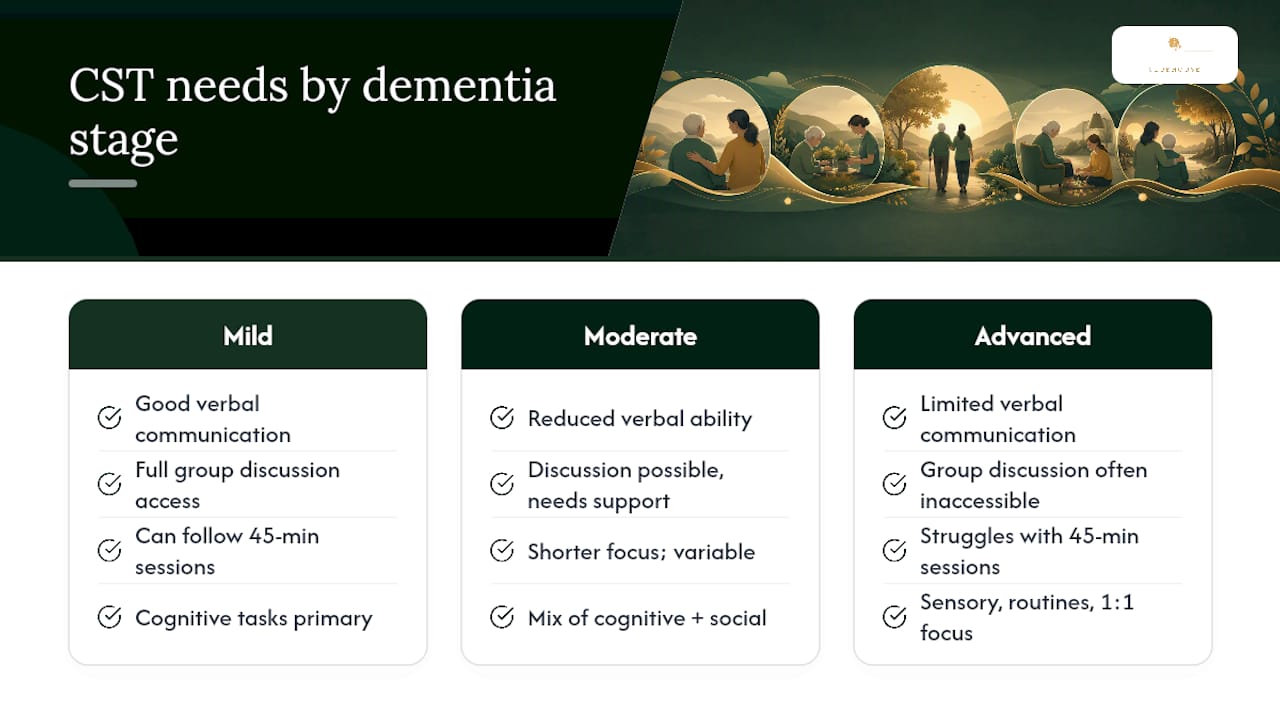
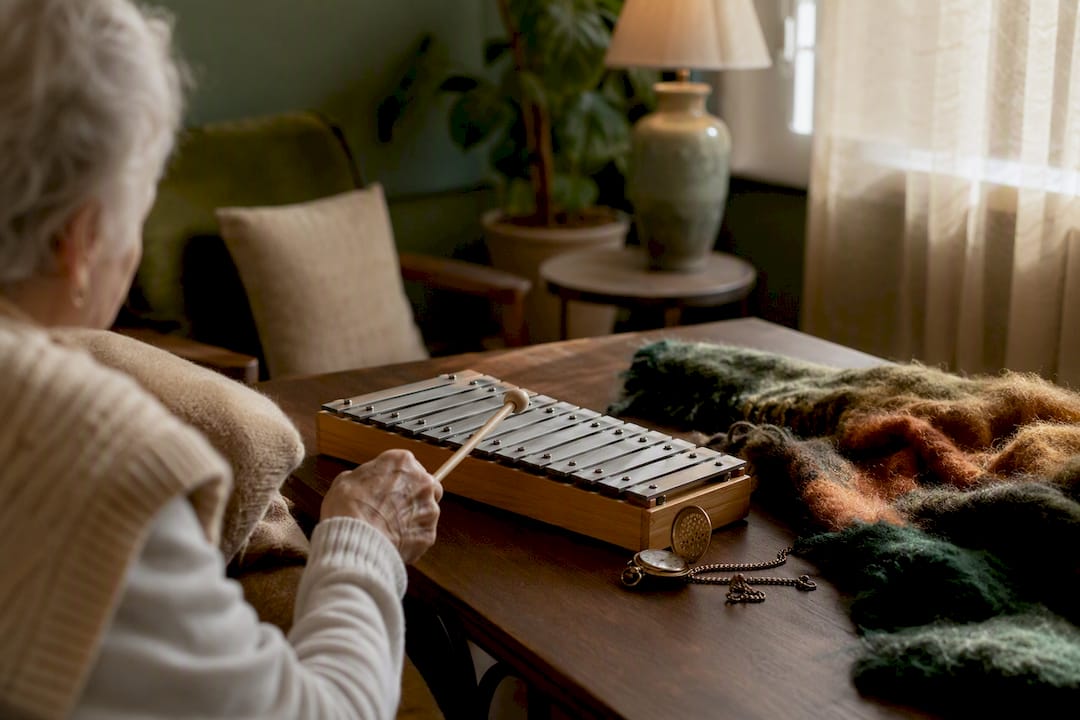
That does not mean day-centre attendance stops mattering. It means the emphasis shifts. Sensory elements, familiar routines, one-to-one attention and simple social contact tend to carry more of the benefit than cognitively demanding tasks once someone's needs become more complex. The physical and social components of a good programme, gentle movement, mealtimes, music, familiar faces, often remain valuable long after formal CST sessions stop being the right fit.
This is worth raising directly with any centre you are considering. Ask how they adapt as needs change, whether the same team can support someone through that transition, and what happens if a placement that worked well at first needs to look different six months on. A centre built around fixed activity slots for a fixed ability level will struggle here. One built around person-centred adaptation, as the evidence on day-programme mechanisms suggests matters more than the activity list itself, is better placed to keep serving your relative well beyond the mild to moderate stage.
A short note on why this matters to us
We run Cognitive Stimulation Therapy at the Clubhouse because we have seen what it does for dignity, not just test scores. Watching someone contribute a memory in a group, and be genuinely listened to, is different from any leaflet describing "cognitive benefits."
Our attendance cap of 35 members a day, full breakfast-to-afternoon-tea catering, and a fully trained team are not extras. They are what makes the CST evidence actually translate into a good day for your relative. If you are weighing this up, come and see it for yourself.
— Scott @ The Clubhouse
Booking a welcome tour at the Alderley Clubhouse
If you have read this far, you already know what good structured activity provision needs to include: trained CST delivery, small capped groups, and a day built around dignity rather than just occupying time. The Alderley Clubhouse offers exactly that, in a purpose-built, dementia-friendly building in Cheshire, with attendance capped at 35 members so every person is known by name.
Every day runs from 9:30am to 4:30pm, a full hour longer than most local provision, and includes breakfast, a cooked two-course lunch, traditional afternoon tea and an all-day hydration station alongside the full programme of physical, creative, cognitive and social activities. Day passes cost £120 including VAT, and a 10-Session Pass gives ten days for the price of nine, useful if your relative settles in well after the first visit.
The best way to judge fit is to see it in person. Book a welcome tour and bring any questions from the checklist above. We would rather answer them face to face than leave you guessing from a brochure.
This article is general information, not a substitute for advice from a qualified doctor. Consult a qualified healthcare professional about your own circumstances before acting on anything here.
Sources
- Effectiveness of cognitive stimulation therapy (CST) for mild to moderate dementia: systematic review and meta‑analysis
- Cognitive stimulation to improve cognitive functioning in people with dementia (systematic review)
- Effectiveness of cognitive stimulation therapy (CST) for mild to moderate dementia: systematic literature review and meta‑analysis (UCL preprint)
- Trends in changes of cognition, depression, physical performance and activities of daily living among people with dementia attending dementia specific day care