
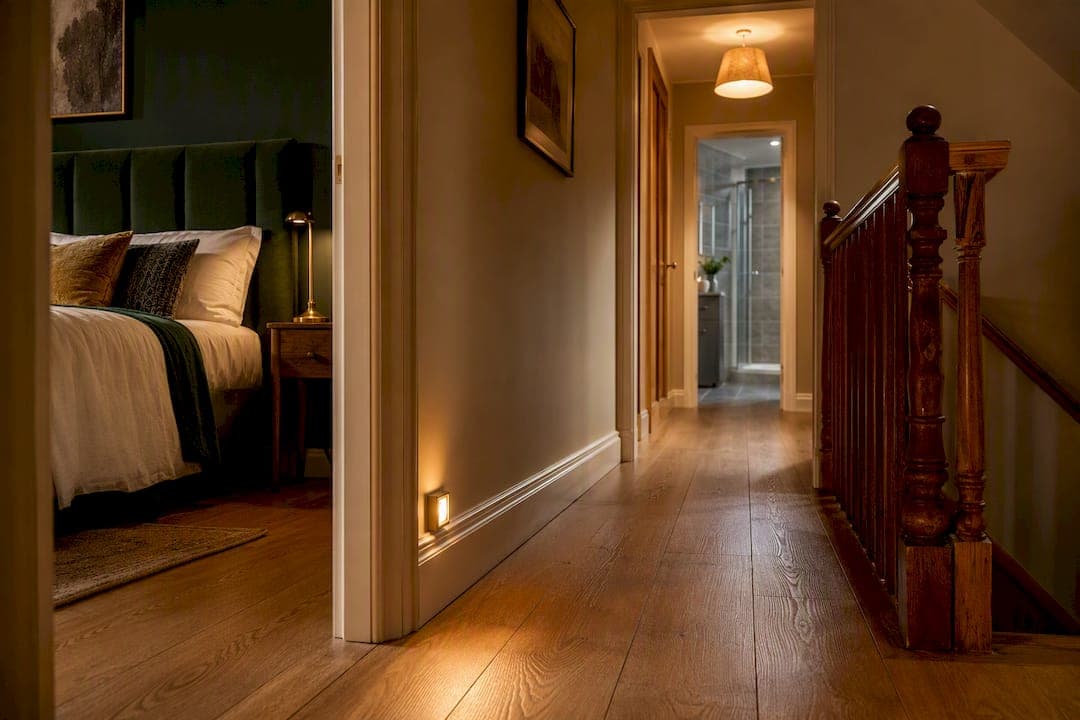
The simplest way to make a home safer for someone with dementia is to create brighter, more even light, cut glare and shadows, and add gentle guidance after dark. Three things to do today: open the curtains fully during the day, swap bedside and hallway bulbs for warm LED bulbs (2700K to 3000K), and fit motion-sensor night lights along the route to the toilet. None of this requires rewiring or a big budget, and you can tackle it room by room, at your own pace.
TL;DR:
- Bright, warm LED bulbs (2700K to 3000K) should be used across the home to reduce glare and create even, layered lighting suited for dementia care.
- Focus on high-risk areas such as stairs, bathrooms, and the bed-to-toilet route by installing motion-activated lights and avoiding high-contrast or reflective surfaces.
- Use consistent lighting levels in hallways and ensure switches are easy to locate and distinguish, minimizing shadowy spots and abrupt contrast.
- Night lights should be amber or red-toned, motion-activated, and placed along pathways to prevent disorientation and reduce sundowning symptoms.
- Prioritize simple, inexpensive upgrades like swapping bulbs, adding plug-in lamps, and fitting motion sensors to target the most dangerous and confusing areas first.
Table of Contents
- What makes lighting dementia friendly?
- Room-by-room lighting for dementia care
- Night-time lighting and sundowning
- Choosing bulbs, fixtures and controls
- Low-cost lighting upgrades you can make this week
- What The Alderley Clubhouse has learned about lighting in practice
- The gap between good advice and what actually gets done
- Sources
What makes lighting dementia friendly?
Dementia friendly lighting follows a few consistent rules, and once you know them, most decisions in your home become obvious. Dementia changes how the brain processes contrast, depth and movement, which is why a dim corridor or a dark patch by the stairs can look like a hole rather than shadow. Getting the basics right does more for safety and mood than any single clever gadget.
The core principles carers need to apply:
- Even, layered light. Combine ambient light (general room lighting), task light (reading lamps, worktop lights) and accent light (hallway or landing fittings) so there are no abrupt jumps between bright and dark. NHS guidance on dementia-friendly homes notes that sudden contrasts between light and dark cause confusion more often than uniformly higher brightness does.
- No glare, no gloss. Reflections off polished floors, glass tables or shiny worktops can look like water or ice to someone with dementia, and matt finishes and diffused shades remove that confusion.
- Bulb choice matters. LED, flicker-free, warm white (2700K to 3000K) is the standard for living areas and bedrooms, since cooler, bluer light tends to feel clinical and can interfere with winding down in the evening.
- Keep expectations realistic on light therapy. Trials of ambient bright-light interventions have reported reductions in agitation and depressive symptoms, but the effect builds over weeks of consistent daytime brightness, not overnight.
Room-by-room lighting for dementia care
Different rooms carry different risks, so the fix looks different in each one. This is where most of the practical value sits, because a targeted change in a high-risk area beats a general upgrade every time.
-
Living room. Layer a floor lamp, a table lamp and soft overhead light rather than relying on one central bulb. Position lamps so the bulb itself isn't in the eyeline of a favourite chair, since direct glare from a lamp can be as disorientating as a dark room.
-
Kitchen. Add under-cabinet task lighting over worktops and the sink, where shadows from overhead lights often fall exactly where hands are working with knives or hot pans. Bright, shadow-free food-prep areas cut the chance of a cut or scald considerably.
-
Bathroom. Fit strong task lighting around the mirror and basin for grooming, but pair it with a low-level, motion-sensor night light for the middle of the night. A sudden full-brightness bathroom light at 3am is jarring; a soft amber glow that switches on automatically is far gentler.
-
Bedroom. A warm bedside lamp with a simple switch works better than an overhead light for settling at night. Keep curtains capable of proper blackout, and light the path to the bathroom at ankle height so there's no need to fumble for a switch in the dark.
-
Stairs. This is one of the highest-risk zones in the house. Motion-activated lights at tread height, or LED strips along the edge of each step, keep every riser visible without the overhead glare that can make a stairwell feel like it's swimming. Avoid high-contrast striped treads, which can be misread as a step that isn't there.
-
Hallways. Keep light levels consistent from room to room. A bright landing next to a pitch-black hallway creates exactly the kind of abrupt contrast that causes hesitation at doorways.
Night-time lighting and sundowning
Late afternoon and evening are when agitation, restlessness and sundowning tend to peak, and lighting choices at this time of day carry real weight. Getting the colour and timing right does more here than almost anywhere else in the house.
- Fit motion-activated night lights on the route between bedroom and toilet, and inside the bathroom itself, so no one has to search for a switch half-asleep as explained in this door to door transport for disabled guide.
- Set sensor sensitivity and timer length so lights stay on long enough to reach the destination safely but switch off again rather than flooding the room all night.
- Choose amber or warm red-toned bulbs for anything used after dark. Research on circadian rhythm and dementia shows amber and red tones minimise melatonin suppression, while bright, blue-rich light in the evening can delay sleep onset and worsen sundowning.
- If you're exploring tunable or dynamic lighting systems, know that a systematic review of ambient bright-light interventions found benefits for agitation and mood at roughly 350 to 750 lux, delivered for 10 to 12 hours a day, over four weeks or more. That's a meaningful daily commitment, not a quick fix.
A simple schedule to test: bright, natural-feeling light from morning through mid-afternoon, a gradual dimming and warming of tone from early evening, and amber-only night lighting from bedtime until morning. Run it for a fortnight before judging whether it's helping.
Choosing bulbs, fixtures and controls
Getting the hardware right the first time saves you buying twice. LED bulbs are worth the switch on their own merits: they're flicker-free, cheap to run and last for years, which matters when you're fitting lights in six or seven places at once.
- Colour temperature: stick to 2700K to 3000K (warm white) for living rooms and bedrooms; anything higher starts to feel institutional rather than homely.
- Brightness: as a rough guide, aim for bright, even coverage in task areas like kitchens and bathrooms, and softer, layered light in living and sleeping spaces, matching room lumens to the number and size of fittings rather than one big central bulb.
- Fixtures: frosted or diffused shades spread light evenly and cut glare, and matt surfaces on switch plates, worktops and flooring reduce the confusing reflections that glossy finishes create.
- Controls: dimmer switches give you flexibility across the day, but tactile, contrasting switch plates matter just as much. If a switch is hard to find or hard to distinguish from the wall, it stops being useful at 2am.
Pro Tip: Test each room at the actual times the person uses it, morning, mid-afternoon and night, not just in daylight. Watch where shadows fall and where they hesitate at a doorway; often, moving a lamp six inches solves the problem for free.
Low-cost lighting upgrades you can make this week
You don't need an electrician for most of this. A few inexpensive changes, done in the right order, cover most of the risk.
- Swap bulbs in the bedroom, hallway and bathroom to warm LEDs first, since these are the highest-traffic, highest-risk rooms.
- Buy plug-in lamps for any room where rewiring isn't practical. They're cheap, movable, and let you layer light without touching the wiring.
- Fit motion-sensor night lights and adhesive LED strips along stair edges and hallway floors. As practical dementia-care lighting guidance points out, these small fixes often deliver the biggest safety return for the smallest outlay.
- Use sheer curtains or blinds to soften harsh daylight glare without darkening the room.
- Spray matt sealant on shiny worktops or lay a non-reflective runner over a polished floor if replacing the surface isn't an option.
- Prioritise in this order: bathroom, stairs, then the bedroom-to-toilet route, since these are where falls and disorientation happen most.
What The Alderley Clubhouse has learned about lighting in practice
Running a day centre for people living with dementia teaches you things a textbook doesn't. At The Alderley Clubhouse, we stage the day deliberately: bright, natural-feeling light and lively activity through the morning and early afternoon, then a gentler, warmer tone as the afternoon draws on, easing members towards a calmer state before they head home. Moving a single reading lamp away from a member's eyeline during a card game once made a visible difference to how settled that table felt within minutes.
A short audit checklist we use ourselves:
- Is the room evenly lit, with no dark corners near seating or doorways?
- Is there glare from any bulb, window or glossy surface at eye level?
- Do shadows fall across walkways, worktops or stair treads?
- Is every step, landing and hallway consistently lit, with no abrupt drop in brightness?
- Are switches easy to find, and easy to feel apart from the wall around them?
Our facilities and activities are built around exactly this kind of thinking, and our guide to accessible day centre design goes into more detail on how it all fits together.
The gap between good advice and what actually gets done
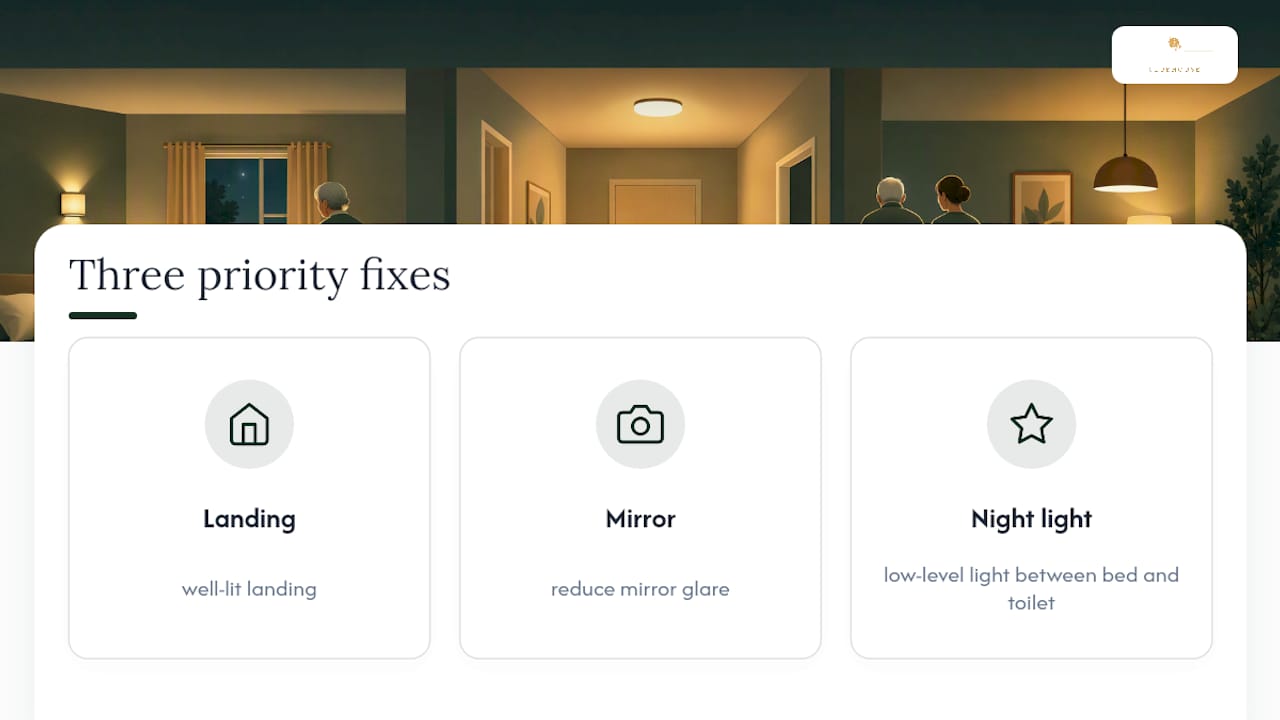
Most lighting advice for dementia care is technically sound and practically useless, because it's written as a list of specifications rather than a plan a tired family carer can act on this weekend. Lux targets and Kelvin ranges matter, but they're not where most households are failing. Most are failing because of one dark landing, one glary bathroom mirror, and one missing night light between the bed and the toilet.
The evidence on dynamic and tunable lighting is genuinely promising, but it comes with a catch conventional advice rarely states plainly: those benefits were measured over weeks of consistent daily exposure, not a single dramatic upgrade. That's a scheduling commitment as much as a shopping list, and it's worth treating it that way from the start.
If you're starting today, don't try to fix the whole house. Fix the three-step journey from bed to bathroom first. Nearly every fall and every distressing night-time episode I've seen described happens somewhere along that route, and it's also the cheapest problem to solve. Everything else, the living room lamps, the kitchen task lighting, the dimmer switches, can wait a week.
— Scott @ The Clubhouse
Sources
- How to make your home dementia friendly
- Effect of an ambient bright light intervention on neurobehavioral symptoms in nursing home residents with dementia
- Effect of Ambient Bright Light on Behavioral and Psychological Symptoms in People With Dementia: A Systematic Review
- Circadian rhythm, dementia and light interventions
- Lighting the way: simple lighting solutions for dementia care at home