
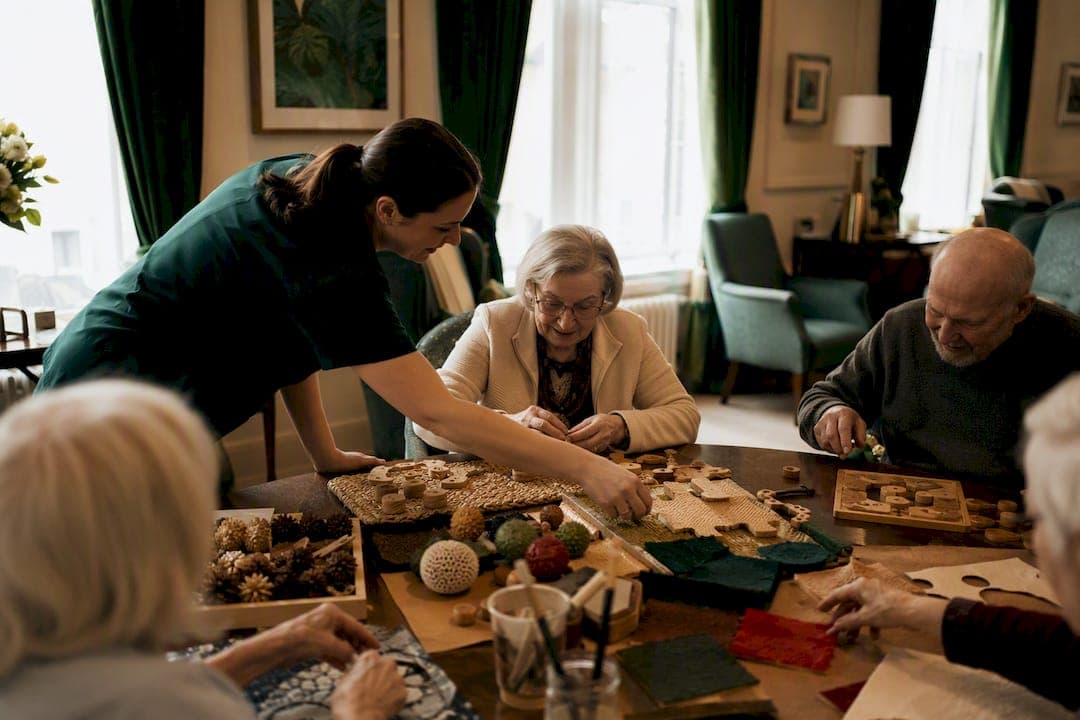
Respite care is temporary, planned support that replaces your caring role so you can rest, work, or simply have a day to yourself. It helps family carers of all ages, and it works especially well for people living with dementia, who often benefit from structured company as much as their carer benefits from the break. The immediate next step is straightforward: contact your local council's adult social care team and ask for a carer's assessment. Most respite funding sits with local authorities, not the NHS. NHS Continuing Healthcare is the exception, and it only applies when someone's needs are primarily clinical.
- What it means: a trained person or service steps in so you can take a break
- Who it helps: carers and the person they look after, including those with dementia
- First move: ask your council for a carer's assessment
- Funding: usually arranged through local authorities, not the NHS
Key Takeaways
Respite care works best when carers request formal assessments early and choose providers on the strength of their therapy programme, not just availability.
| Point | Details |
|---|---|
| Start with an assessment | Request a carer's assessment and a needs assessment from your council before searching for providers. |
| Match the option to the need | Day centres, home visits, live-in cover, and short residential stays suit different levels of need. |
| Funding sits with the council | Most respite is council-funded and means-tested; NHS Continuing Healthcare only applies to clinical cases. |
| Have an emergency contact list ready | Keep medication details and key contacts written down before a crisis, not during one. |
| Judge quality by substance | The Alderley Clubhouse shows what to look for: capped numbers, named staff, and NICE-recommended CST. |
Table of Contents
- How do you get assessed for respite care in the UK?
- What types of respite care are available?
- How do you arrange and pay for respite care?
- What if you need respite care at short notice?
- How do you choose the right respite provider?
- What does high-quality day-care respite actually look like?
- Why "just a day out" undersells good respite care
- Where does the Alderley Clubhouse fit into your respite plan?
- Frequently asked questions
- Sources
How do you get assessed for respite care in the UK?
Two separate assessments open the door to funded respite. A carer's assessment looks at your wellbeing, your caring responsibilities, and what support would help you specifically. A needs assessment looks at the person you care for and what help they require day to day. You can request either one, but starting with the carer's assessment often surfaces respite options faster because it puts your exhaustion or scheduling pressure on record.
Your local authority runs both assessments, and Gov is the quickest way to find the right team. Once eligibility is confirmed, the council carries out a financial assessment to work out what you'll contribute, since council-funded respite is means-tested.
Before your appointment:
- Write down your caring routine, including night-time tasks
- List any health conditions affecting you or the person you care for
- Note down income, savings, and existing benefits for the financial check
- Ask specifically what respite options are available locally, not just "what support exists"
Pro Tip: You have a legal right to a carer's assessment regardless of your finances or how much care the person you look after needs, so request one early rather than waiting until you're at breaking point. A documented assessment on file makes emergency respite far easier to arrange later.
What types of respite care are available?
Respite in the UK isn't one service. It's a spread of options, and the right one depends on how much support the person you care for needs, how often you need a break, and whether they're comfortable away from home.
- Day centres and adult day clubs. These run structured sessions with meals, activities, and social contact, often with transport included. Carers UK lists day care among the most common respite routes, and for people with dementia, a well-run day club offers far more than supervision. It offers therapeutic stimulation.
- Home-based respite. A visiting carer or agency worker comes to the house for a few hours, overnight, or as night-sitting cover, letting you leave the house or simply sleep through.
- Live-in respite. A temporary live-in carer takes over full-time duties, which suits families managing complex or round-the-clock needs, or covering a carer's own holiday or hospital stay.
- Short-stay residential respite. A care or nursing home takes the person you care for for a set number of days or weeks. Arranging this properly means booking ahead, providing a full handover of medication and routines, and visiting beforehand where possible.
- Sitting and befriending services. Charities and trained volunteers sit with someone for a few hours, giving you a shorter, lower-cost break for errands or appointments.
- Respite holidays. Some charities and schemes fund short breaks away for carers and the people they support. Carers worth checking if a longer break is what you need.
Costs vary enormously by type and region, which is exactly why the assessment stage matters. It tells you what's actually funded before you commit to anything privately.
How do you arrange and pay for respite care?
Arranging respite follows a fairly predictable sequence, even though funding routes differ. Start by contacting your local council's adult social care team, request the carer's and needs assessments, and ask for written confirmation of what's funded. If you're paying privately for any portion, get itemised quotes covering meals, transport, and staffing before you sign anything.
- Contact your council and request both assessments
- Ask whether you qualify for a direct payment or personal budget, which lets you buy respite yourself rather than wait for the council to arrange it
- Get written, itemised quotes if paying privately, checking what's included
- Check whether Carer's Allowance is affected. The benefit allows a 4-week break in caring responsibilities without losing the payment, so short respite stays usually don't put it at risk
- Ask about NHS Continuing Healthcare only if the person you care for has substantial, ongoing clinical needs. It's a narrow category, not a general respite fund
Costs range widely. Residential respite costs vary widely by type and location, while private day care often sits around £100 to £150 a day in premium centres, depending on staffing ratios and what's included in that price. Location changes the maths considerably, which is why a local quote beats any national average.
What if you need respite care at short notice?
Emergencies don't wait for a scheduled assessment, so it helps to know who to call before you're in crisis.
- Ring your council's emergency duty team or adult social care out-of-hours line first
- Contact a private home-care agency directly. Many can supply a visiting carer or short-term live-in cover within a day or two
- Call your local carer centre or a carers' charity. They often know which local services have same-week availability
- Keep a written summary ready: medications, daily routine, GP details, and next-of-kin contacts, so anyone stepping in can act immediately
Having this list saved on your phone, rather than assembled under pressure, makes the difference between a stressful scramble and a manageable phone call.
How do you choose the right respite provider?

Not every respite service is equal, and the differences show up in the details. Before committing, check that staff hold relevant training and DBS clearance, that the same small team of carers works with your relative rather than a rotating cast of strangers, and that there's a genuine activity or therapy programme rather than a room and a television.
Ask providers directly:
- What training do your staff have in dementia care specifically?
- Is there a structured activity programme, and does it include recognised therapies?
- What happens if my relative needs to cancel or there's a schedule change?
- Can we do a trial visit before committing to regular sessions?
Watch for red flags: no written care plan, vague pricing that shifts once you ask for detail, or no proper handover process for medication and routines.
Pro Tip: Always ask for a taster day before signing up to a course of sessions. A short trial tells you more about how someone with dementia settles into a new environment than any brochure ever will.
What does high-quality day-care respite actually look like?
The Alderley Clubhouse in Nether Alderley, Cheshire, gives a useful benchmark for what a premium day-care respite offer should include. Days run 9:30am to 4:30pm, a full hour longer than most local provision, with breakfast, a cooked two-course lunch, afternoon tea, and a full programme of physical, creative, and social activities.
- Attendance capped at 35 members daily, so staff know everyone by name
- Trained delivery of Cognitive Stimulation Therapy, the only non-drug therapy NICE recommends for mild to moderate dementia
- Dementia-friendly, fully accessible building with secure parking and a drop-off point
- Day passes at £120 including VAT, with a 10-session pass offering ten days for the price of nine
When you're comparing local day clubs, use these features as your checklist: capped numbers, named staff, a genuine therapy programme, and straightforward drop-off logistics. See the facilities and activities on offer for a fuller sense of what a structured day should include.
Why "just a day out" undersells good respite care
The biggest misconception in respite planning is treating day care as a holding pattern rather than something with therapeutic value in its own right. Carers often ask for "somewhere safe" when they should be asking "somewhere that actively helps." That distinction changes which questions you ask a provider and which services you rule out.
The conventional advice, book whatever has space when you're desperate, gets the sequence backwards. The research on Cognitive Stimulation Therapy suggests the quality of a day programme matters as much as its availability. A rushed booking made in a crisis rarely accounts for staff-to-member ratios, therapy provision, or whether the same small team will be there each visit.
Prioritise the assessment stage even when you don't yet need respite urgently. A carer's assessment on file, requested calmly rather than during a crisis, gives you a documented case that speeds up funding decisions later. Then judge day-care options on substance: capped attendance, named staff, and an actual therapy programme, not just a tidy waiting room and a friendly welcome.
Where does the Alderley Clubhouse fit into your respite plan?
If you've been weighing up home carers, sitting services, and council-arranged day care, the Alderley Clubhouse offers a different kind of respite: a full day of structured company, therapy, and genuine rest for your relative, rather than a few supervised hours. It suits carers who want reliable, predictable cover on set days each week without navigating rotas or agency staffing changes, and it works equally well for private families, live-in carers needing a scheduled day off, and home care providers covering their own client's break.

Days run 9:30am to 4:30pm, Monday to Friday, with meals, activities, and CST included in the price. Whether you're planning ahead or want to see the building before committing, the simplest next step is to book a welcome tour or go straight to secure a day pass and try a single session first.
Frequently asked questions
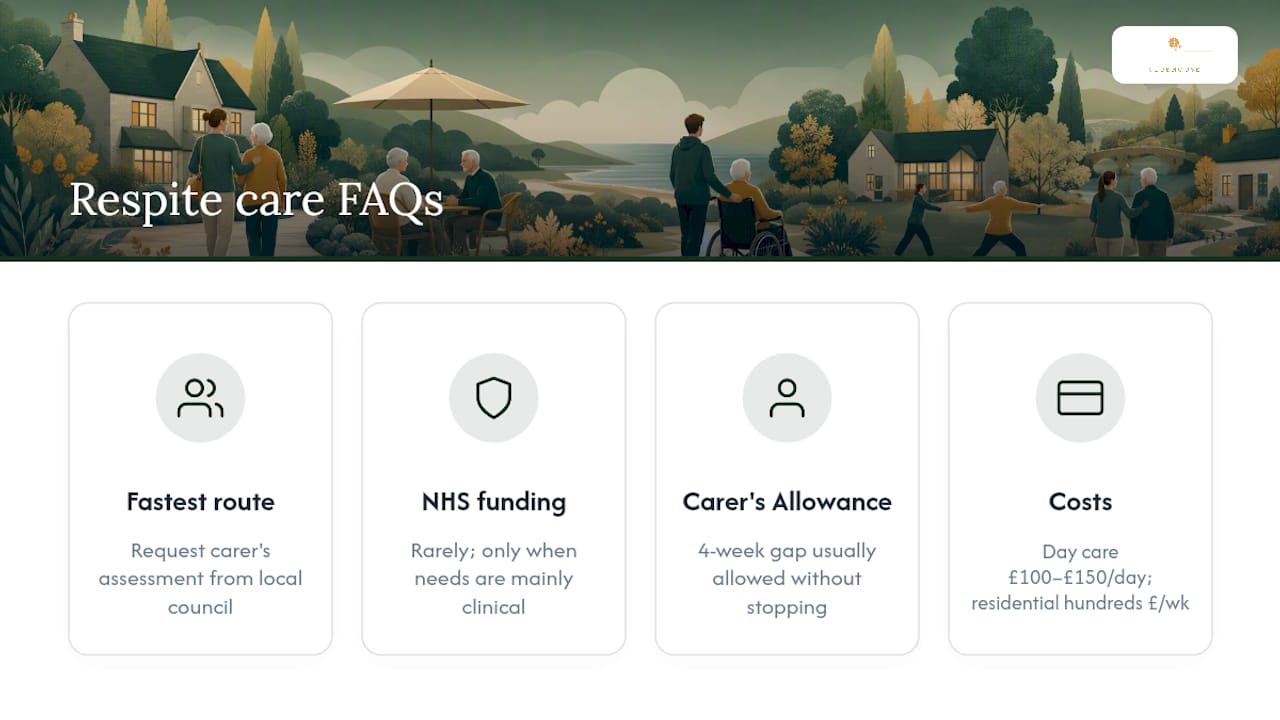
What is the fastest way to get respite care in the UK? Contact your local council's adult social care team and request a carer's assessment. This is usually quicker than arranging private care from scratch, since it identifies funded options you may not know exist.
Does the NHS pay for respite care? Rarely. Respite funding is managed by local authorities, and NHS Continuing Healthcare only covers care when someone's needs are primarily clinical, not general caring support.
Will taking respite affect my Carer's Allowance? Short breaks generally don't. The allowance permits a 4-week gap in caring duties without stopping payment, though it's worth confirming your specific circumstances with the council.
How much does respite care cost in the UK? It varies by type and region. Residential respite can run from a few hundred pounds a week upward, while premium day care often costs around £100 to £150 a day.
Is day care suitable for someone with dementia? Often, yes, particularly where the centre offers structured activity and Cognitive Stimulation Therapy, which NICE recommends for mild to moderate dementia.
This article is general information, not a substitute for advice from a qualified doctor. Consult a qualified healthcare professional about your own circumstances before acting on anything here.