
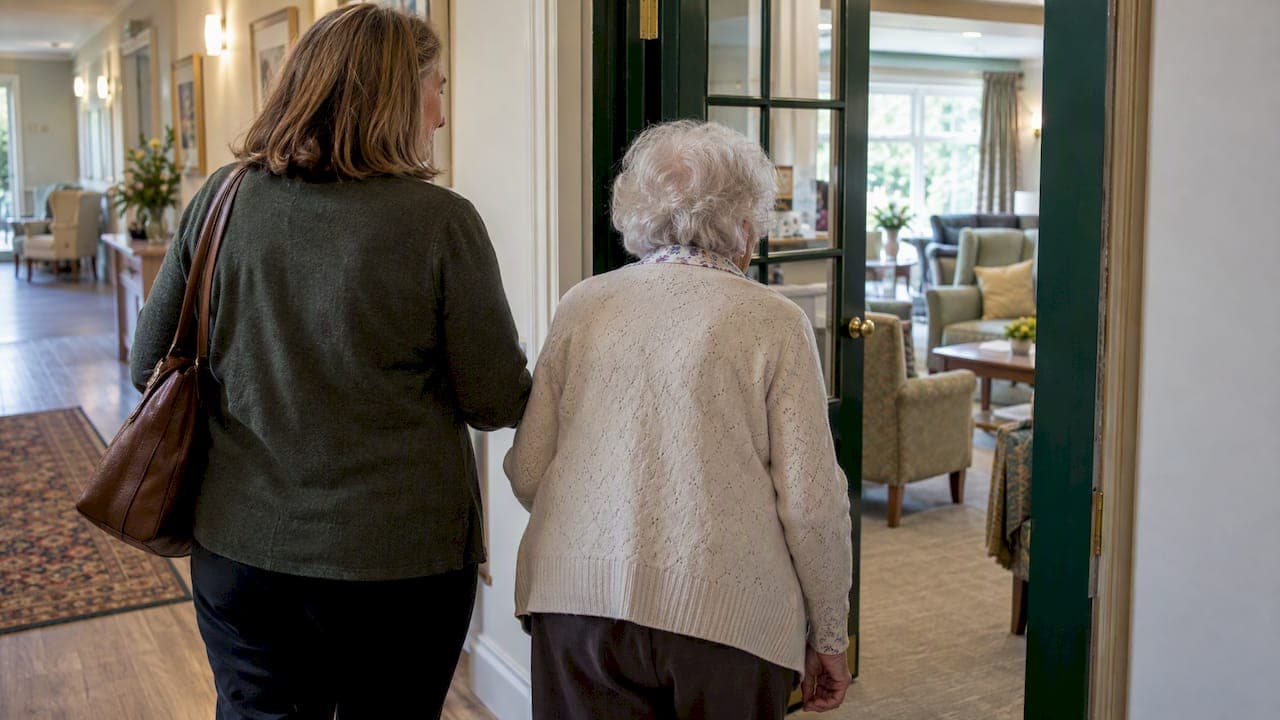
A homely care environment is one where the design, daily routine and staff approach all work together to make someone feel safe, known and genuinely at ease, not just looked after. The quickest way to judge this is to use a short visit checklist and book a visit or needs assessment before deciding anything. Signals worth trusting include CQC guidance, NICE recommendations, and what you see for yourself at a place like The Alderley Clubhouse.
Key Takeaways
A truly homely dementia care environment combines thoughtful design, daily routines, and person-centred staff practices to foster safety, identity, and emotional well-being.
| Point | Details |
|---|---|
| Design features | Clear signage, contrasting colors, clutter-free spaces, and safe outdoor access create a dementia-friendly environment. |
| Daily life routines | Sharing meals, familiar tasks, and involving residents in everyday activities promote a sense of belonging and purpose. |
| Staff practices | Staff trained in cognitive therapies and building individual care plans enhance connection, safety, and personalized care. |
| Visit and assessment | Conducting a short, structured visit with a scoring system helps evaluate if a care setting feels truly homely. |
| Clubhouse approach | The Alderley Clubhouse offers trial visits and day passes, with staff known by name and a focus on genuine, personalized care. |
Table of Contents
- What 'homely' actually means: design, daily life and therapeutic practice
- What to look for on a visit: a practical checklist and scoring prompts
- How long does it take from first enquiry to starting care?
- How the daily routine supports emotional wellbeing
- How design and staff interaction reduce loneliness
- What we've learned from running a clubhouse every day
- How The Alderley Clubhouse can help: day passes and trial visits
- FAQ
- Sources
What 'homely' actually means: design, daily life and therapeutic practice
A homely setting starts with the building itself. CQC guidance on dementia-friendly environments points to clear signage, contrasting colours on doors and furniture, clutter-free corridors and safe outdoor access as the features that help someone orient themselves and feel settled rather than lost. Lighting that follows the natural rhythm of the day supports sleep and reduces confusion, which is part of why our lighting fixes guide focuses on small, practical changes rather than a full refit.
Daily life matters just as much as the walls around it. Shared meals, familiar routines and the chance to take part in everyday tasks all help someone feel at home rather than simply accommodated. CQC's own research into good practice in dementia care highlights that life-task activities, such as folding laundry or tending a garden, support identity and purpose in a way that passive entertainment cannot. Our gardening guide for carers sets out simple ways to bring this into daily life.
Staffing and therapeutic practice tie it together. Person-centred care and co-produced care plans, built around someone's own history and preferences, sit at the heart of CQC's good practice findings. For people with mild to moderate dementia, Cognitive Stimulation Therapy stands out as the only non-drug therapy recommended by NICE, which makes staff trained to deliver it a genuine marker of quality.
A homely setting tends to share these features:
- Clear, contrasting signage and clutter-free spaces that reduce confusion.
- Safe, accessible outdoor areas for fresh air and gentle activity.
- Shared meals and familiar daily routines rather than rigid timetables.
- Life-task activities such as gardening or light household tasks.
- Person-centred care plans built with the individual, not just for them.
Pro Tip: Ask to see a sample care plan on your visit. A genuinely person-centred plan reads like a biography, not a checklist.
What to look for on a visit: a practical checklist and scoring prompts
A visit tells you more in an hour than any brochure. Walking through with a simple scoring system (pass, consider, or flag) turns a vague impression into something you can compare across settings.
- Arrival and access: note how easy the drop-off is, whether parking is straightforward, and how you're greeted at the door.
- Dining: ask whether menus are fixed or flexible, and whether meals are genuinely offered as choices rather than set plates.
- Activities: check the daily programme for variety and ask directly whether staff deliver Cognitive Stimulation Therapy or similarly structured sessions.
- Staffing: look for staff who know residents by name and ask how care plans are built with input from the person and their family.
- Environment: assess noise levels, light, and whether there's a private space to sit away from group activity.
For each area, a simple pass, consider, or flag note helps you build a shortlist based on evidence rather than first impressions:
- Pass: features match what you'd expect from CQC's dementia-friendly guidance.
- Consider: some features present, but ask follow-up questions before deciding.
- Flag: a clear gap, such as no outdoor access or no visible activity programme.
Our room-by-room design guide and our guide to spotting red flags are both useful companions to take with you.
How long does it take from first enquiry to starting care?
The process usually begins with a needs assessment, which NHS guidance confirms is free and arranged through local council social services. This assessment looks at what support someone needs day to day, from mobility to memory support, and forms the basis for any funding discussion that follows.
Once the needs assessment is complete, a financial assessment determines whether the council contributes towards costs. The 2026 to 2027 social care charging circular confirms the upper capital limit remains £23,250 and the lower limit £14,250, figures that decide whether someone is likely to self-fund or receive support.
In practice, families often move faster than the formal process by arranging a private visit or trial day alongside the council assessment, rather than waiting for both to conclude before seeing any settings. Timescales vary by local authority workload, but starting both strands, a needs assessment and a direct visit, at the same time tends to shorten the overall wait. Many families find that booking a trial day gives them a clearer sense of fit within days, even while the formal assessment is still underway.
How the daily routine supports emotional wellbeing
A homely day has a shape to it: arrival, breakfast, activity, lunch, more activity, and a gentle wind-down, rather than long unstructured stretches. This rhythm matters because predictability reduces anxiety, particularly for people living with dementia who may find unfamiliar or unpredictable days unsettling.
Meals anchor the day. Shared dining, rather than meals taken alone or on a tray, gives people a natural point of social contact and a reason to look forward to the next part of the day. Our guide to restaurant-style dining looks at how small changes to how food is served can lift both appetite and mood.
Activities placed through the day, rather than left to chance, give people something to anticipate and something to reflect on afterwards. CQC's good practice findings note that meaningful, structured activity reduces isolation more effectively than passive time in a communal room. A visiting hairdresser, a planned walk in a garden, or a regular slot of cognitive stimulation all give the day texture.
What ties this together is consistency. The same staff, the same rough shape to the day, and the same small rituals, a cup of tea on arrival, a familiar seat at lunch, build a sense of safety that supports emotional wellbeing far more than any single feature of the building.

How design and staff interaction reduce loneliness
Loneliness often creeps in through small gaps: nobody using your name, no one asking what you did yesterday, a chair by the window with no one to talk to. Good design closes those gaps. A central dining or lounge area, rather than a maze of small rooms, naturally draws people together without forcing interaction.
Staff who know residents by name, remember a detail from last week's conversation, or notice when someone seems quieter than usual, do more for loneliness than any activity schedule on paper. CQC's work on dementia care stresses that maintaining someone's life story, their past career, family, interests, is as important as physical safety, because it gives staff a genuine way to connect rather than making small talk.
Shared, life-task activities also build connection in a way that sitting in a group does not. Folding laundry together, planting bulbs in a garden, or preparing a simple recipe gives people something to do side by side, which tends to open conversation more naturally than a formal activity session. Our gardening guide and our short outings guide both give examples of this kind of shared, purposeful activity.

Transport matters too. Families managing group outings or regular drop-offs often find that accessible vehicle layouts, as set out in this guide to accessible coach seating, make the difference between someone joining an outing and being left behind.
What we've learned from running a clubhouse every day
Families often arrive expecting a clinical building and leave surprised by how ordinary the day feels, in the best sense. That's the point. A genuinely homely setting doesn't announce itself with signage about "care", it simply gets the small things right: breakfast on arrival, a proper two-course lunch, a hairdresser who remembers how you like your hair done.
At The Alderley Clubhouse, our care team is trained to deliver Cognitive Stimulation Therapy, and our building is purpose-designed to be dementia-friendly and fully accessible, with secure parking and a drop-off point at the door. We cap attendance at 35 members a day so staff genuinely know everyone by name, not just by file.
If you're weighing up settings, come and see one for yourself before deciding anything.
— Scott @ The Clubhouse
How The Alderley Clubhouse can help: day passes and trial visits
The clearest way to judge whether a setting feels homely is to spend a day there, not to read about it. Our Day Pass Membership gives you a full day experience with meals and a full programme of physical, creative, cognitive and social activities.
A single visit shows you things a brochure can't: how staff greet people, whether activities are genuinely tailored, and whether the atmosphere feels calm or rushed. Because we cap attendance at 35 members a day, you'll see real staff-to-member interaction, not a crowded room.
What a day pass includes:
- A full day of structured activity, meals and hydration from 9:30am to 4:30pm.
- Access to our Cognitive Stimulation Therapy sessions, delivered by trained staff.
- Secure parking and a drop-off point at the door.
| Option | What's included |
|---|---|
| Day Pass | Full day 9:30am to 4:30pm, meals, activities, hydration station |
| Day Pass | Ten days for the price of nine |
Current prices for day passes are available on the pricing page of our website. You can book a day pass, find out about our open days, or be our guest for the day to try it before deciding.
FAQ
How much does homecare cost per hour?
The 2025/26 provisional average fee paid to external homecare providers in England is £25.05 per hour. Rates vary by local authority and by rurality, so it's worth checking local figures before budgeting.
How do I get an older relative into a care home?
The process starts with a free needs assessment from local council social services, as set out in NHS guidance. A financial assessment then follows to determine whether the council contributes towards the cost.
What is homecare?
Homecare refers to professional support delivered in someone's own home, covering anything from personal care to companionship, rather than a move into residential accommodation. It sits alongside other options such as day care and residential care homes.
Who is eligible for a care home place?
Eligibility depends on a council needs assessment confirming the level of support someone requires, followed by a financial assessment. The 2026 to 2027 charging circular confirms the upper capital limit for council support remains £23,250.
What does a day pass at The Alderley Clubhouse include?
A day pass covers a full day from 9:30am to 4:30pm, including breakfast, a cooked two-course lunch, afternoon tea and a full activity programme. Day passes are available with multi-session membership packages, with details and pricing available on our website.
Sources
- Summary - Health and social care support for people living with dementia - CQC
- Care homes - NHS
- Social care charging for care and support 2026 to 2027: local authority circular