
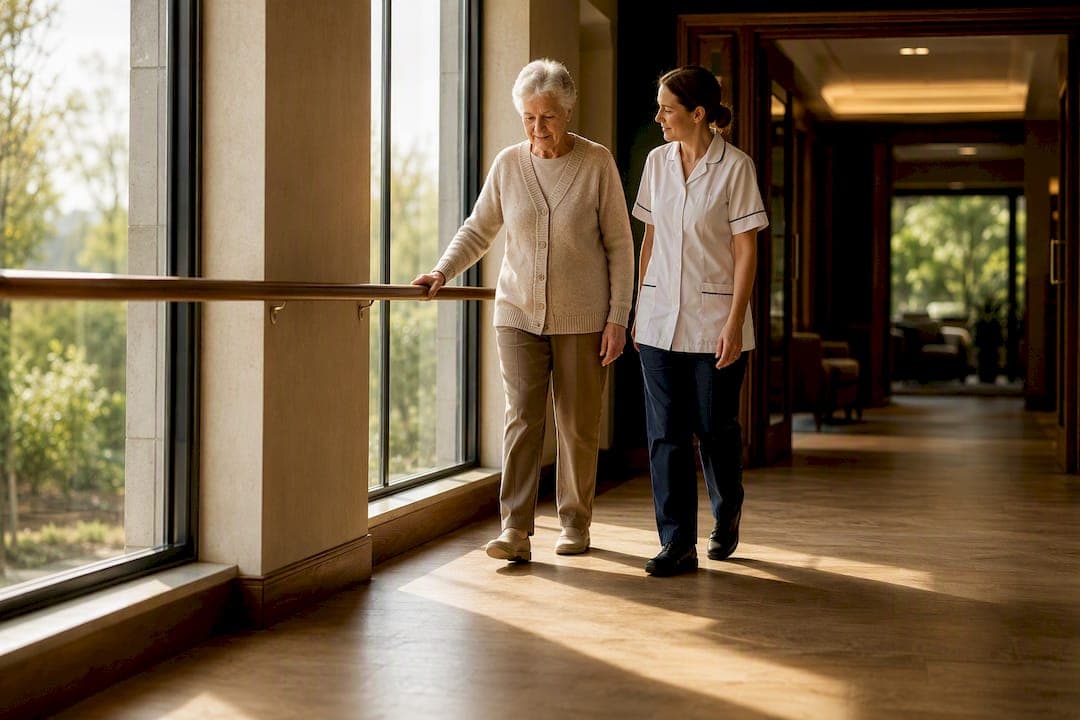
Safe adult day care means person-centred risk enablement: documented risk assessments, trained staff and environmental controls that protect dignity while genuinely reducing harm. Before you book anywhere, or during your first visit, check three things: current, written risk assessments; visible evidence of trained staff and a named safeguarding lead; and environmental cues like clear signage and safe flooring. We see these three checks catch most concerns early, which is exactly how we've built The Alderley Clubhouse.
TL;DR:
- Ensure adult day care offers current, individualized risk assessments for specific activities, not just generic policies, and review these before participation.
- Confirm staff hold up-to-date safeguarding, dementia, and manual handling training, with documented refresh schedules and evidence of competency.
- Check that the building design features clear signage, non-slip flooring, accessible toilets, and safe outdoor spaces to reduce environmental risks.
- Verify emergency protocols are documented, practiced regularly, and that first aid and transport vehicles meet safety standards with proper maintenance records.
- Involve families in care planning and regularly review risk management and incident logs to detect early signs of health or behavioral changes.
Table of Contents
- What does adult day care safety involve, checklist for visits
- How often should risk assessments be reviewed?
- Are staff properly trained for dementia and safeguarding?
- Does the building design actually reduce risk?
- How should activities and equipment be managed safely?
- What emergency and transport arrangements should be in place?
- How should families be involved in safety planning?
- Operational red flags families often miss
- How The Alderley Clubhouse builds safety into every day
- Where to check the official guidance
- Sources
- FAQ
What does adult day care safety involve, checklist for visits
Good adult day care safety rests on one principle: balancing independence with protection, rather than wrapping people in cotton wool. We call this person-centred risk enablement, and it's the difference between a centre that lets someone pour their own tea (with support nearby) and one that does everything for them "to be safe." The second approach isn't safer. It just looks tidier on paper.
When you visit or call a centre, ask to see:
- Up-to-date, individual risk assessments, not a generic template
- A written safeguarding policy with a named lead you can speak to
- Evidence of staff training (induction records, refresher dates)
- Clear first aid and medication management arrangements
- Infection-prevention records, including cleaning logs
- Vehicle and driver checks if transport is offered
- Visible design features that support safe movement around the building
Most managers will show you these documents without hesitation. If they hesitate, or can't locate them, that tells you something important.
Pro Tip: Ask to see the risk assessment for the specific activity your relative would join that week, not just a general policy document. It shows you exactly how principles translate into practice.
How often should risk assessments be reviewed?
A "suitable and sufficient" risk assessment, the standard used across UK social care, covers three layers: the individual, the activity, and the building itself. A cooking session, for instance, needs its own written assessment separate from the general kitchen safety policy, according to SCIE's guidance on safe delivery.
Reviews shouldn't happen only once a year. They need triggering by specific events:
- On admission, before any new attendee joins in
- Whenever health changes, even a minor one
- Before introducing a new activity or outing
- Immediately following any incident, however small
- At minimum every six months for dementia-specific care plans, in line with Royal College of Psychiatrists guidance
A proper document names the assessor, the date, the specific hazards considered and who else was consulted, whether that's a GP, occupational therapist or family member. Operational guidance for adult social care recommends recording positive risk decisions too, not just the hazards you're avoiding.
Are staff properly trained for dementia and safeguarding?
There's no single legal mandate in England forcing dementia-specific training, but providers must demonstrate that staff are competent for the people they support, according to NIHR Dementia Researcher. That gap between "no mandate" and "must demonstrate competence" is exactly where families need to look closely.
Ask to see evidence covering:
- Safeguarding awareness and reporting procedures
- First aid certification, current and renewed on schedule
- Dementia recognition, including reading non-verbal distress cues
- Safe manual handling techniques
- Medicines awareness and administration protocols
- Enhanced DBS checks and supervision notes
Staff trained to spot non-verbal distress early can often de-escalate a situation before it becomes an incident at all, rather than managing the aftermath. That's one of the clearest differentiators between centres, and it rarely shows up unless you ask directly about training refresh schedules.
Does the building design actually reduce risk?

Environment shapes behaviour more than most families expect. Poor lighting, confusing corridors and cluttered rooms increase disorientation and distress. Peer-reviewed research on dementia day centre design found that wayfinding, noise control and safe outdoor access measurably affect behavioural symptoms, not just comfort.
On a site visit, look for:
- Clear signage and contrasting colours between floors, doors and walls
- Non-slip flooring throughout, particularly in bathrooms and dining areas
- Accessible toilets, ideally available in sufficient numbers for attendees
- Secure, supervised outdoor space that's genuinely usable, not just decorative
- Sightlines that let staff supervise without hovering
Ask about maintenance logs and ventilation checks too. Premium providers track things like legionella testing and airflow alongside daily cleaning records, details that rarely make the brochure but matter enormously when something goes wrong. Our guide to accessible day centre design covers these features in more depth.
How should activities and equipment be managed safely?
Adapting activities doesn't mean restricting them. Smaller groups, outdoor sessions and adjusted materials let people continue hobbies they love with proportionate safeguards rather than blanket bans.
Shared equipment needs its own discipline:
- Hand hygiene stations accessible throughout the day
- Cleaning logs for hoists, wheelchairs and mobility aids between uses
- A clear PPE policy for personal care tasks
- Vaccination considerations discussed sensitively with families
Current Gov still shapes proportionate cleaning and PPE policy in most UK day settings. Cognitive activities that build on existing hobbies also support the wider aims covered in reducing dementia risk through engagement, which pairs well with any conversation about safe activity planning.
What emergency and transport arrangements should be in place?
Every centre needs written plans covering three scenarios, each with clearly assigned staff roles:
- Fire evacuation, practised regularly rather than left as a document nobody's read
- Medical emergencies, including who calls 999 and who manages other attendees
- A missing person, with an agreed search protocol before escalating externally
First aid cover should be visible on-site throughout opening hours, not dependent on one trained person's shift pattern. If transport is offered, check vehicle maintenance records, confirm drivers hold appropriate authorisation, and ask how restraints and supervised drop-off routines actually work in practice, not just in policy.
How should families be involved in safety planning?
Care plans work best when they're built with the person and their family, not delivered as a finished document. Royal College of Psychiatrists guidance recommends reviewing these plans at least every six months, with families involved in decisions about positive risk-taking, not just informed after the fact.
Good providers also watch for caregiver strain, recognising that instability at home often shows up as changed behaviour at the day centre first. Adult day care exists partly to catch that early, offering genuine respite for caregivers as much as stimulation for the attendee.
Practical routines matter here:
- Daily handovers between staff and family or carers
- Written incident summaries, even for minor events
- Accessible logs families can review without asking
Pro Tip: If a centre can't describe how they'd tell you about a minor fall or a change in mood that day, ask how they'd handle a serious one.
Operational red flags families often miss
Five things consistently separate well-run centres from struggling ones: high staff turnover, missing or outdated paperwork, no named safeguarding lead anyone can identify, chaotic or absent cleaning records, and environmental cues (poor signage, cluttered corridors) that suggest design was an afterthought.
Smaller, capped-attendance models make proactive de-escalation genuinely possible, because staff know each person's patterns well enough to notice change early. If you spot a red flag, ask directly and specifically. A confident provider will show you the paperwork, not just reassure you verbally.
— Scott @ The Clubhouse
How The Alderley Clubhouse builds safety into every day
The Alderley Clubhouse is a genuine alternative to standard day care provision for families who want dignity and safety held together, not traded off. Attendance is capped daily to ensure staff can know members personally and identify changes in mood or health early rather than after the fact. The care team delivers Cognitive Stimulation Therapy within a purpose-built, dementia-friendly building that includes secure parking and a drop-off point at the door.
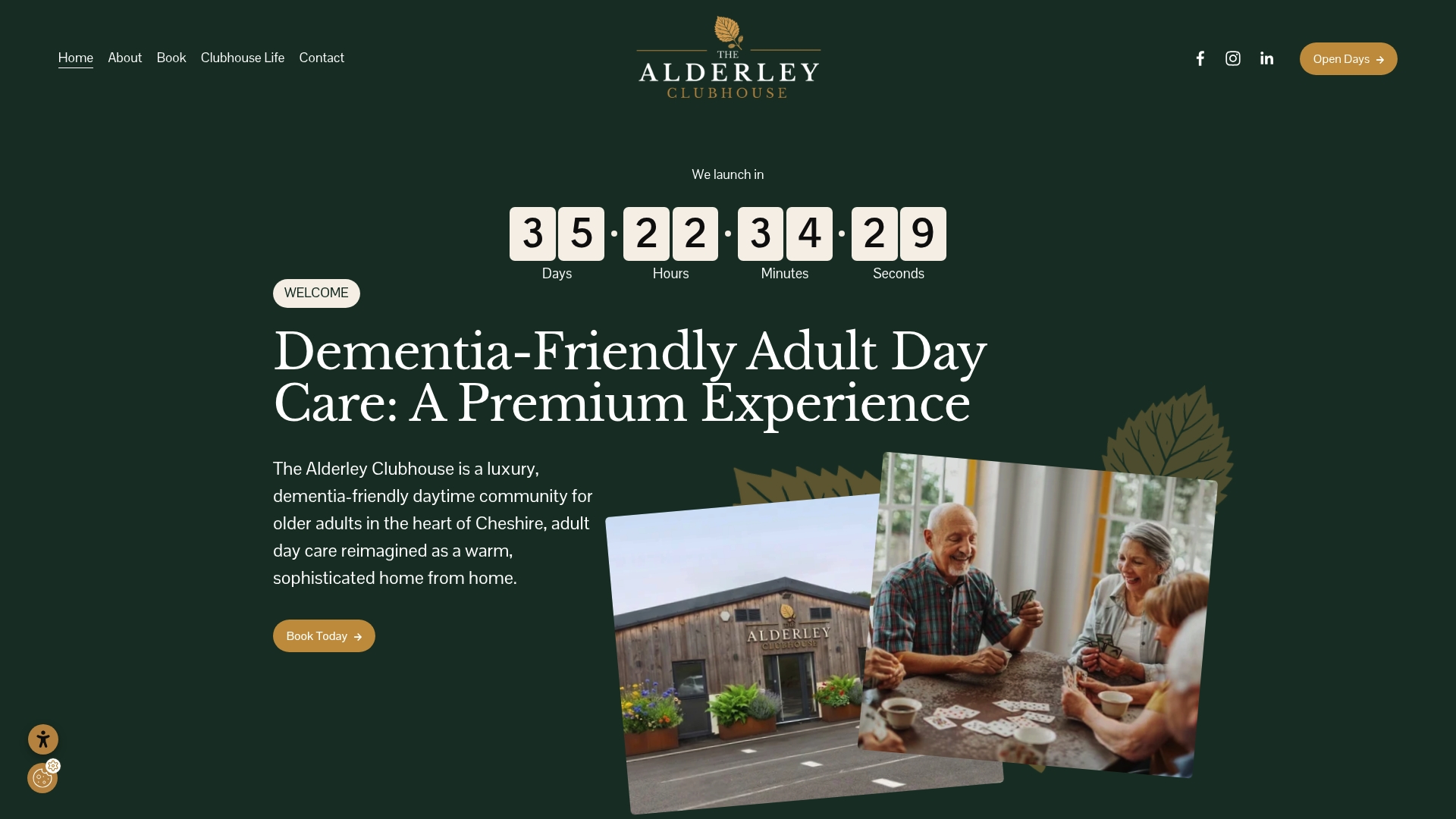
A first visit typically means meeting our care team, walking the building to see the environmental features described above in practice, and talking through a personalised plan before anyone commits. Days run 9:30am to 4:30pm, with breakfast, a cooked lunch, and afternoon tea included throughout. You can explore our facilities and activities or book directly through our Day Pass Membership page when you're ready to see it for yourself.
Where to check the official guidance
For the standards behind this article, see SCIE's risk assessment guidance, RQIA's adult day care standards, and the CQC's fundamental standards on person-centred safety.
This article is general information, not a substitute for advice from a qualified doctor. Consult a qualified healthcare professional about your own circumstances before acting on anything here.
Sources
- Conducting risk assessment to deliver safe adult day care — SCIE
- Dementia training gap exposed in England care — NIHR Dementia Researcher
- NCCMH dementia care pathway implementation guidance — Royal College of Psychiatrists
- Position paper on dementia day care centres — PMC
- Gov
FAQ
What is day care for adults?
Adult day care provides supervised daytime support, activities and meals for older adults or those with health conditions like dementia, typically run on weekdays with structured programmes and trained staff.
Which attendees benefit most from adult day care?
People experiencing loneliness, those living with mild to moderate dementia, and family carers needing dependable daytime respite all benefit, according to Harvard Health's research on day care outcomes.
What are the benefits of adult day care?
Benefits include reduced isolation, structured cognitive and social stimulation, and genuine respite for family carers, alongside professional monitoring of health changes that might otherwise go unnoticed at home.
What is another name for adult daycare?
Adult day care is sometimes called adult day services or a day centre, though the term "clubhouse" is increasingly used for premium, non-clinical models like The Alderley Clubhouse.
How much does The Alderley Clubhouse cost?
Current prices for Day Pass Membership are available on the booking page.