

Most adult day centres do not need to register with the Care Quality Commission (CQC). Registration is triggered by the delivery of regulated personal care in the place someone lives, and a day centre, by definition, isn't that place. But "not required" doesn't mean "off the hook" — the 13 fundamental standards still shape what good practice looks like, and local authorities increasingly expect providers to meet them anyway.
If you manage a day centre, do this now:
- Check whether any of your activities cross into regulated personal care (we cover the test below).
- Map your current policies against the fundamental standards, whether or not you're registered.
- Speak to your local authority commissioning team about what evidence they'll want to see before placing clients with you.
The Single Assessment Framework that CQC now uses for registered providers is a useful yardstick even if you never register, because commissioners borrow its language when they write contracts.
Key Takeaways
Meeting the CQC fundamental standards protects service quality and commissioning eligibility whether or not a day centre is legally required to register.
| Point | Details |
|---|---|
| Registration is rarely required | Day centres fall outside personal care scope because that care isn't delivered where someone lives. |
| The 13 standards still apply in spirit | Use them as an internal audit checklist even without registration. |
| Commissioners expect evidence anyway | Local authorities typically request insurance, DBS checks, and safeguarding policies before placements. |
| Documents should serve multiple standards | A single outcome note can evidence person-centred care, staffing, and governance at once. |
| Clubhouse-group demonstrates the model | Alderley Clubhouse pairs NICE-recommended Cognitive Stimulation Therapy with documented outcome-led care for up to 35 members daily. |
Table of Contents
- Why day centres usually sit outside CQC's personal care rules
- The 13 CQC fundamental standards, translated for a day centre
- When registration becomes mandatory, and how to apply
- Building an inspectable paper trail without drowning in it
- What good inspections actually look for
- Local authority contracts expect the same standards anyway
- A provider's note on prioritising what actually gets noticed
- See what fundamental-standards-led care looks like in practice
- Frequently asked questions
- Sources
Why day centres usually sit outside CQC's personal care rules
CQC's test for "personal care" hinges on one detail: where the care happens, not what the care involves. The official guidance defines personal care as care delivered in the place a person lives. A day centre is somewhere people visit, not somewhere they live, so most day centre activity falls outside the scope of registration.
That distinction trips people up constantly. Helping someone eat lunch, prompting medication, or supporting personal hygiene during a day session doesn't automatically trigger registration just because those tasks sound clinical.
Registration usually does apply when:
- Your staff provide personal care that continues into someone's home (a domiciliary-style model layered onto day attendance).
- You supervise a person through transfers between their home and your service in a way that extends "living" support beyond your building.
Registration usually does not apply when:
- You provide meals, activities, personal care prompts, and supervision entirely on your own premises during set hours.
- Attendance is voluntary and the person returns to their own home each evening under someone else's care arrangements.
Pro Tip: If your service model is genuinely borderline, don't guess. Request a formal scope determination from CQC or ask your local authority commissioning team directly. A five-minute phone call now beats an enforcement letter later.
The 13 CQC fundamental standards, translated for a day centre
CQC sets out 13 fundamental standards that registered providers must meet. Even without registration, these give day centres the clearest possible checklist for what "good" looks like, and commissioners increasingly ask for evidence against exactly this list.
- Person-centred care — activities and support reflect individual needs and preferences. Evidence: individual care plans reviewed quarterly.
- Dignity and respect — privacy is protected during personal care tasks. Evidence: a written dignity policy staff can quote from memory.
- Need for consent — people (or their representatives) agree to care and activities. Evidence: signed consent forms, updated when circumstances change.
- Safe care and treatment — risks are assessed and managed. Evidence: individual risk assessments for mobility, falls, and medication.
- Safeguarding from abuse — staff know how to spot and report concerns. Evidence: a safeguarding policy plus annual refresher training logs.
- Meeting nutritional and hydration needs — meals and drinks suit dietary needs. Evidence: menus cross-referenced against allergy and dietary records.
- Premises and equipment — the building is safe, clean, and suitable. Evidence: dated maintenance and cleaning logs.
- Receiving and acting on complaints — concerns are logged and resolved. Evidence: a complaints register showing dates, actions, and outcomes.
- Good governance — the service is run with proper oversight. Evidence: monthly management review notes.
- Sufficient staffing — enough trained staff are on shift. Evidence: rotas cross-checked against attendance numbers.
- Fit and proper staff — staff are vetted before they start work. Evidence: DBS certificates and qualification files held on record.
- Duty of candour — mistakes are disclosed honestly to those affected. Evidence: an incident log showing what was said to families, and when.
- Display of ratings — registered providers must show their CQC rating. Evidence: not applicable if unregistered, but worth tracking if you ever apply.
Use this list as an internal audit: for each standard, ask "what document would prove this to a stranger in ten minutes?" If the answer is "nothing," that's your next action item.
When registration becomes mandatory, and how to apply
Registration stops being optional the moment your service starts delivering personal care in a place someone lives, or you take on activities that CQC classifies as regulated (some clinical treatments, for example). The Regulated Activities Regulations 2014 set out exactly which activities count, and it's worth reading the regulation text rather than relying on secondhand summaries.
If you do need to register, the process runs roughly like this:
- Submit an application through CQC, including a statement of purpose describing what the service does and who it's for.
- Undergo fit and proper persons checks for anyone registering as a manager or nominated individual.
- Pay the applicable registration fee, set by CQC and reviewed periodically.
- Wait for CQC to process the application, typically several weeks to a few months depending on complexity.
CQC's own guidance for providers explains how each regulation applies in practice, which is genuinely more useful than most third-party summaries because it includes the actual intention behind each clause. Government has also consulted on changes to CQC regulation since 2024, so check for updates before you submit anything.
Building an inspectable paper trail without drowning in it
You don't need a filing cabinet the size of a small library. You need a small set of documents that each do double duty across multiple standards.
Start with these non-negotiables:
- A safeguarding policy, reviewed annually, with staff sign-off on record.
- Consent records for care and activities, updated whenever a person's capacity or wishes change.
- Nutrition and hydration logs, cross-checked against dietary needs and allergies.
- Premises checks, including fridge temperature logs and cleaning schedules.
- Staff files containing DBS checks, qualifications, and training certificates.
- An incident log that records what happened, what was said to families, and what changed as a result.
The trick to keeping this manageable is writing records that serve more than one purpose. A well-kept outcome note (what happened during a session, and what difference it made) supports person-centred care, staffing adequacy, and governance all in one document, cutting duplication rather than creating three separate forms for the same event.
Pro Tip: Ditch generic incident templates that just ask "what happened." Structure notes around outcomes: what changed for the person, what you did about it, and what you'd do differently. That single habit turns a paperwork chore into evidence CQC-style assessors actually want to read.

Digital logs beat paper for one simple reason: you can search them in seconds when a commissioner or inspector asks for evidence covering a specific date or standard.
What good inspections actually look for
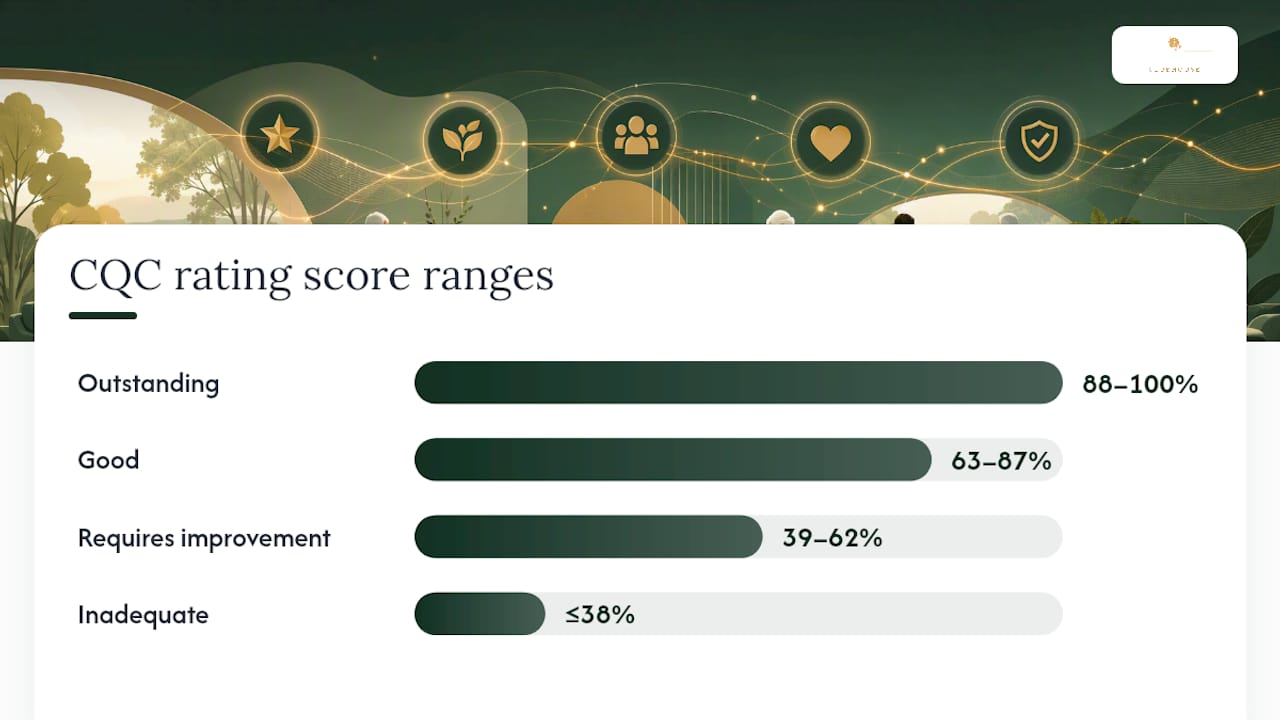
Registered providers are rated across four bands: Outstanding, Good, Requires improvement, and Inadequate. CQC calculates these by aggregating quality-statement scores, with roughly 88 to 100% scoring Outstanding, 63 to 87% Good, 39 to 62% Requires improvement, and 38% or below Inadequate.
Inspectors under the Single Assessment Framework now weight people's actual experience heavily, not just whether a policy exists on paper.
Five failings show up repeatedly in comparable services:
- Thin or generic care plans → fix by reviewing plans against real preferences quarterly.
- Missing incident follow-up → fix by logging what was communicated to families, not just what happened.
- Weak staff training evidence → fix with a training matrix reviewed every six months.
- Poor complaints handling → fix by logging every complaint, however minor, with a dated resolution.
- Inconsistent nutrition records → fix by cross-referencing every menu against individual dietary needs.
Local authority contracts expect the same standards anyway
Commissioning teams rarely care whether you're CQC-registered; they care whether you can prove quality. Contact your local authority's social services team early in your planning, before you need placements, because commissioners typically request public liability insurance, food hygiene certification, a safeguarding policy, and staff DBS checks regardless of registration status. Failing to meet basic legal obligations around food safety or health and safety can still invite action from other regulators, even without CQC involvement.
How one premium day centre organises its evidence
A well-run day centre doesn't need mountains of paperwork, just the right handful of documents, kept consistently. Two examples: daily attendance and outcome notes, and a single incident log covering every notable event.
Attendance and outcome notes map directly to person-centred care and staffing adequacy, while a clear incident log demonstrates duty of candour in action, not just in policy.
Where cognitive support is part of the offer, referencing NICE guidance on Cognitive Stimulation Therapy for mild to moderate dementia gives that clinical grounding real weight, because it's the only non-drug therapy NICE recommends for that group.
- Attendance and outcome notes → person-centred care, staffing.
- Incident log with family communication recorded → duty of candour.
A provider's note on prioritising what actually gets noticed
Prioritise evidence of people's experience first; commissioners and inspectors read that before anything else. Keep outcome notes short but specific, and liaise with local commissioners regularly, not just at renewal time. Don't forget obligations that sit outside CQC entirely: food hygiene, HSE, and planning consent still apply.
See what fundamental-standards-led care looks like in practice
Reading a checklist is one thing; watching it run day to day is another. The Alderley Clubhouse in Nether Alderley, Cheshire, was built around exactly the governance habits this article describes, chef-prepared meals logged against dietary needs, a care team trained in Cognitive Stimulation Therapy, and attendance capped at 35 members so every person's outcomes are genuinely tracked, not just recorded.
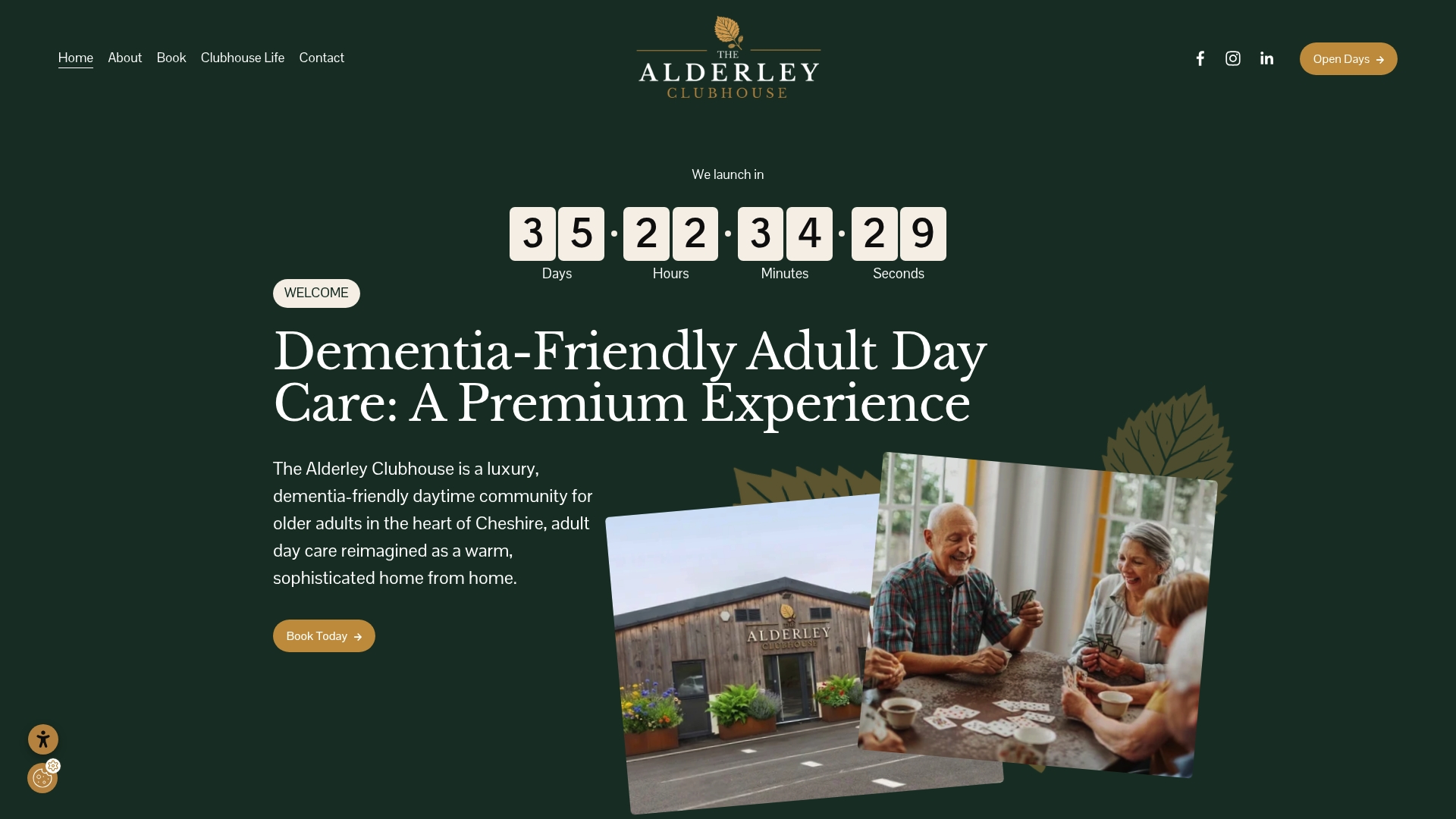
If you're a family member weighing up daytime care options, or a home care provider needing dependable respite cover, the clearest next step is to see the building and the routines for yourself. You can book a welcome tour at Alderley Clubhouse, or go straight to securing a day pass if you already know it's the right fit. Day passes cost £120 including VAT, with a 10-Session Pass giving ten days for the price of nine.
Frequently asked questions
Do all adult day centres need to register with CQC? No. Most day centres fall outside CQC's personal care definition because that care is only regulated when delivered where a person lives, not visits.
What are the CQC fundamental standards? They're 13 minimum requirements covering areas like safeguarding, staffing, consent, nutrition, and governance, set out in the Regulated Activities Regulations 2014.
How are CQC ratings explained in practical terms? Registered services score across five key questions, aggregated into four bands from Inadequate to Outstanding, based on published percentage thresholds.
Should an unregistered day centre still follow CQC standards? Yes. Local authorities routinely use fundamental standards language in procurement, so meeting them voluntarily strengthens contracting position and reduces liability risk.
What should I ask my local authority before opening a day centre? Ask what documents their commissioning team requires, typically insurance, food hygiene certification, safeguarding policy, and staff DBS checks, before you need your first placement.
This article is general information, not a substitute for advice from a qualified lawyer. Consult a qualified legal professional about your own circumstances before acting on anything here.