
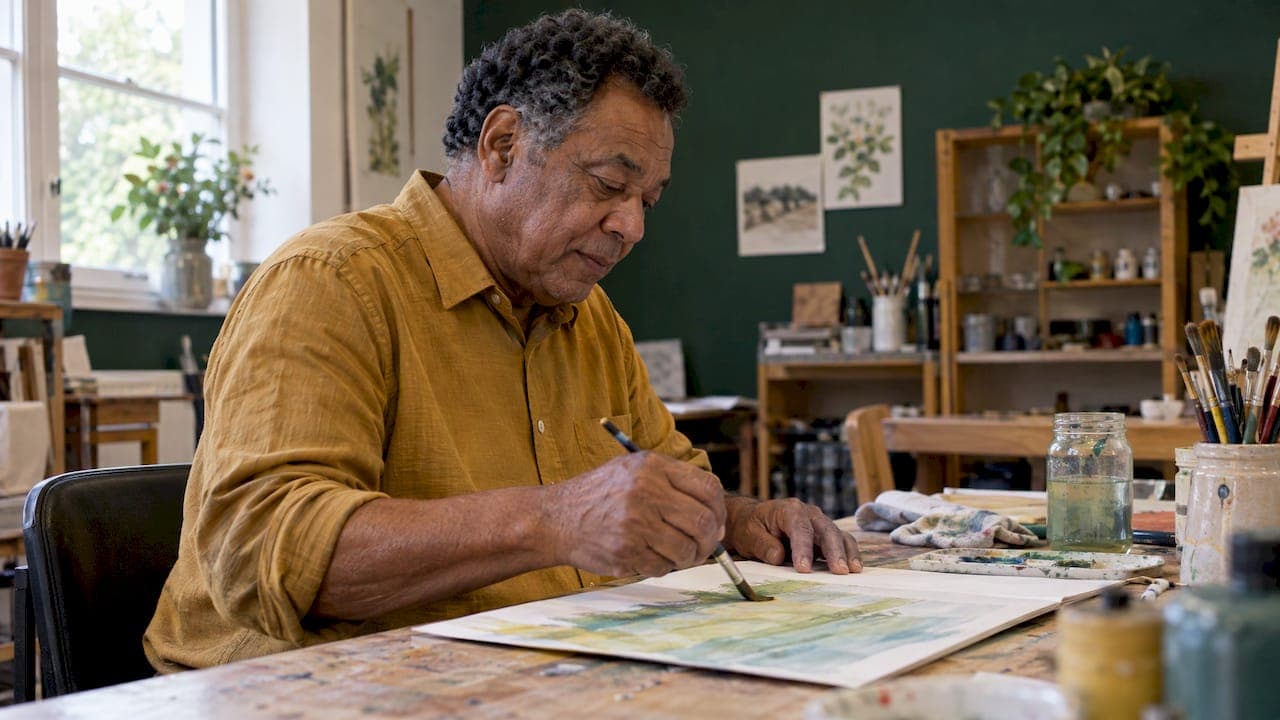
Arts activities can give a person living with dementia a way to express themselves, enjoy time with others and feel like themselves, even when words become harder to find. You don't need artistic skill, special materials or a lot of time. You need a calm space, a task pitched at the right level, and a person-centred approach that follows the person's interests and mood. Below, we explain what the research suggests, how art therapy differs from creative activities, and how to make sessions comfortable and enjoyable.
- ✓Creative and cognitive activities
- ✓Social activities and weekly live entertainment
- ✓Cognitive Stimulation Therapy
- ✓A dementia-friendly, fully accessible building
Key Takeaways
- Participatory arts can support wellbeing and social connection, and may reduce isolation for people with dementia and their carers, according to a scoping review of community-based arts.
- Art therapy is a clinical treatment led by a trained professional. Creative activities are recreational, and both can be valuable.
- Start with the senses and the person's own interests, keep the setting calm, and adjust the difficulty as abilities change.
- Watch for frustration, tiredness or signs of pain, and stop or simplify when they appear.
- A shared session, at home or in a group, often matters as much as the finished piece.
Table of Contents
- Why the arts suit people living with dementia
- Art therapy or creative activities: what is the difference?
- What the evidence says about different art forms
- Creative activities people with dementia often enjoy
- How to adapt an activity to the person
- Making the session calm, comfortable and enjoyable
- Doing it together: carers and groups
- A simple 30-minute session plan
- Try a day with us
- FAQ
- Sources
Why the arts suit people living with dementia
Dementia can make conversation, planning and remembering harder. Creative activities ask for something different. Painting, colouring, singing, handling clay or arranging flowers rely on the senses, feeling and habit rather than on recalling facts. There is no test to pass, and no wrong answer.
Research from Lancaster University and other scholars argues that community-based participatory arts can work as a social catalyst. They move attention away from the diagnosis and towards a shared creative experience, which supports dignity and autonomy (Lancaster University scoping review). In plain words, the person is a painter, a singer or a gardener for an hour, not a patient.
The same body of research suggests participatory arts can support wellbeing and social interaction, and reduce social isolation for people with dementia and their carers. A systematic review of dyadic arts interventions, where the person and their carer take part together, found possible positive effects on wellbeing, quality of life and mood, a stronger sense of identity, and less isolation.
It helps to keep expectations kind and realistic. Arts activities don't change the course of dementia. What they can do is create good moments, and good moments add up.

Art therapy or creative activities: what is the difference?
The two phrases are often used as if they meant the same thing. They don't, and knowing the difference helps you decide what to look for.
| Art therapy | Creative activities | |
|---|---|---|
| Who leads it | A trained professional | A carer, family member, activity coordinator or volunteer |
| Purpose | Clinical treatment using art media to address emotional difficulties | Enjoyment, social connection and self-expression |
| Setting | Formal, with a specific therapeutic focus | Relaxed, at home or in a group |
| Skill needed | None from the person taking part | None from the person taking part |
This distinction follows a British Psychological Society guide to psychosocial interventions, which describes art therapy as a form of psychotherapy conducted by a trained professional, and creative activities as more general, recreational engagement. Both can be beneficial.
If you're worried about low mood, distress or anxiety, speak to your GP or the person's memory service about whether a referral to a registered art therapist is right. For everyday enjoyment, you can start at the kitchen table this afternoon.
What the evidence says about different art forms
Not all art forms have been studied equally, and results should be read with care. A 2023 network meta-analysis of 39 randomised controlled trials compared several art therapies. It suggested calligraphy therapy may be the most effective for improving cognitive function and quality of life in people with dementia. The same analysis identified horticultural therapy as the most effective for reducing agitation.
What does that mean for a family? Two practical points:
- Hands-on, absorbing tasks seem worth trying. Careful brush strokes, planting, potting and tending plants all ask for steady attention and fine movement, and they can feel purposeful. Our gardening for dementia guide has simple ideas for carers.
- Choose what the person already loves. A lifelong gardener may enjoy arranging flowers far more than a watercolour class. The best art form is the one that feels familiar and pleasant.

Creative activities people with dementia often enjoy
There is no fixed list, and what works will depend on the person's history and how they feel on the day. These are good places to begin:
- Colouring and simple drawing. Large, clear outlines and chunky pencils or felt tips are easy to hold. Choose subjects that mean something, such as animals, flowers or a favourite place.
- Painting. Use thick brushes, washable paint and a large sheet. Let the person lead on colour and subject.
- Collage. Tearing and sticking paper, fabric or cut-out pictures needs no drawing skill and lets the person arrange things their own way.
- Clay or salt dough. Squeezing, rolling and shaping is satisfying through touch alone.
- Flower arranging and planting. The scent and texture bring the senses in, and the result can be put on display.
- Looking at photographs and talking about them. This is a gentle creative conversation. An NHS England activity booklet written for carers supporting people with dementia from Black Caribbean and African backgrounds suggests talking about photos, colouring images and using example questions, guided by the person's mood.
- Music, singing and movement. These sit naturally beside visual art. Our guide to starting communication through music shows how to begin in ten minutes.
If you want step-by-step ideas that fit into a short window, our guide to dementia-friendly art activities for carers takes you through starting in five minutes. For a broader mix, see these sensory activities for dementia carers.
How to adapt an activity to the person
The most useful skill is not artistic. It is watching the person and adjusting. The Alzheimer's Society suggests that families and carers can use templates, monitor frustration or loss of interest, and change task difficulty as abilities change.
Start with the senses
A dementia-friendly arts guide from the Alzheimer's Society suggests shifting attention to sight, sound, touch, taste and smell to help people engage. In practice that might mean:
- soft, bright fabrics to handle before a collage
- the smell of fresh herbs or citrus before a painting session
- gentle background music the person knows
- a cup of tea and a biscuit part-way through
Use the person's story
A retired engineer may like drawing patterns with a ruler. A former dressmaker may love sorting buttons and fabric scraps. Ask family, or look at old photographs, and build on what you find. Our guide to personalised dementia activities offers quick ways to do this.
Lower the difficulty before frustration shows
- Offer two choices, not ten.
- Pre-draw outlines or use a template.
- Use one tool at a time.
- Do the first step alongside them, then hand over.
- Praise the doing, not the result.
If the person puts down the brush, pushes the paper away or becomes restless, that is useful information. Change the task, take a break, or try again another day. Nothing is lost.
Making the session calm, comfortable and enjoyable
Setting matters as much as the activity. The Alzheimer's Society dementia-friendly arts guide lists practical steps for arts venues, including extra volunteers on hand, a quiet space, and detailed information given to visitors before they arrive. The same thinking works at home:
- Prepare ahead. Lay out materials before the person sits down, so there is no waiting.
- Choose a quiet corner. Turn off the television and reduce clutter.
- Plan the time of day. Pick the time the person usually feels most alert.
- Keep a helper nearby. A second pair of hands makes the session relaxed.
The Alzheimer's Society also advises creating a calm environment, making sure the person is comfortable, and considering soft music, nature sounds, comforting pictures or fragrances (guidance on preventing and managing aggressive behaviour). That page also notes that signs of pain or discomfort may show in facial expressions and body language. If someone seems unsettled during an activity, check for pain, thirst, a need for the toilet or tiredness before assuming they don't want to take part.
Physical comfort is part of this too. Good seating, a table at the right height and steady posture make it easier to hold a brush or shape clay. If stiffness or pain limits movement, a clinician's advice on physical therapy for older adults can help you think about how to support comfortable movement during creative activities.

Doing it together: carers and groups
Creative time is not only for the person with dementia. The systematic review of dyadic interventions above points to benefits for informal carers as well. Sitting side by side, with no one in charge, can ease the usual roles of carer and cared-for.
Groups add something else: company. Singing, painting or gardening alongside others brings conversation, laughter and a sense of belonging. If you're looking for structured group sessions, our CST 14-session plan for group activities explains how a group programme can be organised, and our dementia-friendly games are a good companion to art sessions.
If the person has Lewy body dementia, alertness can change through the day, so timing matters. See our Lewy body activities guide.
A simple 30-minute session plan
Here is a gentle structure you can follow at home.
- Settle (5 minutes). A cup of tea, a comfortable seat, soft music the person likes.
- Warm up the senses (5 minutes). Pass around flowers, fabric or fruit to smell and touch. Talk about what you notice.
- Make something (15 minutes). One simple task, such as a collage on a theme from the person's life.
- Look and enjoy (5 minutes). Admire what has been made. Choose where to display it.
Keep a short note afterwards of what they enjoyed. Over a few weeks, you will see a pattern.
A word from us on creative days
At The Alderley Clubhouse, we see every day how a creative activity changes the mood of a room. A member who was quiet at breakfast is often chatting by the time the paints come out. We design our days around that: a full programme of physical, creative, cognitive and social activities, with weekly live entertainment and no pressure to be good at anything.
We believe the setting is half the activity. Our building is purpose-designed, dementia-friendly and fully accessible, and we cap attendance at 35 members each day so that everyone is known by name. Our care team is fully qualified and trained to deliver Cognitive Stimulation Therapy, which NICE recommends as the only non-drug therapy for mild to moderate dementia. Because our days run from 9:30am to 4:30pm, there is time to settle in, create something unhurried, and enjoy lunch and afternoon tea afterwards.
For families, that gives the person a day of company and purpose, and gives you dependable respite.
Scott @ The Clubhouse
Try a day with us
If you would like to see how creative activity fits into a full day, we welcome you to come and see for yourself. Our complimentary taster day lets your loved one join in, meet the team and see how they feel: Be Our Guest for the Day. Day passes are £120 per day including VAT, and our 10-Session Pass gives you ten days for the price of nine. You can find details and book on our day passes page, or look at our open day. If you'd like to see what a typical day looks like first, our adult day care schedule walks you through it.
Each day includes breakfast on arrival, a cooked two-course lunch, traditional afternoon tea and an all-day hydration station, so the creative part of the day is never rushed or on an empty stomach. If mealtimes are a challenge at home, our guide to dementia dining may help.
FAQ
Do you need to be artistic to benefit from arts activities?
No. The point is the experience, not the result. Participatory arts are designed so that anyone can take part, and the focus is on enjoyment, expression and company. Offer simple choices and celebrate whatever is made.
Is art therapy the same as an art class?
No. Art therapy is a form of psychotherapy led by a trained professional, aimed at emotional difficulties. An art class or creative session is recreational and aims at enjoyment and connection. If you think therapy might help, talk to your GP or memory service.
What if the person becomes frustrated or refuses?
Stop, simplify or change the activity. Check for pain, thirst, tiredness or noise first, as discomfort can show in facial expression and body language. You can try again at a different time of day with an easier task.
How long should a creative session last?
Follow the person, not the clock. Many carers find 15 to 30 minutes works well, and short sessions can be repeated through the week. Finish while the person is still enjoying it.
Can a day service include creative activities for someone with dementia?
Yes. At The Alderley Clubhouse, each day includes creative activities alongside physical, cognitive and social ones, supported by a care team trained in Cognitive Stimulation Therapy. A complimentary taster day is the easiest way to see whether it suits your loved one.
Sources
- Comparative efficacy of various art therapies for patients with dementia (2023 meta-analysis)
- The Benefits of Community-Based Participatory Arts Activities for People Living with Dementia: a scoping review (Lancaster University)
- Psychosocial outcomes of dyadic arts interventions for people with dementia and informal caregivers
- A guide to psychosocial interventions in early stages of dementia (British Psychological Society)
- 5 creative activities to help people living with dementia (Alzheimer's Society)
- Dementia-friendly arts guide (Alzheimer's Society)
- Preventing and managing aggressive behaviour in people with dementia (Alzheimer's Society)
- My Activity Booklet (NHS England)
- The role of physical therapy for older adults