
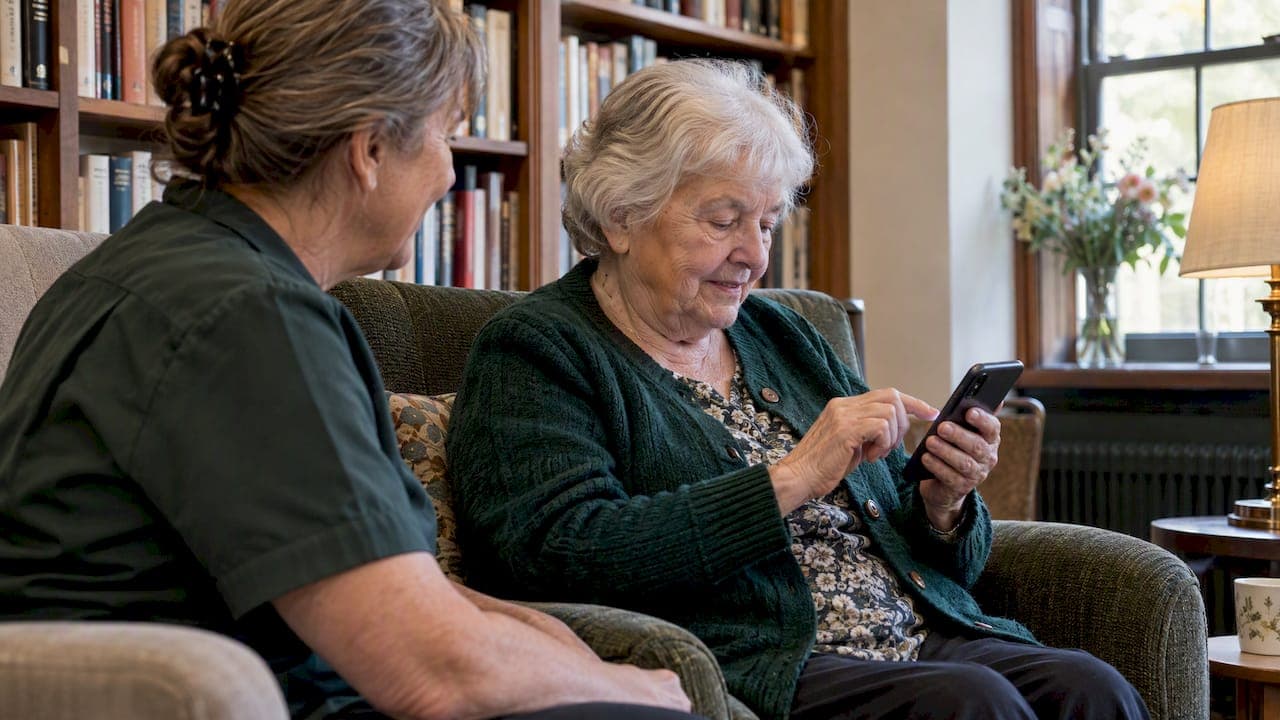
Personalised dementia activities are meaningful tasks shaped around a person's life history, interests and current abilities, rather than generic pastimes handed out to everyone. The single best first step is a practical one: fill in or update a short "This is me" profile today, then try one activity for just 10 minutes. This approach sits behind NICE guidance and Cognitive Stimulation Therapy, both of which favour person-centred engagement over one-size-fits-all activity sheets.
Key Takeaways
Personalised dementia activities, based on a person's life history and ability, significantly improve engagement and well-being through tailored, meaningful interactions.
| Point | Details |
|---|---|
| Start with a personal profile | Fill out or update a This is me profile to tailor activities to individual preferences and routines. |
| Adapt activities to stage and ability | Match activities to early, moderate, or late-stage dementia, adjusting complexity and sensory input accordingly. |
| Use simple, at-home materials | Choose activities that require minimal equipment, often using ordinary household items, and simplify steps for clarity. |
| Monitor and adjust regularly | Observe responses, record engagement, and modify activities to better suit evolving interests and abilities. |
| We customize at The Clubhouse | We personalize activities based on individual histories like baking or gardening, increasing meaningful engagement. |
Table of Contents
- A practical bank of activities to adapt for any person
- A simple process to personalise any activity
- Adapting activities for early, moderate and late-stage dementia
- Quick starters: five activities you can try in under 10 minutes
- Why personalised activities work: the evidence behind the approach
- How we make activities personal at The Alderley Clubhouse
- Try personalised activities for yourself at The Alderley Clubhouse
- FAQ
- Sources
A practical bank of activities to adapt for any person
A good activity bank gives you somewhere to start, then you shape it around the person in front of you. We find it helps to think in categories, picking whatever fits the day, the mood and the energy available.
- Creative: painting with large brushes suits people who enjoyed art or crafts; keep palettes simple and supervise if swallowing risk is a concern.
- Creative: collage from old magazines works well for someone who liked scrapbooking, and needs no special skill.
- Sensory: a textured fabric box (velvet, wool, silk) suits anyone who responds well to touch, including later stages.
- Sensory: scented hand cream massage is calming and needs no supervision beyond checking for allergies.
- Physical: seated stretches or chair yoga suit people with limited mobility; keep sessions short and watch for fatigue.
- Physical: a short walk in a familiar garden suits early and moderate stages, with one-to-one supervision outdoors.
- Reminiscence: sorting old photographs works for almost anyone and sparks conversation naturally.
- Reminiscence: listening to music from someone's twenties, a technique central to CST sessions, often triggers strong recall.
- Household: folding towels or napkins suits people who valued routine and housework, and gives a genuine sense of purpose.
- Household: polishing silver or brass appeals to former homemakers and needs only light supervision.
- Tech: video calls with family suit people who are comfortable with screens and benefit from social contact.
- Tech: simple tablet slideshows of old photos suit visual learners and need minimal setup.
- Gardening: potting bulbs or herbs suits former gardeners at almost any stage; our gardening guide for carers covers safe adaptations in more depth.
- Food-related: laying a table or buttering bread suits people who enjoyed cooking or hosting, and our notes on dining adapted for dementia show how mealtime routines double as activity.
Every one of these can be simplified: fewer steps, bigger pieces, shorter sessions. None requires expensive kit, and most use things already at home.
A simple process to personalise any activity
Turning a generic idea into something that truly fits one person takes four repeatable steps.
- Capture the life history. Use a "This is me" profile, endorsed by the Alzheimer's Society, to record past jobs, hobbies, favourite music and daily routines.
- Check current ability. A quick ability check, using Pool Activity Level style thinking, tells you whether a task should be simple, one-step or fully guided.
- Adapt materials and pace. Swap fiddly tools for larger ones, break instructions into single steps, and slow down without talking over the person.
- Observe, record and adjust. Note what sparked interest, what caused frustration, and tweak the next session accordingly.
A tiny monitoring checklist helps: did the person engage, smile, speak, or withdraw? Jot it down straight after, while it is fresh.
Pro Tip: Treat "This is me" as a living document, adding a favourite playlist or a newly discovered trigger whenever you notice one, rather than filling it in once and filing it away.

Adapting activities for early, moderate and late-stage dementia
Dementia changes over time, and so should the activities offered. Matching the task to the stage keeps engagement high and frustration low.
Early stage: people often retain skills and enjoy purposeful hobbies.
- Group CST-style sessions, such as those outlined in our early-stage CST activity plan, suit this stage well.
- Gardening, baking or light DIY tasks give genuine purpose.
- Low-supervision outings, like a familiar café visit, remain possible.
Moderate stage: tasks need breaking into single steps with sensory cues.
- Folding laundry, one item at a time, with a simple verbal prompt.
- Structured reminiscence using photographs or a memory box.
- Music sessions tied to a specific decade or event in the person's life.
Late stage: multisensory stimulation and comfort take priority.
- Hand massage with scented cream, offering gentle touch and smell.
- Textured objects to hold, explore the sensory activities guide for more ideas.
- Familiar music played softly, with no expectation of response.
Quick starters: five activities you can try in under 10 minutes
Sometimes you just need something to try right now, inspired by frequent cultural activities linked to slower biological aging.
- Hand massage: calming touch; grab scented cream; skip if skin is broken.
- Favourite song: instant mood lift; play one track; watch for overstimulation if too loud.
- Photo sort: sparks memory; pull five family photos; stop if it causes distress.
- Chair stretches: gentle movement; stand behind for support; avoid if dizziness is a concern.
- Fold napkins: purposeful task; use soft fabric; supervise near sharp table edges.
Each takes five to ten minutes and needs nothing you don't already have at home. Our quick art activities guide offers a creative sixth option when you want variety.
Why personalised activities work: the evidence behind the approach
NICE guidance recommends person-centred activities and specifically endorses group Cognitive Stimulation Therapy for people with mild to moderate dementia, with sessions typically run as a series of multiple sessions lasting around 45 minutes each, delivered twice weekly over several weeks. The Royal College of Occupational Therapists backs this up, emphasising occupation-based, individualised interventions that support identity and independence at every stage.
CST groups typically meet twice weekly for structured sessions that build on familiar themes and routines, giving people something to look forward to and a reason to keep engaging.
If someone might benefit from structured CST rather than informal activities alone, that's worth raising with a GP or memory service for a proper referral.
How we make activities personal at The Alderley Clubhouse
We've learned that small details matter more than grand gestures. Knowing that someone was a keen baker, not just that they "enjoy cooking", lets us hand them a mixing bowl rather than a worksheet. That's the difference between an activity someone tolerates and one they actually look forward to. We'd love to show you how this works in practice.
— Scott @ The Clubhouse
Try personalised activities for yourself at The Alderley Clubhouse
If you'd like to see personalised dementia activities delivered properly, a day visit can show exactly how it works, without any long-term commitment.
- Attendance is limited daily, allowing staff to know each person individually.
- Staff trained to deliver Cognitive Stimulation Therapy, the non-drug therapy recommended by NICE for mild to moderate dementia.
- A full day including meals, afternoon tea and a varied activity programme built around individual interests.
A single Day Pass Membership lets you and the person you care for try this firsthand, with no obligation beyond the day itself.
This article is general information, not a substitute for advice from a qualified doctor. Consult a qualified healthcare professional about your own circumstances before acting on anything here.
FAQ
What makes a dementia activity "personalised" rather than generic?
A personalised activity draws on someone's actual life history, former job, hobbies and preferences, captured through a tool like This is me. A generic activity, like a standard puzzle handed to everyone in a room, ignores whether that person ever enjoyed puzzles at all.
How do I know which stage of dementia someone is at for activity planning?
Stage is best assessed by a GP or memory clinic, but day-to-day clues help: early stage usually retains most skills and independence, moderate stage needs single-step prompts, and late stage responds best to sensory, low-demand input. The NHS activities guidance lists examples suited to each level.
What is Cognitive Stimulation Therapy and who is it for?
Cognitive Stimulation Therapy is a structured group programme, typically 14 sessions of 45 minutes over seven weeks, recommended by NICE for people with mild to moderate dementia. It uses themed, enjoyable activities rather than clinical exercises to support cognitive engagement.
How often should I update a "This is me" profile?
Update it whenever you notice a new preference, trigger or calming routine, rather than on a fixed schedule. Practitioner guidance treats it as a living document that grows more useful the more detail it holds.
Can activities still help someone in the later stages of dementia?
Yes, activities remain valuable in late-stage dementia when adapted toward multisensory stimulation, such as touch, familiar music or gentle scent, rather than tasks requiring memory or planning. The NHS notes that short, single-sense activities can still bring comfort and engagement.
Sources
- Recommendations | Dementia: assessment, management and support for people living with dementia and their carers | NICE
- Occupational therapy practice guideline for dementia: supporting prevention, participation and living well
- This is me | Alzheimer’s Society