
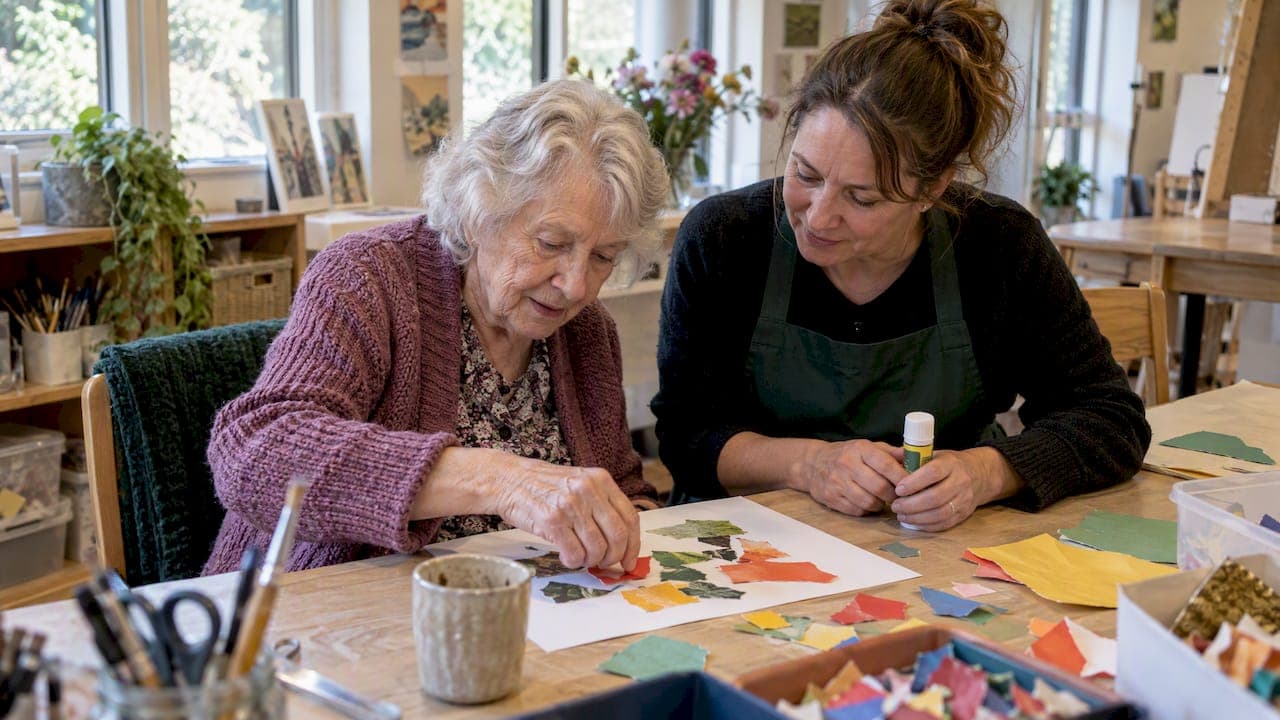
Simple, sensory art activities such as colouring, painting and collage can genuinely engage and comfort someone living with dementia, offering moments of calm and connection without needing any artistic skill. The NHS and Alzheimer's Society both encourage creative activity as part of everyday care, though the evidence is supportive rather than conclusive. These are tools for wellbeing and connection, not a treatment, and they work best when shaped around the person in front of you.
TL;DR:
- Creative activities like painting and collage can improve mood and provide sensory engagement, especially when tailored to individual abilities and preferences.
- For later-stage dementia or limited mobility, focus on sensory elements such as texture, scent, and bold colors rather than fine motor tasks or instructions.
- When distress occurs, pause the activity immediately, switch to sensory engagement, and avoid asking memory-based questions to calm the person.
- Evidence suggests these activities can enhance wellbeing and reduce caregiver burden, but outcomes vary and should be part of a person-centered approach.
Table of Contents
- Easy art activities to try today
- Adjusting activities and handling distress calmly
- Planning a short, relaxed creative session
- What the research actually shows
- Free toolkits and programmes worth exploring
- How creative sessions run at our Clubhouse
- A structured creative day at The Alderley Clubhouse
- FAQ
- Sources
Easy art activities to try today
You don't need a studio or a shopping list of supplies to start. Most of these can be set up in under five minutes with things you already have at home.
- Creative colouring: a colouring book and chunky pencils, five to fifteen minutes, light supervision. Choose large, simple designs for later stages.
- Paint-to-music (expressive lines): paper, washable paint or markers, and a playlist, ten to twenty minutes, sitting alongside your person throughout. Change the track every few minutes and talk about the lines and colours that appear, an approach borrowed from a museum paint-to-music exercise designed for pairs.
- Collage with familiar objects: old greetings cards, fabric scraps, glue stick and scissors, fifteen to twenty-five minutes, close supervision if scissors are involved. Swap scissors for tearing paper by hand for anyone with reduced dexterity.
- Clay or soft modelling: air-dry clay or modelling dough, ten to twenty minutes, hands-on alongside them. Warm the clay first so it's easier to press and shape.
- Bubble art: washable bubble mixture with food colouring and paper, ten minutes, light supervision. Purely sensory and visual, ideal for later-stage dementia.
- Simple printmaking: sponge shapes or vegetable halves with paint, fifteen minutes, close supervision. One shape and one colour at a time keeps it manageable.
- Memory-object collage: photos, fabric or small keepsakes glued to card, twenty minutes, gentle guidance throughout. Use fewer objects and broader prompts for anyone who tires quickly.
For later-stage dementia or limited mobility, slow the pace, offer fewer choices and lean on texture and colour rather than fine motor skill.
Adjusting activities and handling distress calmly
Matching the task to the person's current ability matters more than the activity itself. A simpler task, well matched, brings more enjoyment than an ambitious one that causes frustration. As dementia progresses, sensory elements such as texture, music, scent and bold colour tend to hold attention better than instructions or fine detail.
When distress appears, a short, calm routine helps:
- Pause the activity straight away rather than pushing through.
- Offer reassurance in a warm, steady voice.
- Switch to a purely sensory alternative, such as handling fabric or listening to music.
- Avoid testing memory or asking "do you remember?" questions.
- Try again later, perhaps with a different activity or a quieter moment.
A fixed countdown, sometimes called a "90 second rule", isn't an NHS-established guideline. NHS guidance instead points carers towards reading mood and ability and adapting on the spot rather than following a set time limit.
Pro Tip: Keep one simple sensory activity, like a textured fabric square or a small jar of scented hand cream, within reach for a fast, calm switch when things aren't working.

Planning a short, relaxed creative session
A session doesn't need to be long or complicated to be worthwhile. A loose structure helps it feel purposeful without feeling rigid.
- Materials: non-toxic paints, chunky pencils, soft clay, textured fabric scraps and a damp cloth for easy cleanup.
- Warm-up: five minutes of music or handling a familiar object to settle attention.
- Main activity: fifteen to thirty minutes on the chosen task, paced to energy and mood.
- Gentle reflection: a few minutes looking at what's been made, with no pressure to explain or remember it.
- Shorter version: for limited attention spans, compress to a ten-minute sensory activity alone, such as bubble art or fabric sorting.
Sit alongside your person as an equal participant rather than a supervisor, and resist the urge to test memory. Open prompts about colour, texture or sound ("that blue is lovely, what does this feel like?") invite a response without demanding recall. A favourite song or a meaningful object often does more to draw someone in than any instruction.
What the research actually shows
The evidence for creative activity in dementia care is encouraging but not conclusive. A systematic review of creative art therapy found improvements in wellbeing and quality of life across many studies, but the overall body of evidence is mixed and inconsistent, particularly where cognition is concerned. The review is also clear that art therapy, as a term, refers to a psychotherapeutic intervention delivered by accredited art therapists, while everyday creative activities remain valuable without needing that clinical label.
A small randomised trial of weekly visual-arts sessions involving 26 carer and person-with-dementia pairs found improved self-esteem for participants and reduced caregiver burden at six months, run over eight weeks with new, slightly more challenging work introduced each week. Separately, a 2025 randomised trial combining visual art-making with storytelling reported reductions in behavioural symptoms and caregiver distress that held steady to 24 weeks.

Taken together, these studies suggest real benefits for mood, communication and caregiver strain, though study designs vary widely and results won't look the same for everyone. Treat creative activity as one part of person-centred care rather than a guaranteed outcome.
Free toolkits and programmes worth exploring
A handful of trusted organisations publish free, practical material that takes the guesswork out of planning.
- The NHS activities page lists dementia-friendly ideas from reminiscence to sensory gardens and singing groups.
- The Alzheimer's Society shares creative activity guidance built around enjoyment and present-moment engagement.
- The Association for Dementia Studies at the University of Worcester publishes a free creative and sensory activities booklet suitable for home or group use.
Any of these can be adapted for a home visit or a day club session simply by scaling the materials and timing to the setting. For more short, practical ideas, our posts on sensory activities and music and communication pair well with everything above.
How creative sessions run at our Clubhouse
At our Clubhouse, our care team delivers Cognitive Stimulation Therapy, the only non-drug therapy NICE recommends for mild to moderate dementia, and creative sessions sit alongside this within our daily programme. With attendance limited each day, sessions stay small enough that staff know each person's preferences and pace. Favourites tend to be simple: music-led painting and tactile collage work using familiar, seasonal objects, chosen because they ask nothing of memory and everything of the senses.
— Scott @ The Clubhouse
A structured creative day at The Alderley Clubhouse
For families who want these activities built into a reliable, professionally supported day rather than planned from scratch at home, our Day Pass Membership offers exactly that.
A day with us includes:
- A full programme of creative, physical, cognitive and social activities, led by our trained team.
- Breakfast on arrival, a cooked two-course lunch and traditional afternoon tea.
- A purpose-designed, dementia-friendly and fully accessible building with secure parking.
- Cognitive Stimulation Therapy delivered by qualified staff within a small, capped group of 35.
You can see the full range of what a day involves on our facilities and activities page, or book a day pass directly when you're ready to try one.
This article is general information, not a substitute for advice from a qualified doctor. Consult a qualified healthcare professional about your own circumstances before acting on anything here.
FAQ
What are some simple art activities for people with dementia?
Colouring, paint-to-music, collage with familiar objects, soft clay modelling and bubble art are all simple options that need little preparation. The NHS and Alzheimer's Society both recommend keeping materials familiar and instructions minimal.
What is the 90 second rule for dementia?
There isn't an official "90 second rule" in NHS guidance. Instead, carers are encouraged to watch mood and ability closely and adapt or pause an activity whenever distress appears, rather than following a fixed time limit.
What are some creative activities for people with dementia?
Beyond drawing and painting, options include printmaking, memory-object collage, soft modelling and sensory crafts using texture, scent or music. Practitioner guidance from the Alzheimer's Society suggests treating the person as an equal participant rather than someone being tested or taught.
Does art therapy actually help with dementia symptoms?
Research is encouraging but mixed. A systematic review found improvements in wellbeing in many studies, and a small randomised trial found better self-esteem and lower caregiver burden after regular sessions, though results vary between studies.
How do I get someone with dementia interested in art who seems reluctant?
Start with one simple choice rather than several options, and use familiar objects or music to draw them in gently. Practitioner guidance from the Alzheimer's Society suggests focusing on curiosity and sensory enjoyment rather than asking someone to "do" art or remember past skills.
Sources
- Activities for dementia - NHS
- Creative Art Therapy as a Non-Pharmacological Intervention for Dementia: A Systematic Review - PMC
- How creative activities can help people with dementia | Alzheimer's Society