
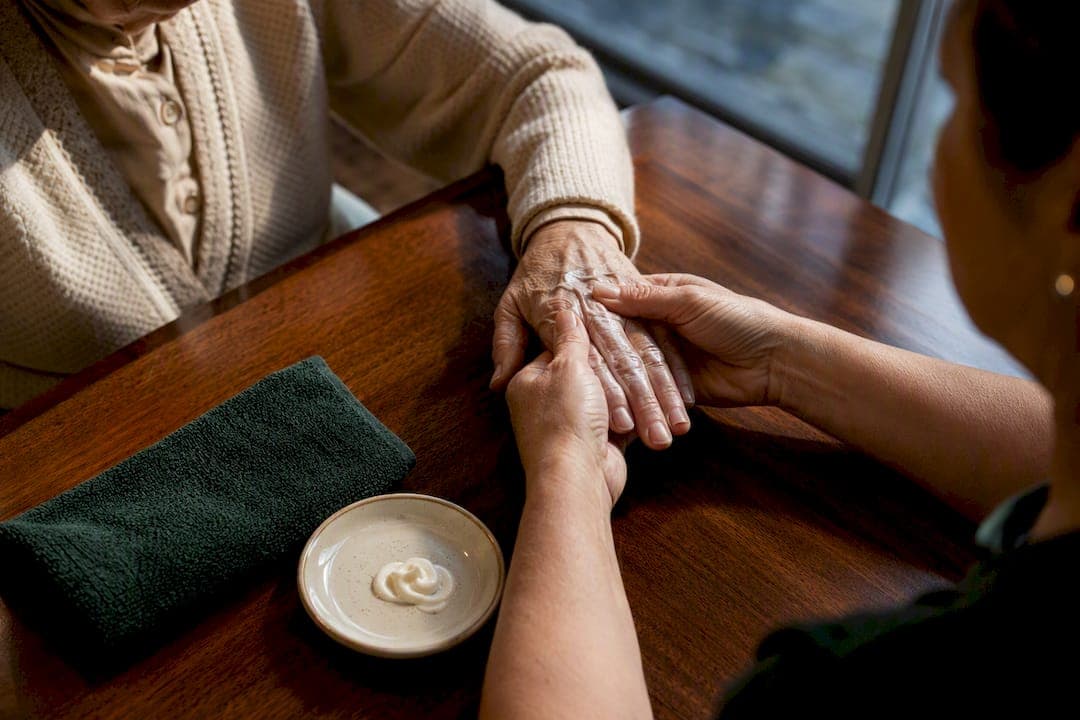
Start with personalised music, something tactile to hold (a twiddle muff or a soft fidget cushion), and a short hand massage. Keep each session to between 5 and 20 minutes, and let go of any idea of "getting it right." Match the activity to who the person was and what they loved, focus on connection over achievement, and if agitation creeps in, swap something calming for something stimulating straight away.
TL;DR:
- Personalised music playlists are the most effective sensory activity and should include 8 to 12 memory-specific songs, with volume kept moderate.
- Sensory activities should be scaled down as dementia progresses, with early-stage involving choice and challenge, mid-stage requiring guidance, and late-stage focusing on comfort.
- Repetition and consistency are crucial, as benefits of multisensory stimulation diminish without ongoing, tailored sessions delivered by trained staff.
- Creating a calm environment with minimal clutter, secure items, and appropriate lighting enhances safety and focus during activities.
- Engaging in sensory activities regularly can improve mood, behaviour, and quality of life, but they must be adapted to the individual's current stage and energy levels.
Table of Contents
- What are sensory activities for dementia, and why do they work?
- Practical sensory activities for dementia, sense by sense
- Adapting sensory activities across early, mid and late stage dementia
- Planning, environment and safety for dementia sensory activities
- What the evidence actually says about sensory activities and dementia
- How The Alderley Clubhouse puts sensory engagement into practice
- Book a trial day and see sensory activities delivered properly
- Further resources on dementia sensory activities
- Sources
What are sensory activities for dementia, and why do they work?
Sensory activities are simple, deliberate ways of stimulating sight, hearing, touch, smell or taste to help someone with dementia feel calmer, more present, and more connected to the people around them. They work because they bypass language and memory, the two things dementia damages first, and speak instead to the senses, which often stay intact much longer.
This is why a woman who can no longer hold a conversation might still hum along, note for note, to a song from 1962. Or why a man who has forgotten his grandchildren's names will still relax when someone strokes lavender-scented hand cream into his palms. The NHS recommends exactly this shift as dementia progresses: move away from activities that demand memory or logic, and lean into the five senses instead.
You will sometimes see this called dementia sensory stimulation, multisensory engagement, or simply therapeutic activities for dementia. They all describe the same idea. Give the brain something concrete to respond to, rather than something abstract to recall, and you remove the pressure that so often causes frustration or withdrawal. That single shift, from "remember this" to "feel this," is the difference between an activity that agitates someone and one that settles them.
Practical sensory activities for dementia, sense by sense
Every activity below follows the same shape: what you need, how to run it, how long it should last, one easy adaptation, and one safety note. Pick two or three to start with rather than attempting all of them in one sitting.
Hearing: sound and music
1. Personalised playlists This is consistently the single most effective sensory activity for people with dementia, and it costs nothing but time. The charity Playlist for Life has spent over a decade helping families build individual playlists rather than generic "dementia music" compilations, and the difference matters. A song someone danced to at their wedding does far more than a random collection of 1960s hits.
- Materials: a phone, tablet or simple MP3 player, headphones or a speaker, and 8 to 12 songs tied to specific memories (weddings, first jobs, national events, favourite films).
- How to run it: sit close, play one track, watch the face rather than the ears. Let silence sit between songs if needed.
- Length: 10 to 20 minutes, or however long engagement lasts.
- Adaptation: for someone in the later stages, drop to three or four songs on repeat rather than a long list, which can feel overstimulating.
- Safety note: keep volume moderate. What sounds pleasant to you can be overwhelming through headphones for someone with sensitised hearing.
2. Sing-alongs and simple percussion Group or one-to-one singing taps procedural memory, the kind that survives long after episodic memory fades.
- Materials: printed lyric sheets in large print, a tambourine, maracas or even a wooden spoon and saucepan.
- How to run it: start singing yourself first; most people join in within a verse or two rather than being asked to begin.
- Length: 15 to 20 minutes.
- Adaptation: for early-stage dementia, add simple harmonies or call-and-response verses to add challenge.
- Safety note: avoid sudden loud percussion near someone who startles easily.
3. Radio-era reminiscence Old radio clips, particularly wartime broadcasts or 1950s programmes, can trigger detailed, vivid recollection in people who otherwise struggle to recall the previous hour.
- Materials: archive radio clips (the BBC Archive has free access to many), a comfortable chair, a warm drink nearby.
- How to run it: play a short clip, then simply ask "does this remind you of anything?" and follow wherever the conversation goes.
- Length: 10 to 15 minutes.
- Adaptation: pair with a related photograph or object for mid-stage dementia to add a visual anchor.
- Safety note: some wartime content can be distressing depending on personal history. Know the person's story before you choose the clip.
Touch: hands, textures and warmth
4. Hand and foot massage This is one of the most reliably calming activities across every stage of dementia, including the most advanced.
- Materials: unscented or mild hand cream, a warm towel, a quiet space.
- How to run it: always approach from the front, say the person's name, and ask (even nonverbally, by holding out your own hand) before touching. Massage slowly, watching for tension or relaxation in the shoulders and face.
- Length: 5 to 10 minutes.
- Adaptation: for late-stage dementia, this can become the entire activity rather than a warm-up to something else.
- Safety note: check for skin conditions, broken skin or known allergies before using any cream.
5. Twiddle muffs and fidget blankets These knitted muffs, lined with ribbons, buttons and textured patches, give restless hands something purposeful to do.
- Materials: a twiddle muff or fidget blanket (many are made by volunteer knitting groups and available through local Age UK branches).
- How to run it: simply hand it over. No instruction is required.
- Length: can be left with the person for as long as they want it, from minutes to hours.
- Adaptation: for someone who was a knitter, sewer or tradesperson, choose one with tools relevant to that history, such as buckles or zips.
- Safety note: check for small, detachable buttons if the person tends to put objects in their mouth.
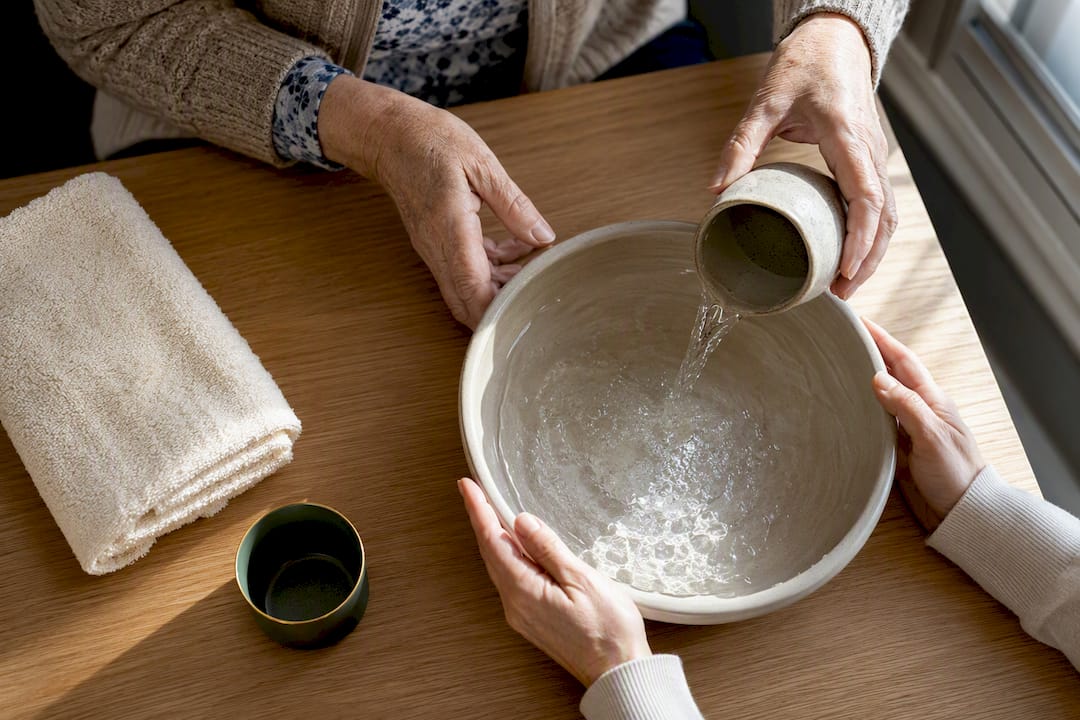
6. Textured boards and warm water soaks
- Materials: a board with varied textures (sandpaper, velvet, bubble wrap, cork), or a basin of warm water with a soft flannel.
- How to run it: guide the person's hand across each texture slowly, naming it as you go.
- Length: 5 to 15 minutes.
- Adaptation: water play works particularly well for someone who enjoyed swimming, sailing, or gardening.
- Safety note: test water temperature yourself first; sensation and safety awareness both decline with dementia, so scalding risk is real.
Sight: images, light and colour
7. Memory boxes and photo albums A curated box of objects and photographs tied to one specific period, rather than a whole life crammed into one album, gives a much clearer prompt.
- Materials: a shoebox or small case, 5 to 8 photographs, and two or three objects (a medal, a recipe card, a piece of jewellery).
- How to run it: introduce one object at a time, pause, and let the person lead the conversation.
- Length: 15 to 20 minutes.
- Adaptation: for early-stage dementia, ask them to help you build the box together as the activity itself.
- Safety note: avoid photographs from distressing periods (a funeral, an illness) unless you know the person wants to revisit them.
8. Sensory bottles Clear plastic bottles filled with water, glitter, beads or coloured oil create a slow, hypnotic visual that many people find soothing.
- Materials: a sealed plastic bottle, water, glitter or sequins, food colouring.
- How to run it: hand it over and let the person shake or tilt it themselves.
- Length: 5 to 15 minutes.
- Adaptation: add small bells inside for someone who also responds well to sound.
- Safety note: seal the lid securely with strong tape or glue to prevent spillage or choking.
9. Light projectors and shadow play Simple LED projectors that cast moving patterns of light onto a ceiling or wall can be genuinely mesmerising, particularly for people in the later stages who respond well to low, ambient stimulation.
- Materials: a battery-operated light projector (widely available and inexpensive), a darkened room.
- How to run it: run it in the background during a quiet part of the day rather than as a standalone event.
- Length: 10 to 30 minutes, often longer.
- Adaptation: pair with calm music for a fuller multisensory effect.
- Safety note: avoid strobing or rapidly flashing settings, which can be disorientating or, rarely, trigger seizures in susceptible individuals.
Smell and taste: scent kits and food-based activities
10. Small scent kits Smell is closely tied to memory and often the last sense to fade.
- Materials: small jars or cotton pads with distinct scents, coffee grounds, dried citrus peel, cinnamon, lavender.
- How to run it: offer one scent at a time, close enough to smell without being overpowering, and ask what it reminds them of.
- Length: 5 to 10 minutes.
- Adaptation: tie scents to specific memories where you know them (fresh bread for someone who baked daily).
- Safety note: avoid concentrated essential oils directly on skin, and check for respiratory sensitivities before using strong scents in enclosed rooms.
11. Baking and tea-tasting Cooking activities combine smell, taste, touch and often long-held procedural skill.
- Materials: simple ingredients for something familiar, such as scones or shortbread, and supervision throughout.
- How to run it: give the person one manageable task (stirring, cutting shapes) rather than the whole recipe.
- Length: 20 to 30 minutes.
- Adaptation: for later-stage dementia, reduce this to simply smelling and tasting the finished product rather than helping to make it.
- Safety note: supervise closely around ovens, hobs and sharp tools, and check for swallowing difficulties before offering food with texture.
Movement and multisensory settings
12. Garden box planting Gardening combines touch, smell, gentle movement and, often, deep procedural memory.
- Materials: a raised garden box, soil, seedlings or bulbs, gloves.
- How to run it: offer the person a specific, simple task such as pressing bulbs into soil.
- Length: 15 to 30 minutes, weather permitting.
- Adaptation: for someone unable to stand or manage tools, bring a small pot of herbs to the table instead so they can touch and smell the leaves.
- Safety note: watch for soil or plant material being put in the mouth, and check for any plant allergies first.
13. Seated dance and simple ball games
- Materials: a soft ball, scarves, upbeat familiar music.
- How to run it: sit in a circle, pass or throw the ball gently, or wave scarves in time to music.
- Length: 10 to 15 minutes.
- Adaptation: for a wheelchair user, focus on upper body movement only.
- Safety note: clear the space of trip hazards and ensure seating is stable before starting.
14. Snoezelen-style multisensory stations You do not need a dedicated room to recreate the principle behind multisensory stimulation environments, often known by the brand name Snoezelen. A simple table with a light, a texture, a scent and quiet music, arranged together, achieves much of the same effect.
- Materials: a small lamp or light projector, a textured cushion, a scent jar, a speaker playing quiet music.
- How to run it: let the person move between stimuli at their own pace, with no set order or goal.
- Length: 15 to 30 minutes.
- Adaptation: for early-stage dementia, this works well as a calming end-of-day wind-down rather than a main activity.
- Safety note: avoid combining too many strong stimuli at once, which can tip from soothing into overwhelming.
Tech-assisted options
15. Tablet apps for reminiscence and video calls Simple, well-chosen tablet apps can bring photographs, music and familiar faces within easy reach.
- Materials: a tablet with large icons, pre-loaded photos, and video call apps already set up.
- How to run it: prepare everything in advance so the person is not asked to navigate menus themselves.
- Length: 10 to 20 minutes.
- Adaptation: for a grandchild who lives far away, a short weekly video singalong can become a genuinely anticipated routine.
- Safety note: always supervise tablet use; unsupervised screen time can lead to frustration if an app behaves unexpectedly.
Adapting sensory activities across early, mid and late stage dementia
The same activity rarely works the same way twice as dementia progresses, and expecting it to is one of the most common sources of frustration for carers. The skill lies in scaling down complexity, not abandoning the activity altogether.
Early stage calls for real choice and a touch of challenge, because maintaining existing skills matters as much as introducing new comfort. Someone in this stage can usually manage two-step tasks and benefits from being asked to decide rather than simply told.
- Offer full gardening tasks: choosing plants, digging, planting, watering.
- Bake from a recipe with gentle reminders rather than full instructions.
- Build a memory box together as a joint project, not just as a prompt to look at later.
Middle stage needs one-step tasks and far more tactile, sensory prompting, with the carer leading gently rather than expecting independence.
- Pot up seedlings with your hands guiding theirs, rather than a full planting task.
- Offer two clear choices ("the red jumper or the blue one?") rather than open-ended questions.
- Combine activities: music playing quietly while doing a simple tactile task together.
Late stage is the point at which goals should disappear entirely. The NHS is explicit that later-stage activity should be purely sensory, focused on comfort rather than outcome.
- Hand massage with no expectation of conversation.
- A small scent box passed slowly under the nose.
- Familiar music playing softly in the background, with no requirement to respond.
Gardening shows this progression clearly: full planting in early stage, potting with help in mid stage, and simply touching and smelling herbs in a box by late stage. The activity's identity survives even as its demands shrink to almost nothing.
Timing matters as much as the activity itself. Most people with dementia have a window of best energy, often mid-morning, and a predictable dip in the afternoon sometimes called "sundowning." Watch for signs of overload: turning away, closing eyes, gripping an object tightly, or repeating a phrase with rising agitation. These are cues to stop, not to push on.
Planning, environment and safety for dementia sensory activities
Getting the approach right often matters more than the activity itself. Approach from the front, say the person's name clearly, and make eye contact before you touch or hand anything over. Demonstrate what you would like them to do rather than explaining it verbally, and leave space for silence. A nonverbal response, a glance, a smile, a hand reaching out, is still a response, and it deserves the same patience as a spoken one.
- Reduce clutter and background noise. A quiet, uncluttered room with one activity visible at a time helps concentration far more than a room full of choices.
- Check the seating and lighting. Comfortable, supportive seating and lighting that avoids glare or deep shadow both reduce confusion and falls risk.
- Secure anything of real value first. Small precious items can be picked up, pocketed or misplaced during a sensory session, so put them away before you begin.
- Set up a tray or table for tactile play. A defined surface keeps materials contained and signals, without words, that this is where the activity happens.
- Check allergies and choking risks before food or scent activities. This applies every time, not just the first time you try something new with a person.
- Keep shared items clean between uses. Twiddle muffs, textured boards and sensory bottles used across multiple people should be wiped down or laundered following standard infection-control practice, particularly in group settings.
Pro Tip: If agitation rises during an activity, don't push through it. Research on the Model of Imbalance in Sensoristasis suggests agitation is often a sign of sensory overload or underload, so the fix is usually to switch stimulus type entirely, not to intensify or abandon the activity. Swap loud music for a quiet hand massage, or a bright light projector for a warm scent box, and give the nervous system a chance to settle.
Supervision levels differ by setting. At home, one attentive carer is usually enough for most one-to-one sensory activities, though food preparation and water play always need full attention. In day-care settings, a lower staff-to-member ratio, alongside trained staff who recognise early signs of distress, makes structured activities far more consistent and safer to deliver at scale.
What the evidence actually says about sensory activities and dementia
The evidence is genuinely encouraging, but it comes with a caveat every carer should know: benefits tend to fade without repetition. A randomised trial of multisensory stimulation environments, the approach often called Snoezelen, gave participants two 30-minute sessions a week for 16 weeks and found real improvements in neuropsychiatric symptoms and dementia severity scores during the intervention. Those gains were often smaller by follow-up once the sessions stopped.
That single finding reshapes how you should think about sensory activity. It is not a one-off treatment. It behaves more like exercise, in that consistency matters more than any single powerful session.
Sensory and memory stimulation therapies can measurably improve communication, behaviour and quality of life in long-term care, but a wider literature review found that success depends heavily on staff access to training and ongoing management support, not just on choosing the right activity.
The NHS guidance aligns closely with this: simplify activities as dementia progresses, lean into the five senses, and treat personalised music as one of the most effective tools available, precisely because it needs no special equipment or training to deliver well.
Cognitive Stimulation Therapy sits alongside sensory work as the only non-drug intervention NICE formally recommends for mild to moderate dementia. It is structured, themed, and delivered in short group sessions, usually by trained facilitators, and works best as a complement to sensory activity rather than a replacement for it. If you are supporting someone with mild to moderate dementia and want structured cognitive benefit alongside sensory engagement, this is the point at which it is worth asking a day service whether they deliver CST formally, rather than trying to replicate it informally at home.
Systematic reviews of non-pharmacological interventions echo the same pattern across music and reminiscence approaches: short-term mood and quality-of-life improvements are well documented, but long-term durability depends on repetition and personalisation, not on any single clever activity idea.

How The Alderley Clubhouse puts sensory engagement into practice
We cap attendance at 35 members a day, which sounds like a small operational detail until you see what it does for sensory activity. Every member of staff knows every person by name, their history, and what they respond to, so a session can be adjusted on the spot rather than run to a script.
Our team is trained to deliver Cognitive Stimulation Therapy alongside a full programme of sensory activity, which means a member who responds beautifully to a scent kit one morning but needs quiet music instead the next gets exactly that, without disruption to the day.
A typical adapted session might see one member doing full garden box planting while, at the next table, another simply holds warmed lavender hand cream and listens to a personalised playlist. Both are having a good day. Neither is being asked to do more than they comfortably can.
If you are trying this at home, three things translate directly: keep sessions short and end them before fatigue sets in, have one calming alternative ready before you start anything stimulating, and use simple, familiar props rather than anything that needs explanation.
— Scott @ The Clubhouse
Book a trial day and see sensory activities delivered properly
A trial day at The Alderley Clubhouse runs from 9:30am to 4:30pm, a full hour longer than most local day services, and includes breakfast on arrival, a cooked two-course lunch, traditional afternoon tea, and an all-day hydration station alongside the sensory and cognitive programme.
A day pass costs £120 including VAT, and a 10-Session Pass gives ten days for the price of nine, useful if you are looking for reliable weekly respite rather than a one-off visit. What you are really paying for is consistency: trained staff who already know how to switch a member from a stimulating activity to a calming one the moment it is needed, in a building designed from the ground up to be dementia-friendly, with secure parking and a drop-off point at the door. For a family carer trying to deliver this level of tailored sensory engagement alone, day after day, that consistency is genuinely hard to replicate at home. Get in touch to arrange a trial visit and see how a structured sensory day compares with what you have been managing solo.
Further resources on dementia sensory activities
For deeper reading, the NHS activities guide remains the most reliable starting point for evidence-based ideas, and Playlist for Life offers free tools for building a personalised music playlist. The Worcester TAnDem booklet provides dozens of adaptable, low-cost activity templates for home use.
For practical, Clubhouse-written guides, see our pieces on gardening for dementia, music therapy for dementia, and what to expect from Cognitive Stimulation Therapy.
This article is general information, not a substitute for advice from a qualified doctor. Consult a qualified healthcare professional about your own circumstances before acting on anything here.
Sources
- Activities for people living with dementia | NHS
- Multisensory stimulation as an intervention strategy for elderly patients with severe dementia | PMC
- Non-pharmacological interventions for people with dementia (NLM evidence chapter)