
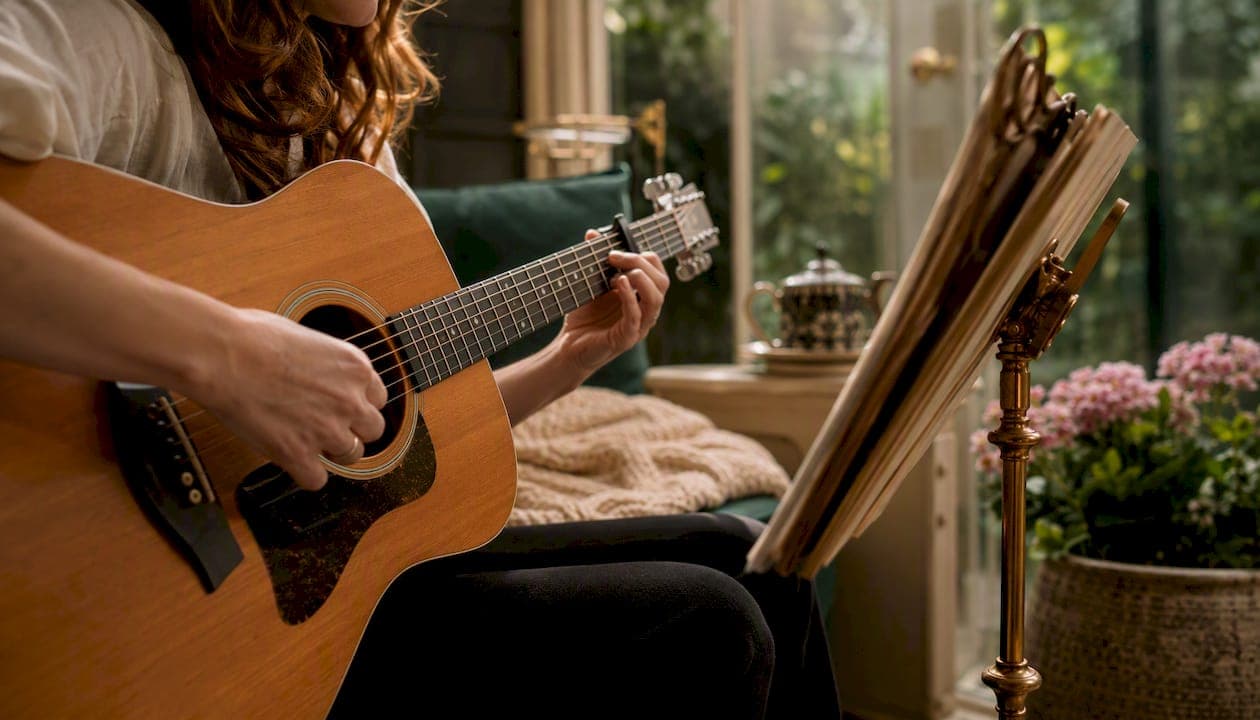
Music therapy can meaningfully reduce distress, lift mood and improve engagement in many people living with dementia, with support from randomised controlled trials and systematic reviews. A meta-analysis of 19 RCTs (n=1,024) found statistically significant improvements in general cognition, executive function, and episodic memory with music-based interventions. For carers, the practical implication is straightforward: you do not need to wait for a formal referral to begin. Start with a personalised playlist of familiar songs, and ask your GP or social prescriber about accessing a registered music therapist if you want structured support.
Quick actions you can try today:
- Put together a short playlist of songs your loved one knew well before their diagnosis, particularly from their teens and twenties.
- Try a short, calm singing session during a routine activity such as morning care or mealtimes, and notice any changes in mood or cooperation.
- Ask your GP, community nurse or social prescriber about music therapy referrals through the NHS or local charities.
- Contact the British Association for Music Therapy (BAMT) to find a registered therapist near you.
Pro Tip: Keep a simple written note after each music session: what you played, how long it lasted, and any visible changes in mood or behaviour. This record is genuinely useful when you speak to a GP or music therapist.
Key takeaways
Music therapy and music-based activities can reduce agitation, lift mood and support cognitive function in people with dementia, with the strongest evidence for mood and engagement outcomes.
| Point | Details |
|---|---|
| Start with a personalised playlist | Choose songs from your loved one's teens and twenties; this is the lowest-risk, highest-impact first step. |
| Therapist vs carer-led sessions | HCPC-registered music therapists offer clinical oversight; carer-led singing and playlists are a valuable daily complement. |
| Evidence for cognitive gains | A meta-analysis of 19 RCTs (n=1,024) found significant improvements in general cognition and episodic memory. |
| Watch for overstimulation | Stop any session if agitation, distress or sensory overload increases; note what was playing and share with the care team. |
| The Alderley Clubhouse | Offers structured music activities within a premium dementia-friendly day programme in Cheshire; trial day passes available. |
Table of Contents
- What is music therapy, and how does it differ from playing music?
- How does music affect the brain in dementia?
- What does the research show about music therapy for dementia?
- What types of music intervention are available?
- What benefits can carers realistically expect?
- Practical tips for carers: how to use music safely at home
- How do you find music therapy in the UK?
- What are the risks and limitations of using music with people who have dementia?
- What does a music-focused day at a dementia-friendly day club look like?
- Music-focused day care at The Alderley Clubhouse
- Sources
What is music therapy, and how does it differ from playing music?
Music therapy is a clinical, relationship-led intervention delivered by a practitioner registered with the Health and Care Professions Council (HCPC) and holding membership of the British Association for Music Therapy (BAMT). It is not background music, a playlist, or a sing-along activity organised by a care assistant, though all of those can be valuable in their own right. The defining feature is the therapeutic relationship: a trained music therapist uses music in a purposeful, moment-by-moment way to meet specific emotional, cognitive or social goals for the individual.
BAMT's guidance on music therapy in dementia care makes this distinction clearly. A therapist's attunement to the person's emotional state, adjusting tempo, volume or song choice in real time, is what converts a musical activity into therapy. Clinical accounts reinforce this: it is the therapist's responsiveness, not the music itself, that drives the therapeutic effect.
The table below shows the key differences carers should understand before choosing between a therapist-led session and a carer-led music activity.
| Feature | Music therapy | Music listening / informal activity |
|---|---|---|
| Who leads it | HCPC-registered, BAMT-member music therapist | Carer, activities co-ordinator or care staff |
| Therapeutic relationship | Central; therapist adapts in real time | Not present in the clinical sense |
| Typical goals | Reduce agitation, support communication, improve affect | Calm, entertain, prompt reminiscence |
| Setting examples | NHS ward, care home, private clinic, day club | Home, day centre, care home lounge |
| Evidence base | RCTs and systematic reviews | Observational studies and practice guidance |
Both approaches have value. The evidence suggests that carefully structured music listening can produce some of the same short-term benefits as therapist-led sessions, though the therapist's clinical judgement adds an important layer of safety and personalisation.
How does music affect the brain in dementia?
Music reaches parts of the brain that dementia tends to spare longer than language or episodic memory. The neural networks associated with musical memory, particularly those linked to emotionally significant songs from early adulthood, show relative preservation even in moderate-to-advanced Alzheimer's disease. This is why a person who cannot recall a family member's name may still sing every word of a song from their youth.
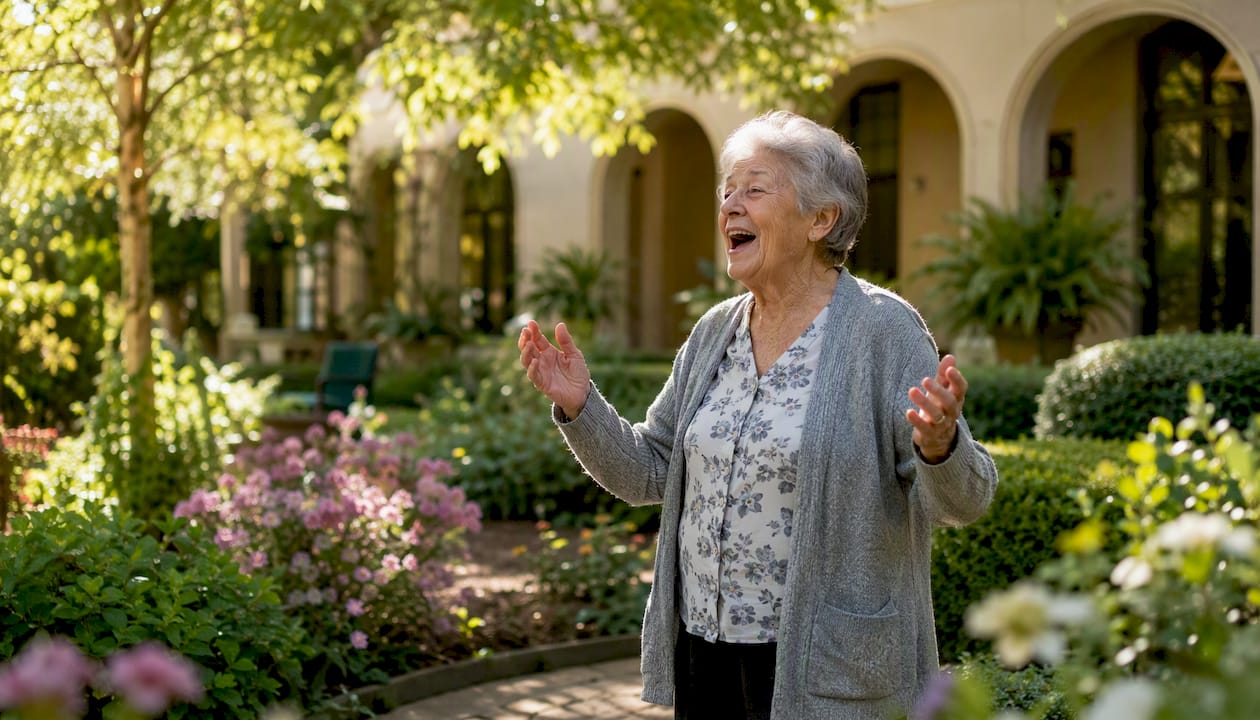
Several mechanisms work together. Familiar music activates reward and emotional processing circuits, which can reduce anxiety and agitation. Rhythm provides an external structure that supports motor and attentional regulation, which is why movement to music often comes more naturally than prompted exercise. Music also stimulates autobiographical memory networks, prompting recall of personal events and identities that other cues cannot reach.
A realist review published in Nature Medicine found that music therapy reduces distress in advanced dementia partly by meeting unmet psychosocial needs and supporting personhood as well as through neurological stimulation. The mechanisms identified included attunement, personalised music plans and staff training, all of which extend the benefit beyond the session itself.
Physiologically, music can lower cortisol levels, reduce heart rate and ease muscle tension, producing a calming effect that is observable even when verbal communication has largely broken down. These responses do not require the person to understand or engage consciously with the music; the body responds to familiar sound in ways that remain accessible throughout much of the dementia journey.
What does the research show about music therapy for dementia?
The evidence base is genuinely encouraging, though carers deserve an honest picture of its strengths and limits. The outcomes with the most consistent support across studies are mood improvement, reduced agitation and better engagement during sessions. Cognitive gains, particularly in general cognition and episodic memory, are also reported, though these tend to be modest and measured over short follow-up periods.
Key studies at a glance:
A randomised trial of 61 people with early Alzheimer's disease found significant improvements in MMSE (cognition), NPI (neuropsychiatric symptoms) and ADL (daily living) scores after three months of music therapy compared with a control group, with effects persisting at six months. Plasma biomarkers showed trends rather than statistically significant changes.
A meta-analysis of 19 RCTs (n=1,024) reported statistically significant improvements in general cognition, executive function and episodic memory across music-based interventions in people with mild cognitive impairment and dementia.
A randomised study in long-term care found that a music therapy singing group led by a credentialed therapist increased positive affect and quality of life compared with music listening and TV control over four weeks, though the small sample (37 completers) means findings should be read with care.
A multicentre single-blind RCT (N=158) comparing individual music therapy and personalised music listening found both reduced some neuropsychiatric symptoms and improved quality of life, with neither approach consistently superior across all measures.
Limitations carers should know:
- Many studies use small samples and short follow-up periods of four to twelve weeks.
- Methods vary widely across trials, making direct comparisons difficult.
- Most research focuses on mild-to-moderate dementia; evidence for advanced stages is thinner.
- Placebo effects and the general benefits of social engagement are hard to separate from music-specific effects.
- Long-term maintenance of gains after therapy ends is not yet well established.
The honest summary: mood, agitation and engagement have moderate-to-strong support. Cognitive outcomes have moderate support from the meta-analysis data. Long-term effects and benefits in advanced dementia have limited support and need more research.
What types of music intervention are available?
Not every music intervention looks the same, and the right choice depends on the person's stage of dementia, their preferences and what resources are available to you.
- Active music therapy: Led by an HCPC-registered music therapist. Involves improvisation, singing, instrument playing or movement guided by the therapist's real-time responses to the person. Suited to individual or small-group sessions with specific clinical goals.
- Group singing sessions: Can be led by a music therapist or a trained activities co-ordinator. Particularly effective for social engagement and mood. A mixed-studies systematic review found singing can positively affect psychological well-being, quality of life, cognition and engagement, though heterogeneity of methods limits firm conclusions.
- Personalised playlist listening: Carer-led, using a curated list of personally meaningful songs. Low cost, easy to implement at home, and supported by Dementia UK's guidance as a practical first step for reducing agitation and supporting mood.
- Carer-led singing: Informal singing by a family member or care staff during daily routines. An RCT coaching caregivers in singing found improvements in mood, orientation and remote episodic memory, with singing also improving caregiver wellbeing.
- Receptive listening: Structured listening to live or recorded music, sometimes with guided reflection. Can be delivered by trained staff and is useful for calming before or after personal care.
Pro Tip: For sessions during personal care (washing, dressing), try receptive listening with calm, familiar music at low volume. For reminiscence or social time, a group singing session tends to produce more visible engagement and enjoyment.
Therapist-led sessions offer clinical oversight, real-time adjustment and documented care planning. Carer-led approaches are more flexible and can be woven into daily routines, making them a practical complement rather than a replacement.
What benefits can carers realistically expect?
Music-based interventions can reduce agitation, improve mood and increase engagement, with some evidence of cognitive gains and caregiver wellbeing benefits. Here is what the research suggests you might observe, and how confident we can be in each outcome.
Mood and emotional wellbeing (moderate-to-strong evidence) Many carers notice a visible lift in mood during and shortly after a music session. Familiar songs can prompt smiling, singing along or a more relaxed posture. The singing group RCT showed significant increases in positive affect compared with TV control, and this kind of observable change is one of the most consistently reported effects across studies.
Reduced agitation and distress (moderate evidence) Agitation, restlessness and anxiety often ease during music sessions. The multicentre RCT found both individual music therapy and personalised listening reduced some neuropsychiatric symptoms, including restless behaviour. You may notice your loved one becoming calmer, less likely to repeat questions or more willing to accept personal care when familiar music is playing.
Engagement and social connection (moderate evidence) Group singing in particular tends to draw people in, even those who are otherwise withdrawn. Eye contact, spontaneous vocalisation and physical movement are common signs of engagement that carers can watch for.
Memory recall and cognition (moderate evidence) The meta-analysis of 19 RCTs reported significant improvements in general cognition and episodic memory. In practice, this might look like a person recalling the name of a song, a place or a person connected to a piece of music. These moments of recall can be brief, but they are meaningful.
Caregiver wellbeing (limited-to-moderate evidence) The caregiver coaching RCT found that singing with a person with dementia improved the caregiver's own wellbeing alongside the person's mood and memory outcomes. Shared music can ease the emotional weight of caring, even in small ways.
Practical tips for carers: how to use music safely at home
Start with a short, personalised playlist of five to ten songs your loved one knew well before their diagnosis. That single step is low-risk, costs nothing and can be tried today.
Step-by-step guide to running a short music session:
- Choose the right time. Mid-morning or early afternoon tends to work best. Avoid sessions when the person is already tired, hungry or in pain.
- Prepare the environment. Reduce background noise: turn off the television, close doors and dim harsh lighting if needed. A calm, familiar room works better than a busy space.
- Set the volume carefully. Music should be clearly audible but not loud. Start lower than you think necessary and adjust gently.
- Select music thoughtfully. Focus on songs from the person's teens and twenties, their cultural background and any music linked to significant life events (a wedding song, a favourite band). Avoid music associated with loss or grief unless the person has specifically requested it.
- Keep sessions short. Ten to thirty minutes is usually enough. Watch for signs of fatigue or distress and be ready to stop.
- Engage alongside them. Sing along gently, tap a rhythm or simply sit close. Your presence matters as much as the music.
- Note the response. Write down what you played, how long the session lasted and any visible changes in mood, movement or communication.
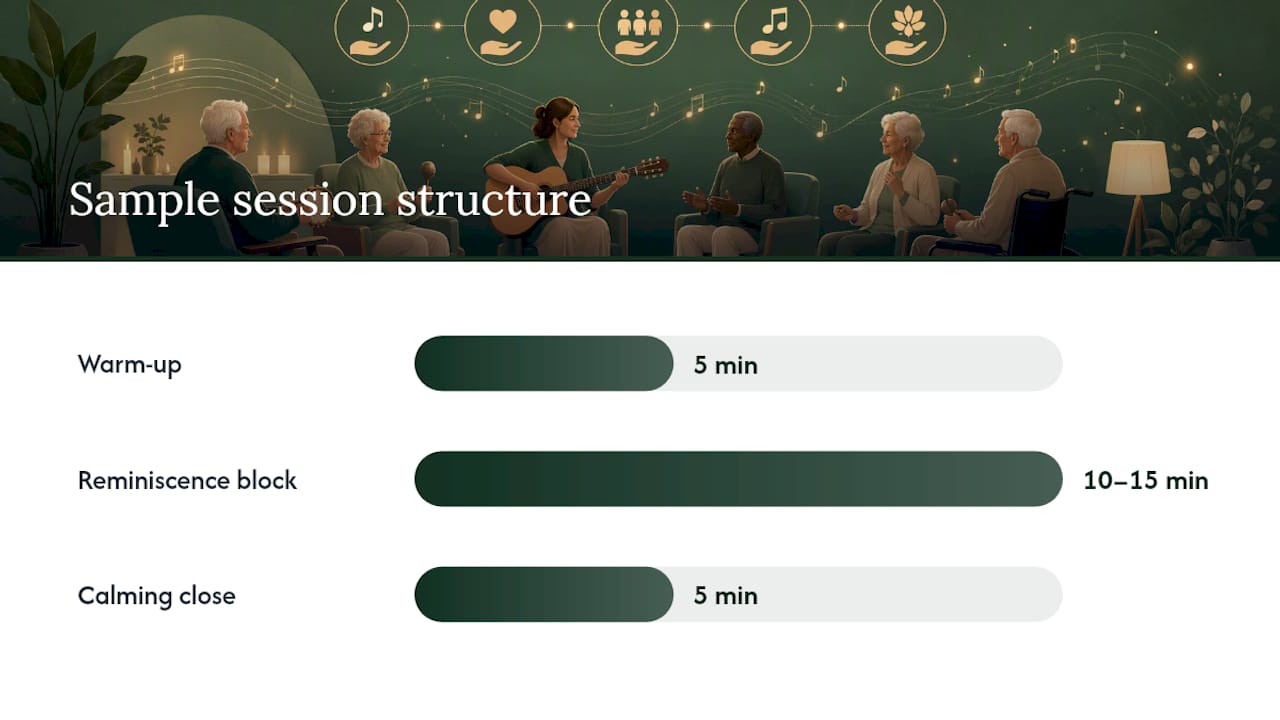
Sample session structure:
- Warm-up (5 minutes): One or two upbeat, very familiar songs to draw attention and settle the person.
- Reminiscence block (10–15 minutes): Three to five songs from their young adult years, chosen for personal significance.
- Calming close (5 minutes): One slow, gentle piece to bring the session to a quiet end before returning to routine.
Pro Tip: If the person has a cultural or religious background different from your own, ask family members or community contacts for song suggestions. Music that feels meaningful in the right language and tradition tends to produce a noticeably stronger response.
Red flags: when to stop or change the activity
- Visible distress, tearfulness or agitation that increases during the session.
- Repeated attempts to leave the room or remove headphones.
- Shouting, covering ears or other signs of sensory overload.
- Any sudden change in breathing, colour or physical state.
If any of these occur, stop the music calmly, offer reassurance and note what was playing. Share this with the care team.
How do you find music therapy in the UK?
Access to music therapy in the UK comes through several routes, and the right one depends on your circumstances.
NHS and social prescribing: Your GP or community mental health team can refer to music therapy services where they exist, particularly on NHS dementia wards or through community mental health teams. Social prescribing link workers, now widely available through GP practices in England, can connect you with local music programmes, community choirs and charity-funded therapy without a clinical referral.
BAMT directory: The British Association for Music Therapy maintains a directory of registered music therapists. When searching, look for practitioners who hold HCPC registration and BAMT membership; these are the credentials that confirm professional training and accountability. Ask specifically about experience with dementia.
Charities and community programmes: The Alzheimer's Society and Dementia UK both signpost music-related resources and local programmes. Many areas have community singing groups, reminiscence choirs or arts-on-prescription schemes that are free or low cost.
Private provision: Private music therapists typically charge per session. Costs vary by region and practitioner; check the BAMT directory for therapists offering home visits or care home sessions.
Questions to ask any provider before booking:
- Are you HCPC-registered and a BAMT member?
- Do you have specific experience working with people with dementia?
- How do you personalise sessions to the individual's preferences and stage of dementia?
- How do you communicate with family carers and the wider care team?
- What safeguarding policies do you follow?
- How do you handle a session if the person becomes distressed?
A realist evaluation of the MELODIC programme on NHS dementia wards found that embedding a music therapist within the multidisciplinary team, producing personalised musical care plans and training staff and families, produced short-term distress reduction and improved ward atmosphere. This model, where the therapist communicates regularly with care staff and families, represents good practice worth asking about when evaluating any provider.
What are the risks and limitations of using music with people who have dementia?
Music is generally low-risk, but it is not without challenges. Being aware of these helps you use it safely and respond well if something unexpected happens.
Possible adverse reactions:
- A minority of people with dementia respond to music with increased agitation rather than calm. This is more likely with unfamiliar music, high volumes or music associated with difficult memories.
- Certain songs can trigger grief, loss or distressing autobiographical memories. Watch for tearfulness, withdrawal or a sudden change in expression.
- Sensory overload can occur, particularly in later-stage dementia or in people with hearing sensitivities. Signs include covering ears, turning away or becoming rigid.
- Variable responsiveness is normal. A song that worked well last week may produce no response today. This is not a failure; it reflects the fluctuating nature of dementia.
Consent and capacity:
People with dementia retain the right to make choices about their care, including whether they want to participate in music activities. Where capacity fluctuates, use the Mental Capacity Act 2005 framework: assume capacity unless there is evidence otherwise, take all practicable steps to support decision-making, and act in the person's best interests when a decision cannot be made independently. Involve family members or advocates in decisions about music preferences and session participation. A best-interests conversation about music is far simpler than many clinical decisions, but it still deserves care.
Documentation:
Keep a brief written record after each session: date, music played, duration, observed responses (positive and negative) and any concerns. Share this with the GP, community nurse or music therapist at the next contact. If you notice a sudden change in behaviour or a consistent negative response to music, pause sessions and seek advice before continuing.
What does a music-focused day at a dementia-friendly day club look like?
A well-structured day at a dementia-friendly day club uses music at several points to support engagement, regulate mood and create moments of genuine connection. The goal is not to fill time with activity, but to use music purposefully: for reminiscence, for calm, and for the kind of social warmth that words alone cannot always reach.
| Time | Activity | Purpose |
|---|---|---|
| — | Arrival and welcome music (familiar background playlist) | Ease the transition, reduce arrival anxiety |
| — | Group singing session (activities co-ordinator led) | Social engagement, mood lift, reminiscence |
| — | One-to-one music therapy slot (HCPC-registered therapist) | Individual clinical goals: agitation, communication, affect |
| — | Chef-prepared lunch with gentle background music | Calm mealtime atmosphere, appetite support |
| — | Movement to music (seated exercise with familiar songs) | Physical activity, rhythm-based motor engagement |
| — | Calming playlist (soft, familiar music) | Regulation before departure, reduce end-of-day agitation |
| — | Departure | Settled, calm transition home |
What staff observe and record: engagement levels (eye contact, vocalisation, movement), signs of agitation or distress before and after music activities, social interaction between members, and any notable memory recall moments. These observations feed into individual care plans and are shared with families.
Staff roles: The music therapist leads clinical sessions and produces personalised musical care plans. The activities co-ordinator runs group singing and movement sessions. Care staff support individuals during all activities and apply personalised music during personal care routines, guided by the care plan.
Why music matters more than most people realise in dementia care
We see, time and again, that families arrive at music almost by accident. A carer puts on an old record to fill a quiet afternoon, and something shifts. The person who had been withdrawn for weeks starts to hum, then sing, then talk about where they first heard that song. It is one of the most moving things to witness in dementia care, and the research now gives us a clearer picture of why it happens.
What strikes us most is how often music is underestimated as a clinical tool. It tends to be seen as a nice extra, something to do when the "real" care is done. The evidence from RCTs and systematic reviews tells a different story: structured music interventions produce measurable improvements in cognition, mood and neuropsychiatric symptoms, sometimes persisting months after the intervention ends. That is not a small thing.
We would encourage every carer to start simply. A playlist costs nothing and carries no risk if you choose music carefully and watch the response. If it helps, note it down and tell the care team. And if you want to go further, a registered music therapist brings a level of clinical skill and personalisation that a playlist alone cannot replicate. Both have a place. Neither should be dismissed.
Music-focused day care at The Alderley Clubhouse
At The Alderley Clubhouse, we offer premium dementia-friendly day care in Cheshire where structured music activities are woven into every session, not added as an afterthought. Our members enjoy personalised music sessions, group singing and movement to music as part of a thoughtfully planned daily programme, delivered by professional staff in a warm, beautifully appointed setting.
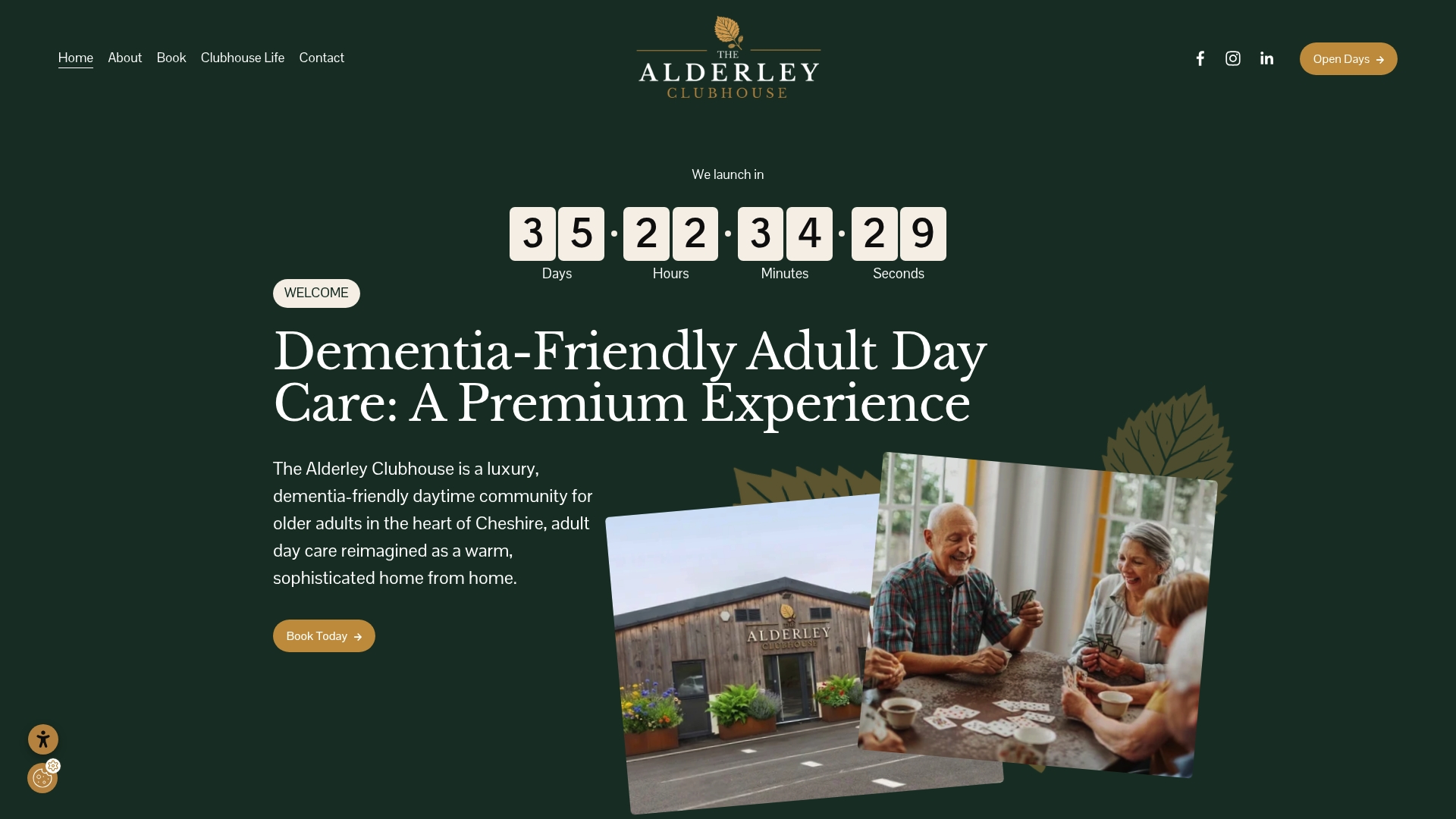
A trial day pass gives your loved one the chance to experience our full programme: chef-prepared meals, personalised activities, professional care staff and the kind of unhurried, individual attention that comes from capping our daily numbers. Every member is known by name from the moment they arrive.
Our team works closely with families to understand each person's musical history and preferences before their first visit, so the music they hear on day one already feels familiar and personal. Safeguarding, consent and individual care planning are central to everything we do.
To find out more or to book a day pass, get in touch with our team. We are happy to answer questions, arrange a visit or talk through whether The Alderley Clubhouse is the right fit for your family.
Sources
The sources below are selected for reliability: peer-reviewed RCTs, systematic reviews and established UK professional bodies. They are the most useful starting points for carers who want to read further or find local services.
- Efficacy and Safety of Music Therapy for Early Alzheimer's Disease: a Prospective, Randomized Study
- How singing can help people with dementia and their family care‑partners: a mixed studies systematic review
- The effect of music-based intervention on cognitive functions in MCI and dementia: systematic review and meta-analysis
- Social benefits of regular musical activities in early dementia: randomized controlled study
This article is general information, not a substitute for advice from a qualified doctor. Consult a qualified healthcare professional about your own circumstances before acting on anything here.