
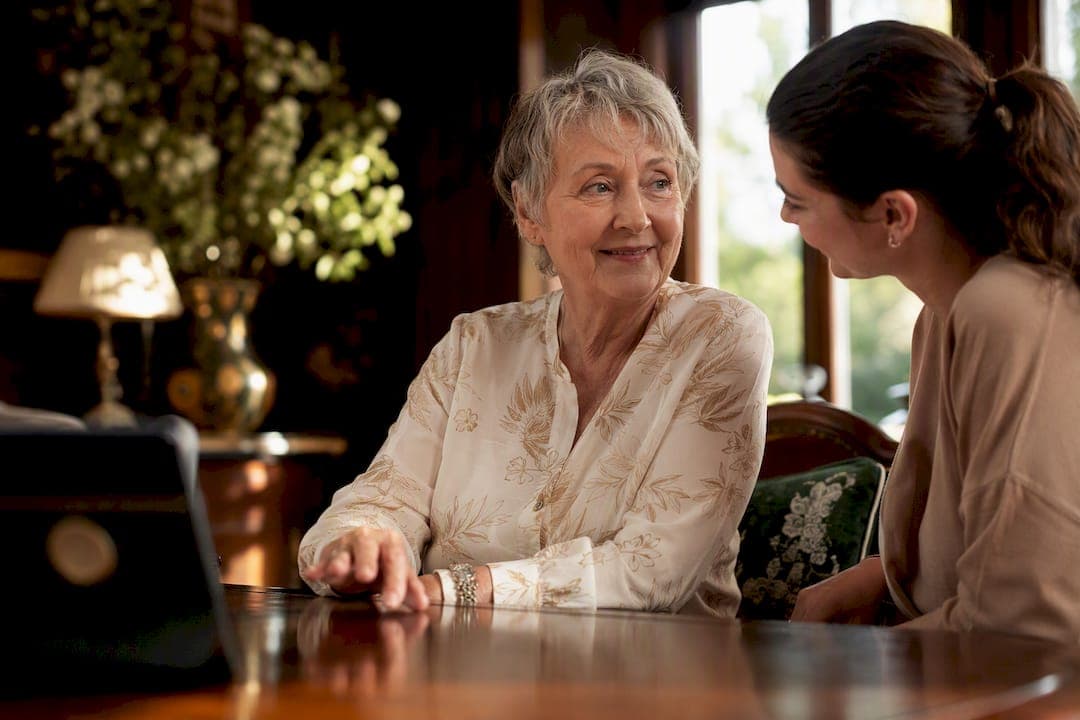
Use calm, short speech alongside clear non-verbal signals, and offer a simple choice rather than an open question, to start a meaningful interaction. Try showing a favourite photograph and asking "shall we look at this one, or sit in the garden?" Or simply reach for their hand, if that's welcome, and smile before you say a word.
TL;DR:
- Using familiar objects and simple choices, such as photos or music, helps trigger recognition and encourages engagement for people with dementia.
- Non-verbal cues like eye contact, facial expression, and gentle touch often convey more than words, especially as dementia progresses.
- Short, clear sentences and giving plenty of response time improve communication, while avoiding open questions and correcting feelings fosters trust.
- A quiet, well-lit environment with essential aids in place reduces confusion and makes conversations easier to follow.
- Structured activities and routines, like music and reminiscence, create natural opportunities for connection that support meaningful interaction.
Table of Contents
- How to encourage conversation with someone who has dementia
- Non-verbal communication and physical contact
- What to say and how to really hear them
- Preparing the room and using simple aids
- Music, reminiscence and Cognitive Stimulation Therapy
- Handling difficult moments and looking after yourself
- What years on the day-service floor have taught us
- How the Alderley Clubhouse supports easier conversation
- Where to find more detail
- Sources
- FAQ
How to encourage conversation with someone who has dementia
Getting a conversation going often has less to do with words than with timing and familiarity. Open with something pleasant and known to them: their garden, an old photograph, a song from their youth. Avoid open questions like "what would you like to do today?" and offer two options instead, such as "would you like tea or coffee?"
The NHS advises speaking clearly, giving plenty of time to respond, and never rushing to fill a silence. The Alzheimer's Society recommends bringing in familiar objects and photos to spark recognition, and gently including the person in group conversations rather than talking over them.
A few habits make a real difference:
- Choose moments when the person is usually most alert
- Keep opening lines to one or two sentences, not a paragraph
- Use props: a photo, a piece of music, a familiar object from their past
- Offer limited choices ("blue jumper or the green one?") rather than broad questions
- Repeat the invitation gently if there's no response first time
Non-verbal communication and physical contact
Words often carry less weight than tone, expression and posture, especially as dementia progresses. The Alzheimer's Society notes that eye contact, facial expression, gestures and touch may convey feeling more clearly than the words themselves, so matching your expression to your message matters as much as what you say.
Mixed signals confuse. Smiling while saying something serious, or sounding cheerful while rushing someone, sends two different messages at once, and the person will often trust the tone over the words.
Touch can be comforting, but only when welcomed:
- Approach from the front, not from behind, so you don't startle them
- Get down to their eye level rather than standing over them
- Offer a hand first and watch for a relaxed or reaching response before holding it
- Use gentle demonstration, pointing at a cup while asking about a drink, for instance
Pro Tip: If someone tenses or pulls away from touch, don't take it personally and don't push through it. Try again a little later, once the moment has passed.
What to say and how to really hear them
Simple, short sentences work better than detailed explanations, and a slightly slower pace than usual gives the brain time to process what's being said. The NHS suggests using yes/no or forced-choice questions rather than open ones, and steering well clear of anything that feels like a memory quiz.
- Ask "would you like soup or a sandwich?" instead of "what do you fancy for lunch?"
- Wait several extra seconds after speaking. It can feel like a long pause, but it's often exactly what's needed.
- Repeat back what you've heard, in your own words, to show you're listening.
- Validate feelings rather than correcting facts, so "that sounds upsetting" rather than "no, that didn't happen."
- Resist finishing their sentences, even when you're fairly sure what's coming next.
Avoid what's sometimes called "elderspeak," the exaggerated, sing-song tone some people slip into with older adults. It rarely helps and can feel patronising, chipping away at someone's sense of being treated as an equal.
Preparing the room and using simple aids
A quiet, well-lit room with the television off makes conversation considerably easier to follow. Background noise and clutter compete for attention that's already stretched thin.
Before starting, check the basics:
- Hearing aids in and switched on, glasses clean and on their face
- Seating arranged so you're facing each other, not side by side
- Photos, familiar objects or simple cue cards within reach
- Any tablet or app kept simple and familiar, since new technology can add confusion rather than remove it
Small adjustments to the physical environment often achieve more than any clever phrase.
Music, reminiscence and Cognitive Stimulation Therapy
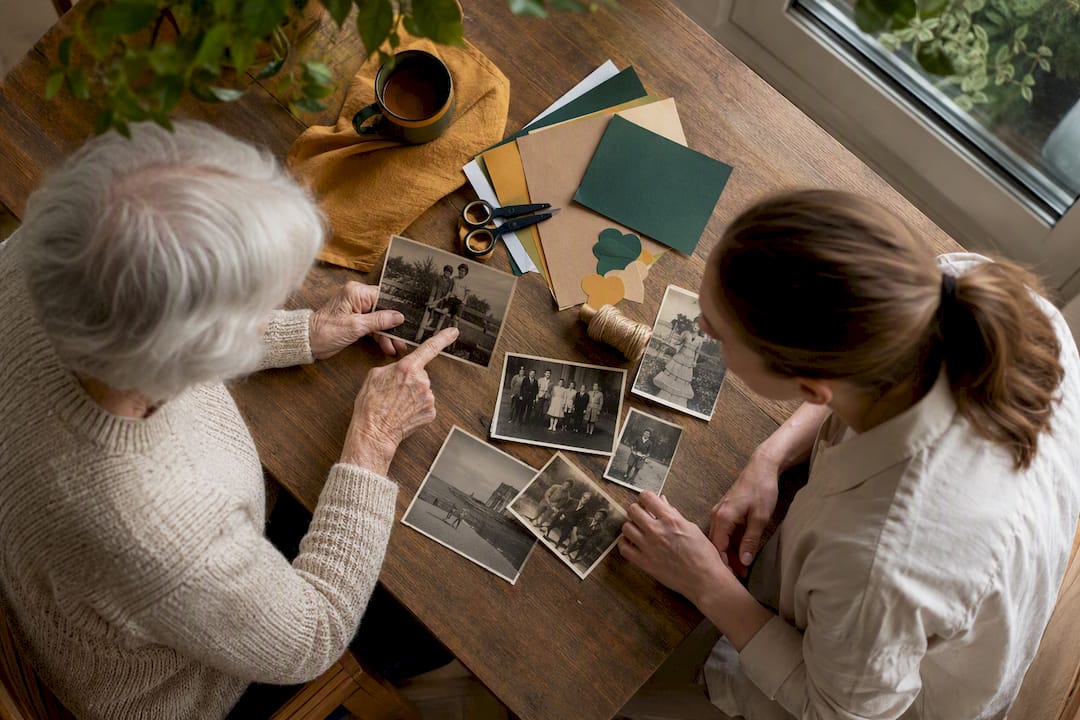
Shared activity often reaches people when words alone cannot. Music, old photographs and simple craft tasks can prompt recognition, emotion and even speech, according to the National Institute on Aging, long after fluent conversation has become difficult.
A 2025 systematic review of dementia communication strategies identified three consistent themes: understanding the person and their history, using a mix of verbal and non-verbal techniques alongside practical aids, and giving carers proper support and training.
Cognitive Stimulation Therapy, known as CST, is a non-drug therapy recommended by NICE for mild to moderate dementia. Sessions run on themed topics using structured group activities designed to encourage orientation and conversation.
Combining relational understanding with practical, structured technique consistently outperforms relying on any single method alone.
At home, this can look like ten minutes of familiar music, a themed reminiscence chat about a decade or a place, or a simple word game, echoing what a structured day programme would offer.
Handling difficult moments and looking after yourself
Distress usually eases faster through gentle redirection than through correction. Validate the feeling behind the words rather than the accuracy of the words themselves, and shift attention to something calming, a walk, a cup of tea, a familiar object.
- Step away for a few minutes if you feel your own frustration rising
- Return once you're calmer rather than pushing through a tense exchange
- Talk to a carers' support group or seek professional advice if outbursts become frequent
- Treat sudden changes in behaviour, confusion or distress as a signal to check in with a GP
Harvard Health notes that stepping away briefly and returning calm is more effective than continuing a conversation while frustrated, since your own emotional state shapes how the exchange unfolds.
Pro Tip: Keep a short mental checklist for tough days: pause, breathe, redirect. It's far easier to remember three words than a whole strategy in the moment.
What years on the day-service floor have taught us
One of our members used to grow anxious most afternoons, until we noticed she brightened whenever the piano started. Now that fifteen-minute window is built into her day, deliberately, not by chance.
Structured days create more natural openings for conversation than a quiet living room ever can. Mealtimes, activities and simple routines give people something shared to respond to, which is exactly what CST-style sessions are designed to do. Our care team trains specifically in these techniques, day after day, with the same small group of members.
— Scott @ The Clubhouse
How the Alderley Clubhouse supports easier conversation
The Alderley Clubhouse is the alternative to piecing together support alone at home, for families in Cheshire who want communication with dementia to feel less like hard work and more like connection. Our days run from 9:30am to 4:30pm, a full hour longer than most local provision, with breakfast, a cooked two-course lunch, afternoon tea and an all-day hydration station built around a programme of physical, creative and social activities.
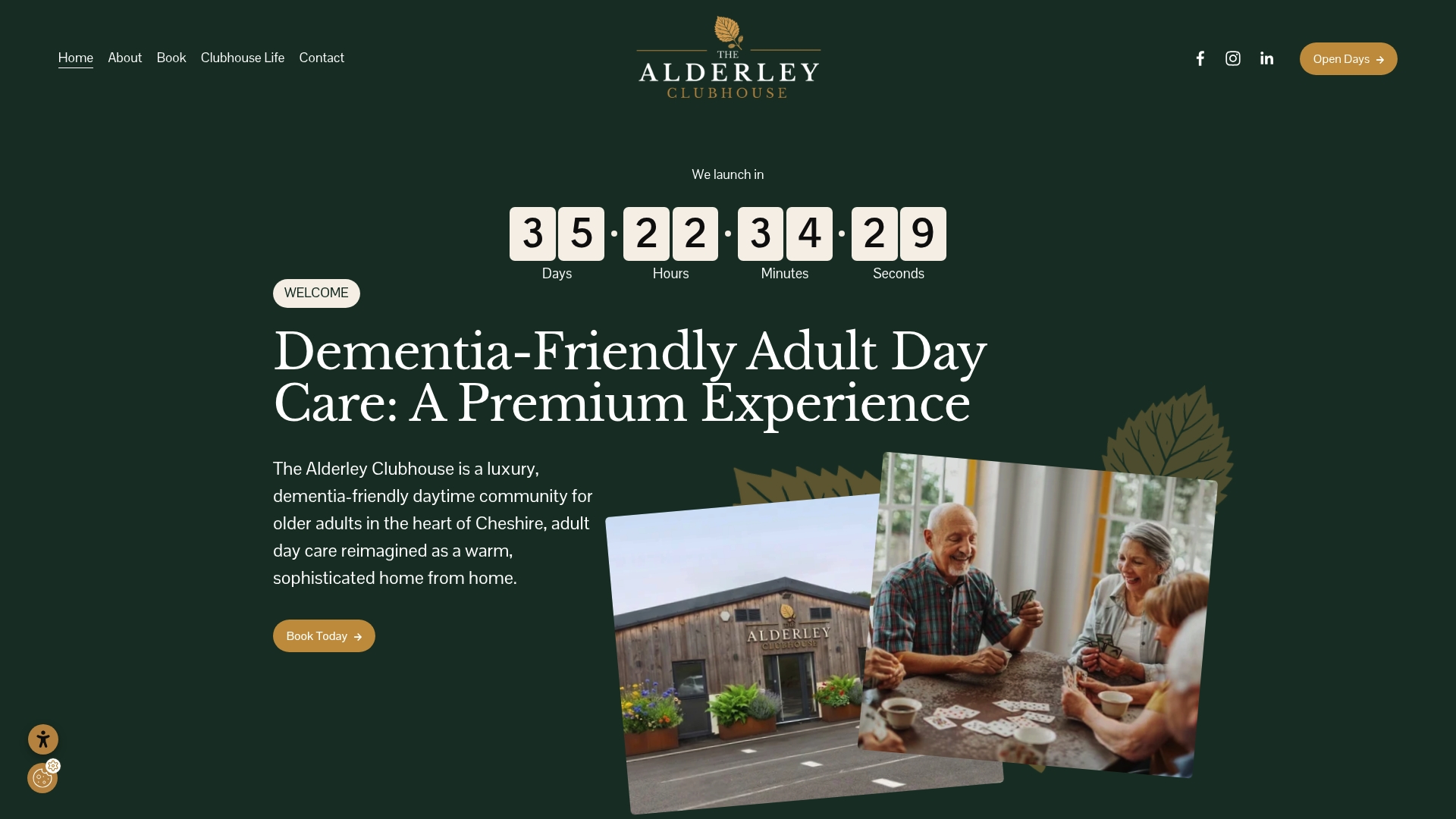
Our care team is trained in Cognitive Stimulation Therapy, the approach NICE recommends for mild to moderate dementia, and attendance is capped to ensure personal attention for all members. Families booking respite, or simply wanting a calmer, more connected day for someone they love, can view day pass and membership options and arrange a visit to see the space for themselves.
Where to find more detail
- NHS guidance on communicating with dementia, practical dos and don'ts for daily conversations
- Alzheimer's Society communication tips, including a downloadable factsheet on visual aids
- 2025 systematic review summarising the evidence behind personalised dementia communication
- Best amenities for dementia support via AFHCircle, on accessible facility design
This article is general information, not a substitute for advice from a qualified doctor. Consult a qualified healthcare professional about your own circumstances before acting on anything here.
Sources
- Communicating with someone with dementia | NHS
- How to communicate with a person with dementia | Alzheimer’s Society
- Systematic review: Communication strategies for personalised dementia care (2025)
FAQ
What are effective ways to communicate with someone who has dementia?
Speak in short, simple sentences, use a calm tone, and offer limited choices rather than open questions, giving the person plenty of time to respond before repeating yourself.
What signs suggest dementia is nearing its final stage?
Signs can include reduced eating and drinking, extreme drowsiness, difficulty swallowing and loss of speech, though the timeline varies considerably between individuals, so any noticeable decline is worth discussing with a GP or specialist nurse.
What are the stages of dementia?
Dementia is often described using a three-stage model, early, middle and late, though some clinical scales break progression into seven finer stages; communication needs shift at each point, moving from occasional word-finding difficulty toward reliance on non-verbal cues.
What are some good questions to ask someone with dementia?
Simple, present-focused questions work best, such as "do you like this song?" or "shall we sit outside?", rather than questions that test memory, like asking what they had for breakfast.
How can day programmes like the Alderley Clubhouse support communication?
Structured days built around shared meals, music and CST-style activities create repeated, low-pressure opportunities for connection that are harder to recreate consistently at home alone.