
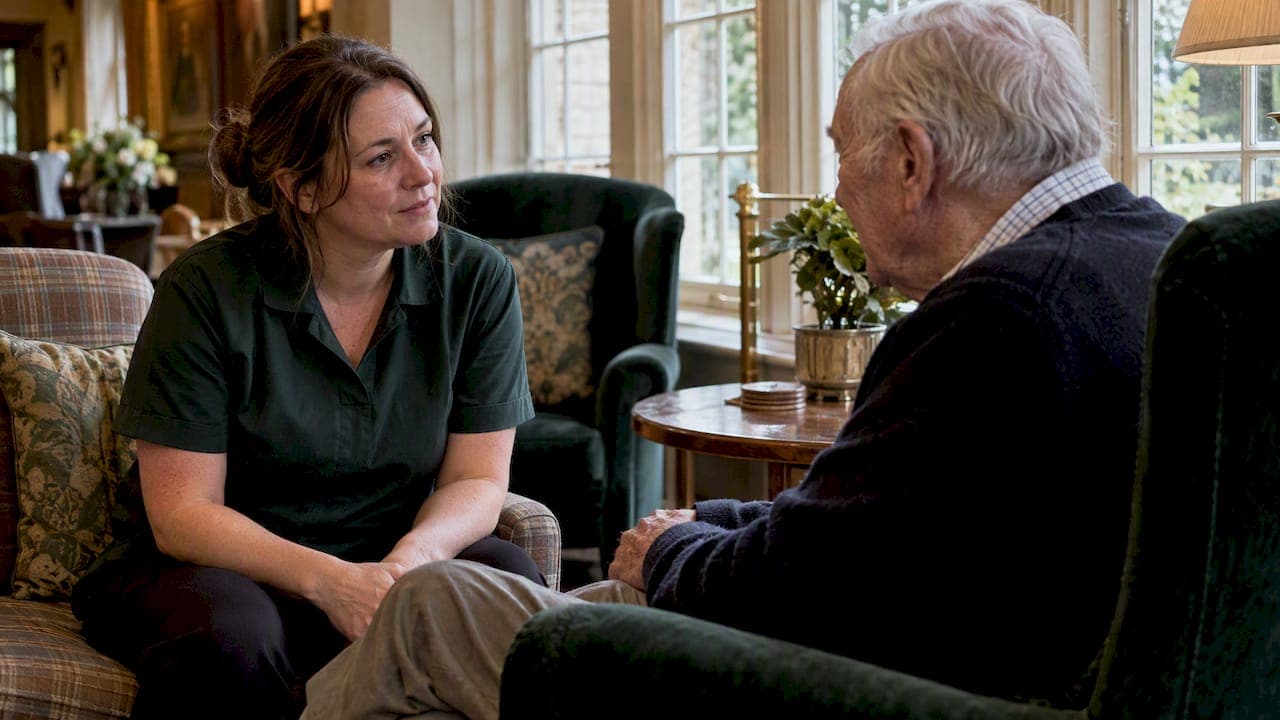
When someone with dementia becomes agitated, stay calm, keep your voice low and slow, and remove any obvious trigger such as noise or a crowded room before trying anything else. Non-drug, person-centred steps come first; medication is a last resort, reserved for serious risk of harm or severe, sustained distress, according to NICE-aligned NHS guidance. If the change feels sudden or unlike the person's usual pattern, treat it as a possible medical issue rather than "just dementia" and get it checked.
TL;DR:
- Most agitation in dementia is caused by reversible factors such as physical discomfort, sensory overload, or confusion, rather than the disease progressing.
- A quick assessment should include checking for pain, infection, medication changes, sleep issues, and environmental triggers before considering medication.
- Non-drug management focuses on communication, environmental adjustments, and routine activities; effective strategies require consistent trial over one to two weeks.
- Medication, especially antipsychotics, should only be used when there is a serious risk of harm or severe distress, and always at the lowest effective dose with regular review.
- Keeping detailed records of episodes helps identify patterns and informs care plans, and carer wellbeing is essential to sustain effective support.
Table of Contents
- What is agitation in dementia and why it happens
- How to recognise triggers and a quick assessment checklist
- Evidence-based non-drug management: communication, environment and routine
- When to seek clinical help and how medication is used
- After an episode: recording, the IPA cycle and updating your care plan
- Looking after yourself: carer wellbeing and respite options
- How The Alderley Clubhouse applies these approaches
- Day pass membership: a practical next step for respite and support
- FAQ
- Sources
What is agitation in dementia and why it happens
Agitation covers a range of behaviours: pacing, calling out, restlessness, resisting care, or sudden irritability. It sits within what clinicians call behavioural and psychological symptoms of dementia (BPSD), a broad term for the emotional and behavioural changes that can accompany memory loss.
It rarely comes from nowhere. Most agitation is a form of communication from someone who can no longer explain what is wrong in words. A need goes unmet, a sound feels too loud, or a room full of strangers becomes frightening because the context has been lost.
Common underlying drivers include:
- Unmet physical needs such as hunger, thirst, pain or needing the toilet
- Sensory overload: too much noise, clutter or unfamiliar faces at once
- Confusion about place, time or the people around them
- Frustration at being unable to complete a once-simple task
Agitation can appear at any stage of dementia, not only in advanced disease, which is part of why the IPA consensus framework treats it as something to investigate afresh each time rather than assume is simply "the dementia getting worse".
How to recognise triggers and a quick assessment checklist
Before assuming agitation is behavioural, run through the physical and environmental causes that are often reversible. A short, methodical check saves distress for everyone and often resolves the episode without any need for medication.
- Check for pain: look for grimacing, guarding a body part, or resistance to being touched or moved.
- Check for infection: a urinary tract infection or chest infection commonly shows up as agitation before any other symptom.
- Check constipation, hunger and thirst, all frequently overlooked once someone can no longer say they are uncomfortable.
- Review recent medication changes, including new prescriptions, dose increases or missed doses.
- Check sleep: poor sleep the night before often shows up as agitation the following afternoon.
- Check the environment: noise, temperature, lighting, or too many people in the room at once.
Watch for red flags that point to delirium rather than straightforward dementia-related agitation: acute onset over hours or days, fluctuating alertness, or new hallucinations. Delirium is common in people with dementia and often presents as restlessness or aggression rather than drowsiness, and dementia itself is the single biggest risk factor for it, according to delirium guidance from Oxford Health NHS. Any of these signs warrants same-day medical assessment.
A practical first move before calling the GP: a trial of regular paracetamol for a few days can reveal unrecognised pain as the cause, alongside checking temperature and recent infections to report back.
Pro Tip: Keep a simple note of what changed in the 24 hours before the agitation started: new medicine, missed meal, visitor, or broken sleep. That detail often points straight to the cause.
Evidence-based non-drug management: communication, environment and routine
Once physical causes have been ruled out or treated, the next layer is entirely about how you communicate, how the environment feels, and what the day looks like. This is where most agitation can genuinely be prevented, not just managed in the moment.
Communication that calms rather than escalates:
- Validate the feeling before correcting the fact: "You seem worried, let's sit down" works better than arguing over what is true.
- Use short, simple sentences and give one instruction at a time.
- Name the emotion you can see: "You look frustrated" often defuses tension faster than logic.
- Avoid confrontation or trying to win an argument; a dementia brain cannot be reasoned out of distress.
Environmental adjustments that reduce triggers: lower background noise, use warmer and softer lighting, keep familiar objects within reach, and use clear, simple signage for doors and toilets. NHS guidance on the home environment sets out exactly these practical changes, and they translate directly into calmer behaviour because a predictable, legible space asks less of a struggling memory.
Routine and meaningful activity matter as much as the physical space. A structured day with regular mealtimes, familiar seating and planned one-to-one activity reduces the drift and boredom that often precede agitation. Music, in particular, reaches people even in later-stage dementia, and sensory activities such as handling textured objects or garden time can settle restlessness without a single word being exchanged.

Group Cognitive Stimulation Therapy (CST) has level 1 evidence for improving quality of life in people with mild to moderate dementia, and multicomponent non-pharmacological programmes show real benefit for behavioural symptoms more broadly, according to a systematic review in the British Journal of Psychiatry. That review puts CST's effect on quality of life at a standardised mean difference of 0.25, a meaningful improvement for a non-drug approach, and found that multicomponent interventions, those combining staff training, structured activity and sensory input, ranked highest for reducing BPSD in randomised trials.
A separate network meta-analysis of 71 randomised controlled trials found that multicomponent caregiver interventions, the kind that teach communication skills alongside structured programmes, had the largest effect on both behavioural symptoms and carer stress, according to a 2025 network meta-analysis. That consistency across two independent reviews is a strong signal that combining several non-drug approaches beats any single tactic on its own.
Give any new approach, whether it is a change to the seating plan or introducing a music session, around one to two weeks of consistent trial before judging whether it works. Note what you tried, when, and how the person responded; this record becomes genuinely useful later when speaking to a GP. For environment-specific ideas, our room-by-room guide to dementia-friendly design and our piece on communication techniques for carers go into more practical detail.
Pro Tip: If a strategy has not reduced agitation within two weeks, change the approach rather than abandoning structure altogether. Routine itself is doing some of the work even when the specific activity is not.
When to seek clinical help and how medication is used
Medication is never the first answer. NICE-aligned guidance is explicit that antipsychotics should be considered only when there is a risk of harm to the person or others, or severe and sustained distress that non-drug approaches have not relieved, and even then at the lowest effective dose for the shortest possible time, with review at least every six weeks, according to regional NHS prescribing guidance.
When you contact the GP, it helps to be specific rather than general. Bring:
- A timeline of when the agitation started and whether it is constant or comes in episodes.
- What you have already tried (environment changes, routine, the paracetamol trial) and what happened.
- Any recent medication changes, infections, falls or changes in continence.
- Whether the change was sudden (possible delirium) or gradual.
The clinician may order basic tests: bloods, a urine sample to check for infection, and a delirium screen if onset was acute. These are quick and routine, and ruling out a urinary tract infection or constipation before anything stronger is tried is standard practice.
A few safety points matter here. Benzodiazepines carry a real risk of increased falls and confusion in older people and are used cautiously, if at all. Antipsychotics carry a measurable risk of stroke and increased mortality in people with dementia, which is why shared decision-making and regular review matter so much. People with Lewy body dementia or Parkinson's-related dementia can react severely to antipsychotics, so this history should always be flagged clearly to whoever is prescribing. Watchful waiting, simply removing stressors and observing, is itself a valid, evidence-supported strategy for many episodes rather than an immediate escalation.
After an episode: recording, the IPA cycle and updating your care plan
A short, consistent record turns one difficult afternoon into useful information for next time, and it is exactly what professionals need if you do escalate.
- Note the time and what was happening just before the agitation started.
- Record what you tried in response and how long it took to settle.
- Note the duration of the episode and anything unusual about it.
- Flag any pattern you notice over several entries, such as always happening before lunch.
This fits naturally into the Investigate, Plan, Act (IPA) cycle recommended by the International Psychogeriatric Association. Investigate the likely cause using your checklist, plan one specific intervention with a measurable goal, such as "reduce evening pacing by introducing a calm wind-down routine", then act and review after a set period. Share your notes with the GP or memory service when patterns repeat or episodes intensify; specific timing and triggers are far more useful to a clinician than a general description of "bad days".
Looking after yourself: carer wellbeing and respite options
Supporting someone through repeated agitation is exhausting, and your own wellbeing is not a luxury item on the list. If you ever feel at risk of harm yourself, step back, ensure the person is safe where they are, and call for help rather than trying to manage alone.
- Build in short daily breaks, even ten minutes away from the room, to reset before responding.
- Ask one other person, family or friend, to take a fixed slot each week so you can rely on it.
- Watch for your own warning signs: poor sleep, irritability or dreading the next episode are all signals to ask for more support, not to push through.
Respite comes in several forms: day services, short residential stays, or home care cover. Whichever you consider, check quickly for staff dementia training, a visible activity programme, and a calm, predictable routine, all signs of a setting that understands agitation rather than simply managing it. Our guide on spotting red flags during a day centre visit is worth reading before you book anywhere.
Pro Tip: Visit a day service unannounced once, if you can, rather than only on a scheduled tour. The ordinary Tuesday is more telling than the showcase visit.
How The Alderley Clubhouse applies these approaches
We built The Alderley Clubhouse around the same principles this guide describes. Our care team is trained to deliver Cognitive Stimulation Therapy, the non-drug therapy NICE recommends for mild to moderate dementia.
Each day runs with small groups, so members are known by name rather than lost in a crowd, alongside live music, an all-day hydration station, and calm, unhurried mealtimes. The building itself follows dementia-friendly day centre design principles: predictable layout, soft lighting and clear signage, the same features NHS home guidance recommends for a calmer environment.
— Scott @ The Clubhouse
Day pass membership: a practical next step for respite and support
A Day Pass Membership gives your family member a structured day from 9:30am to 4:30pm, breakfast through to afternoon tea, CST-led and sensory activities, and a fully trained team who understand how to prevent agitation before it starts, not just respond to it once it happens.
We have a daily attendance cap to ensure a personalised experience, and pricing is available on request when you enquire. If you are weighing up respite options, book a taster day through our Day Pass Membership page or look at our facilities and daily activity schedule to check it fits before you commit.
This article is general information, not a substitute for advice from a qualified doctor. Consult a qualified healthcare professional about your own circumstances before acting on anything here.
FAQ
What should I do when someone with dementia becomes agitated?
Stay calm, lower your voice, and check for an obvious trigger such as pain, noise or hunger before anything else. Validate the feeling rather than arguing the facts, remove the immediate stressor where you can, and only consider contacting a GP if the episode is severe, sudden, or involves risk of harm.
At what stage of dementia does agitation usually start?
Agitation can appear at any stage of dementia, including relatively early on, rather than only in advanced disease. The IPA consensus framework treats each episode as something to investigate freshly rather than assume is tied to a fixed stage.
What do UK guidelines recommend for treating agitation in dementia?
Non-pharmacological, person-centred approaches come first, with medication reserved for risk of harm or severe, sustained distress, according to NICE-aligned NHS guidance. When antipsychotics are used, they are given at the lowest effective dose and reviewed at least every six weeks.
What are the early signs of anger or agitation in Alzheimer's disease?
Early signs often include restlessness, pacing, repeated questioning, resistance to care tasks, or sudden irritability over something that would not normally bother the person. These frequently signal an unmet need, such as pain, hunger or sensory overload, rather than a deliberate change in character.
Sources
- Anti-psychotic prescribing for dementia (regional NHS guidance citing NICE principles)
- Reduction and prevention of agitation in persons with neurocognitive disorders: IPA consensus algorithm
- NHS: home environment advice for people living with dementia