
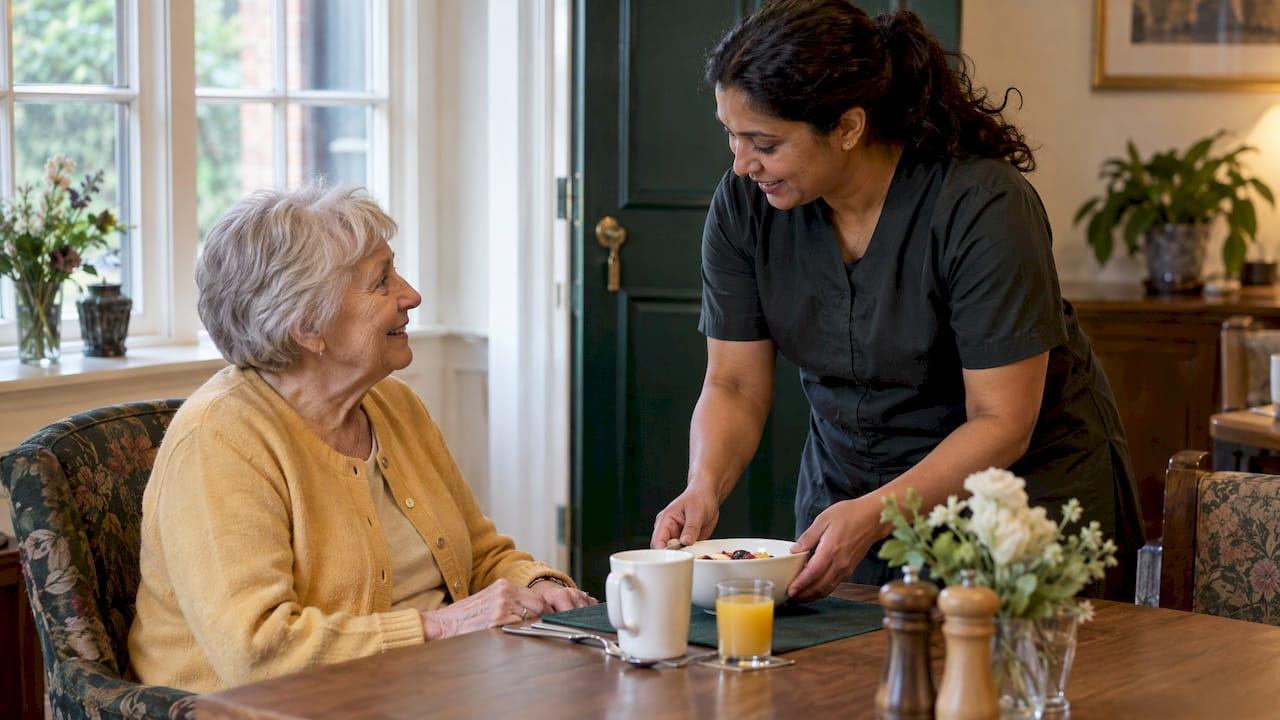
If you care for someone with dementia in Macclesfield, a regular day away from caring is one of the most useful things you can arrange. The best dementia day care gives them a warm, structured day among people who know them by name, and gives you hours you can rely on. At The Alderley Clubhouse, in Monks' Heath on the edge of Macclesfield, days run from 9:30am to 4:30pm, Monday to Friday, with a day pass at £120 including VAT and a complimentary taster day so you can see it first.
This guide explains what day care does for carers, what a good day looks like, what to check before you choose, and how to get an assessment and find out about funding in Cheshire East.
Key Takeaways
- Day care gives family carers a genuine break, and research links it with a better quality of life for both the carer and the person they look after.
- A good day is structured: meals, activities, company and, where it suits, Cognitive Stimulation Therapy (CST), the group therapy NICE recommends for mild to moderate dementia.
- Ask Cheshire East Council for a care needs assessment and a carer's assessment. Both are free, and the first step is open to anyone.
- Check hours, staffing, personal care, accessibility, meals and group size before you book, and visit with the person you care for.
- Our day runs 9:30am to 4:30pm with attendance capped at 35 members, and you can start with a complimentary taster day.
Table of Contents
- Why a day away matters for family carers
- What a good day of dementia day care looks like
- Who a day like this suits
- How to get an assessment in Cheshire East
- What to check before you choose a day service
- The different kinds of daytime help in Macclesfield
- Costs and paying for day care
- Try a day with us
- Our view: a day should feel like a club, not a clinic
- Frequently asked questions
- Sources
Why a day away matters for family carers
Caring for someone with dementia rarely stops. Even when you love the person, the constant watchfulness, the repeated questions and the broken nights wear you down. Many carers tell us they have forgotten what an uninterrupted morning feels like.
Day care is built for exactly this. A systematic review of day care for family carers describes it as providing a friendly environment and care for people with dementia while family carers take a break, with the aim of reducing carer burden and improving quality of life for the carer and the person together. The same review found that programmes combining day care with family support were associated with postponing a move into a care home.
That last point matters to many families. Regular respite is not a step away from caring at home. For many people it is what makes caring at home last longer.
What you can do with the hours
Six or seven hours is a different kind of break from an hour at the shops. Carers use the time to:
- sleep, or simply sit down without listening for footsteps
- attend their own GP, dental or hospital appointments
- keep up with work, or with the paperwork that dementia brings
- see friends and family, which is easy to lose in the middle of caring
- go for a walk or do something that is only theirs
If low mood has crept in, looking after your own wellbeing is part of caring well. This evidence-backed self-help guide for low mood offers small, practical steps. If you are persistently low or anxious, speak to your GP.

What a good day of dementia day care looks like
People with dementia do best with a day that has a gentle rhythm: a welcome, something to eat, something to do, company, rest, and a pleasant end. NICE guideline NG97 on dementia care asks services to offer a range of activities that promote wellbeing and are tailored to the person's preferences. It also says to consider structured group activities, including elements of cognitive stimulation and reminiscence, for people with mild to moderate dementia.
At The Alderley Clubhouse, a day includes:
- breakfast on arrival
- a cooked two-course lunch
- traditional afternoon tea
- an all-day hydration station, so drinks are always within reach
- a full programme of physical, creative, cognitive and social activities
- weekly live entertainment
- visiting hairdressing and chiropody
For many people, the hairdresser and the chiropodist are not small extras. Looking and feeling like themselves matters, and it takes one more task off your list at home. If mealtimes are a worry, our guide to dementia dining challenges and a 9:30 to 4:30 day service goes into it in more detail.
Cognitive Stimulation Therapy, in plain words
CST is a group programme of themed activities, such as word games, discussion, music and reminiscence, designed to keep minds active and encourage people to join in. NICE's evidence review for NG97 found moderate-quality evidence from up to 23 randomised trials with 1,398 participants that people with mild to moderate dementia offered CST had a clinically meaningful improvement in cognition compared with usual care, around 1.4 points on the MMSE, a common memory and thinking test.
Despite the recommendation, access is patchy. The 2023/24 National Audit of Dementia found that 31% of patients with a dementia diagnosis had been offered CST, with provision varying widely between services. Our care team is fully qualified and trained to deliver CST, so it can be part of a day with us rather than something you have to chase. For session ideas you can use at home, see our CST 14 session plan for carers.

Who a day like this suits
Our members are adults aged 50 and over. That includes people living with mild to moderate dementia, people who are lonely or isolated, and older adults who simply want good company and something to do. We also welcome people whose family carers, live-in carers or home care providers need dependable daytime respite.
The mix is deliberate. A club that welcomes everyone feels like a club, not a ward. People with dementia often do better in a lively, social setting than in a room where everyone is labelled by diagnosis.
How to get an assessment in Cheshire East
Before you pay for anything, it is worth getting two assessments. You do not have to use the council's funding to benefit from them.
- A care needs assessment for the person with dementia. The NHS explains that adult social services at the local council can help with personal care and day-to-day activities, including access to day centres, and that a care needs assessment is free and anyone can ask for one.
- A carer's assessment for you. The NHS says carers should have their own assessment, and that the person you look after should have a needs assessment too, as it indicates which type of respite suits best.
Here is what usually follows. If the assessment finds a need for help with everyday tasks, you agree a plan together, and then the council carries out a financial assessment, also called a means test, to see whether it will contribute to the cost. The assessment itself does not depend on the person's finances. Under the Care Act, the eligibility test looks at whether dementia stops the person achieving two or more listed outcomes, with a significant effect on their wellbeing, as set out in local clinical guidelines.
To start, contact Cheshire East Council's adult social care, either online or by phone. Write down a typical bad day before the call: what the person can and cannot do, what you do for them, and what happens at night. Specifics make the assessment more accurate.
Assessments can take time. Many families book a taster day or a first day pass while they wait, so the break begins now. Our guides on what to book first in Cheshire and fast dementia help in Cheshire East set out the order that suits most families.
What to check before you choose a day service
Whatever you decide, visit with the person you care for if they are able, and go at a busy time of day, not a quiet one. These are the questions that tell you most.
| What to check | What a good answer sounds like |
|---|---|
| Hours | Long enough to be a real break and to cover travel. A full day, not a short morning. |
| Group size | Small enough that staff know every member by name. |
| Staff training | Staff trained in dementia care, and in CST if you want it. |
| Personal care | Clear about help with the toilet, eating and drinking, and mobility. |
| Building | Designed for dementia, step-free, with clear signs and a calm layout. |
| Food and drink | Proper meals, drinks offered often, and adjustments for swallowing or diet. |
| Arrival | Easy parking and a drop-off point close to the door. |
| Communication | How the team tells you about the day, and how you reach them. |
Here is how we answer those at The Alderley Clubhouse:
- Our day is 9:30am to 4:30pm, a full hour longer than most local provision.
- Attendance is capped at 35 members each day, so everyone is known by name.
- The building is purpose-designed, dementia-friendly and fully accessible.
- There is secure parking and a drop-off point at the door.
Our guide to choosing a dementia day centre in five steps and our visit-ready checklists for Macclesfield give you printable questions to take along.
Settling in
Starting day care can be emotional for both of you. A few things help:
- Begin with one day a week, then build up as the routine becomes familiar.
- Tell the team about life history: former jobs, favourite music, the dog, the street they grew up on.
- Keep goodbyes short and cheerful, and tell them when you will be back.
- Expect a tired person at the end of the day. A full, sociable day is tiring in a good way.
The different kinds of daytime help in Macclesfield
Families usually weigh three types of daytime support: council-arranged or charity-run day services, paid home care visits, and a private day club. Each does a different job. Home care helps with personal care in a familiar setting, but the person is often alone between visits. Day services outside the home offer company, activity and a meal, which loneliness and boredom call for. A private club adds longer hours, a smaller group and hospitality, and is booked by the day without a waiting list or recurring commitment.
Many families combine them. A day at the club on three weekdays and visits at home on the others can make a week that works. If your home care provider or live-in carer needs daytime respite, we welcome them too.
Costs and paying for day care
We are open about price. A day pass at The Alderley Clubhouse is £120 including VAT. It covers breakfast, a cooked two-course lunch, afternoon tea, the full activity programme and the visiting services. Our 10-Session Pass gives you ten days for the price of nine, and there are no recurring subscriptions: you pay for the days you book.

If you want the council to contribute to the cost of daytime support, the route is the care needs assessment and then the means test described above. The NHS notes that local councils only fund respite care for people they have assessed as needing it, which is why the assessment comes first even if you plan to pay privately for now. For a clear picture of what to expect from paid daytime care, read our guide to paid daytime dementia care in Cheshire.
For advice on benefits, ask the council's adult social care team or a local carers' organisation, and speak to your solicitor or financial adviser for anything involving property or long-term planning.
Try a day with us
We know that choosing day care for someone you love is a big step. That is why we offer a complimentary taster day, called Be Our Guest, so the person you care for can join in, meet the team and see the building, and you can see how they get on. When you are ready, you can book a day pass. You can also see more about the facilities and activities at The Alderley Clubhouse.
If you are also thinking about support closer to Alderley Edge, our article on dementia day care for family carers in Alderley Edge covers the same ground for that area.
Our view: a day should feel like a club, not a clinic
We opened The Alderley Clubhouse because we believe a day of care should feel like a day out. Not a waiting room, not a ward: somewhere with a proper breakfast, a laid table at lunch, afternoon tea, and people who say good morning and use your name.
Families tell us the hardest part is not finding a place. It is trusting that their person will be happy there. That is why we keep the group to 35 members a day, why our care team is trained to deliver Cognitive Stimulation Therapy, and why the building is designed around dementia, with an easy drop-off at the door and secure parking.
We also run a longer day, 9:30am to 4:30pm, because a carer's break should be long enough to feel like one. An extra hour is the difference between rushing to an appointment and having time to breathe.
Come for a taster day and see for yourself. We would love to meet you both.
Scott @ The Clubhouse
Frequently asked questions
Can someone with dementia attend day care if they need help with personal care?
Many people with mild to moderate dementia attend day care and need some help with eating, drinking or the toilet. Talk to the team before the first day so they know what support is needed and how the person prefers to be helped. A taster visit is a good way to see how this works in practice.
How often should a person with dementia go to day care?
Most families start with one or two days a week and add more as the person settles. The right number depends on how much of a break you need and how much the person enjoys the days. Our 10-Session Pass suits families who want to build up gradually.
Do I need a diagnosis or an assessment before booking?
Not to book a private day at The Alderley Clubhouse. You do need a council care needs assessment if you want the council to consider contributing to the cost. The assessment is free and is worth having either way, because it describes the support the person needs.
What is Cognitive Stimulation Therapy and who is it for?
CST is a group programme of themed activities that encourages conversation, memory and enjoyment. NICE recommends group CST for people living with mild to moderate dementia. Our care team is trained to deliver it.
How much does dementia day care cost at The Alderley Clubhouse?
A day pass is £120 including VAT, and the 10-Session Pass gives ten days for the price of nine. The complimentary taster day lets you try us before you book.
Sources
- Effectiveness of day care in supporting family caregivers of people with dementia (systematic review, 2019)
- NICE guideline NG97: Dementia, assessment, management and support
- National Audit of Dementia, Round 6 (2023/24) national report
- NHS: Dementia, social services and the NHS
- NHS: Carers' breaks and respite care
- Guidelines in Dementia, 3rd edition (August 2024)