

If you're worried about a loved one's memory, start with your GP and ask for a referral to the Cheshire East Memory Service, and if you need reliable daytime care or a break as a carer, The Alderley Clubhouse offers a warm, dementia-friendly day community nearby in Nether Alderley. Alongside this, local groups such as Alzheimer's Society sessions offer gentle, low-cost social contact while you arrange longer-term support.
TL;DR:
- The Cheshire East Memory Service offers home visits, occupational therapy, crisis support, and post-diagnostic guidance, with appointments best prepared by a list of medications and personal details.
- Local daytime options include charity-run social groups, council-funded day clubs with meals and activities, informal community drop-ins, and private structured day care with trained staff.
- Planning respite begins with a Carer's Assessment through the Cheshire East Carers Hub, with most community respite requiring at least two weeks’ notice, though emergency support may also be available.
- A good day service should have clear referral pathways, trained staff, structured activities, accessible venues, and transparent costs, with trial days recommended before committing long-term.
- The Alderley Clubhouse provides adults aged 50 and over, including those with dementia, with a full-day program of meals, activities, and therapeutic care, with options for single or multiple day passes.
Table of Contents
- How to get assessed and diagnosed in Macclesfield
- Local daytime services and community activities in Macclesfield
- Arranging respite and support for family carers
- Choosing the right daytime service: checklist and red flags
- Local perspective: where hospitality-led day care fills the gaps
- Legal and financial planning support available locally
- Home care services for dementia patients in Macclesfield
- What this guide gets right that others miss
- Booking a day pass or trial at The Alderley Clubhouse
- FAQ
- Sources
How to get assessed and diagnosed in Macclesfield
Your GP is always the right place to begin. They can rule out other causes of memory changes, such as thyroid problems or vitamin deficiencies, and refer you to specialist support if needed. Cheshire East Council advises residents to start with their GP, who can then refer to the local memory assessment service.
That referral reaches the Cheshire East Memory Service, run by Cheshire and Wirral Partnership NHS Foundation Trust. It's a genuinely thorough service, offering:
- Home-based memory assessments for people who find clinic visits difficult.
- Occupational therapy advice to help with daily living and safety at home.
- Crisis outreach support for sudden changes in behaviour or wellbeing.
- Pre-diagnostic guidance and ongoing post-diagnostic support for families.
The Memory Service was awarded MSNAP accreditation in April 2021, a quality mark showing the service meets recognised national standards for memory assessment. Because the service covers several strands of care, it's worth asking specifically which part is relevant to you rather than assuming one appointment covers everything.
Before your appointment, bring a list of current medications, a few notes on recent changes in memory or mood, and if possible some 'Information About Me' details covering routines, preferences and life history. These small details make a real difference to how personalised the support ends up being.
Local daytime services and community activities in Macclesfield
Macclesfield has a genuinely varied mix of daytime options, from free community groups to paid, structured day care. Knowing the difference helps you choose what fits your situation now, and what might suit better later.
- Charity-run activity groups: Alzheimer's Society runs sessions including Always Active and Singing for the Brain, offering music, gentle movement and social contact.
- Council-run day clubs: listed through the Cheshire East LiveWell directory, these often include lunch and organised activities at a lower cost than private care.
- Church and community groups: many run informal drop-in sessions, particularly useful for low-level social contact.
- Private adult day care: structured, staffed daytime community care, typically with meals, planned activities and higher staff ratios.
Singing for the Brain in Macclesfield meets on the second and fourth Thursday of each month at Tytherington Family Worship Church, and the venue is wheelchair accessible. Typical sessions elsewhere in the area include light lunches, arts and crafts, and seated exercise, with Always Active Macclesfield listed by Alzheimer's Society as one of the regular local options.
Before attending anywhere new, check the practical details: days and hours, cost, whether transport is provided, how accessible the building is, and whether food is included. The Cheshire East LiveWell directory lists centres such as the Mayfield Centre, and it's worth calling ahead to confirm current sessions, since availability can change.
Arranging respite and support for family carers
Caring for someone with dementia is demanding, and Cheshire East Council recognises that carers need breaks too. The route into this support starts with a Carer's Assessment, arranged through the Cheshire East Carers Hub.
- Request a Carer's Assessment by contacting the Carers Hub, who will look at your physical, mental and emotional wellbeing alongside your caring responsibilities.
- Discuss respite options once assessed, which may include a community day place, residential respite nights, or home-care cover for a few hours or days.
- Allow planning time, since Cheshire East Council notes that planned community respite typically needs at least two weeks to arrange.
- Keep emergency contacts to hand, since sudden changes in your availability or the person's needs may require urgent support rather than a planned booking.
If you're facing a sudden gap in care, such as illness or an unexpected hospital stay, contact the Carers Hub directly and explain the urgency, since some short-notice options exist outside the usual planning window. Our guide to carers' assessments and booking day services walks through what to expect at each stage.
Choosing the right daytime service: checklist and red flags
A good day service should feel reassuring from the first phone call, not just on paper. Before you commit, work through a short checklist:
- Referral route: does the service need an Adult Social Care referral, or can you self-refer privately?
- Staffing and training: are staff trained in dementia care, and ideally in Cognitive Stimulation Therapy (CST)?
- Activities and meals: is there a planned daily programme, and are meals included or supervised?
- Transport and accessibility: can the venue arrange pick-up, and is the building step-free and dementia-friendly?
- Cost and funding: is pricing clear upfront, and does the service accept any local authority funding?
On a visit, ask directly about medication support, safeguarding procedures, staff-to-guest ratios and what happens in an emergency. Watch for warning signs too: little meaningful activity, guests left unsupervised at mealtimes, or vague answers about pricing.
Pro Tip: Ask to join a trial day before committing, and watch how staff interact with guests, not just how the building looks.
Our piece on spotting red flags during a day centre visit covers this in more depth if you want a fuller list before you go.
Local perspective: where hospitality-led day care fills the gaps
Across Macclesfield and the wider Cheshire East area, the common pressures we hear about are limited day-place capacity, patchy transport, and carers struggling to get predictable, reliable breaks; supporting this, EV charging for care homes is improving infrastructure in care settings to aid accessibility and sustainable transport options. A hospitality-led model addresses this differently to a traditional day centre: proper meals, a genuine social programme, and staff trained to deliver Cognitive Stimulation Therapy, the only non-drug therapy recommended by NICE for mild to moderate dementia.
In practice, that means a typical day includes breakfast on arrival, a cooked two-course lunch, and a full programme of physical, creative and social activities, so families know exactly what their relative's day looks like. Booking works simply: a single day pass, or a block of sessions, with no long-term commitment required.
Legal and financial planning support available locally
Getting legal and financial arrangements in order early makes later decisions far easier, both for the person with dementia and for the family supporting them. Cheshire East Council's dementia guidance encourages families to think about this alongside a diagnosis, not after a crisis forces the issue.
Lasting Power of Attorney is usually the first practical step, covering both health and welfare decisions and property and financial affairs. Setting this up while the person can still express their wishes avoids the more complicated route through the Court of Protection later on. A solicitor experienced in later-life planning can guide you through the paperwork, and some local firms offer a first consultation at no charge, so it's worth asking before booking.
On the financial side, a needs assessment through Cheshire East Council can clarify what support you might be entitled to, and whether a financial assessment (sometimes called a means test) applies to any care costs. Citizens Advice Macclesfield can help explain benefits such as Attendance Allowance, which isn't means-tested and is often overlooked by families focused on day-to-day care. Getting this sorted early means fewer surprises when care needs increase.

Home care services for dementia patients in Macclesfield
For many families, home care sits alongside, or instead of, daytime services, particularly in the earlier stages of dementia or when someone prefers to stay in familiar surroundings. Local home care providers offer visits ranging from short welfare checks to full live-in care, with staff trained to support routines, medication and personal care safely.
When choosing a home care provider, ask specifically about dementia training, not just general care experience, since the two require different skills. Continuity of carer matters enormously too: ask whether the same small team will visit regularly, since familiar faces reduce confusion and distress for someone living with dementia.
Home care and daytime community care aren't competing choices. Many families use both, home care for morning and evening routines, and a day service such as The Alderley Clubhouse for structured activity, company and a proper break during the day. Combining the two often gives carers the most sustainable long-term arrangement, rather than relying on one type of support to cover everything.
What this guide gets right that others miss
Most dementia advice online reads like a directory: a long list of services with no clear order of operations. The truth is simpler than it looks. Start with the GP, get the Memory Service involved early, and treat carer respite as essential rather than optional, because carer burnout is often what forces a crisis decision rather than the dementia itself progressing.
Where conventional advice tends to fall short is timing. Families often wait until a crisis to ask about respite or day services, by which point the two-week planning window for community respite feels impossible. The better approach is to set up a relationship with a day service, whether that's a local charity group or a private option like ours, before you urgently need it, so there's already a familiar place to turn to.
If you take one thing from this guide, let it be this: ask about respite before you think you need it, not after.
— Scott @ The Clubhouse
Booking a day pass or trial at The Alderley Clubhouse
The Alderley Clubhouse is a daytime community for adults aged 50 and over, including people living with mild to moderate dementia, built around companionship, activity and proper hospitality rather than a clinical setting. Days run from 9:30am to 4:30pm, Monday to Friday, a full hour longer than most local provision, which gives carers a genuinely useful stretch of respite rather than a token few hours.
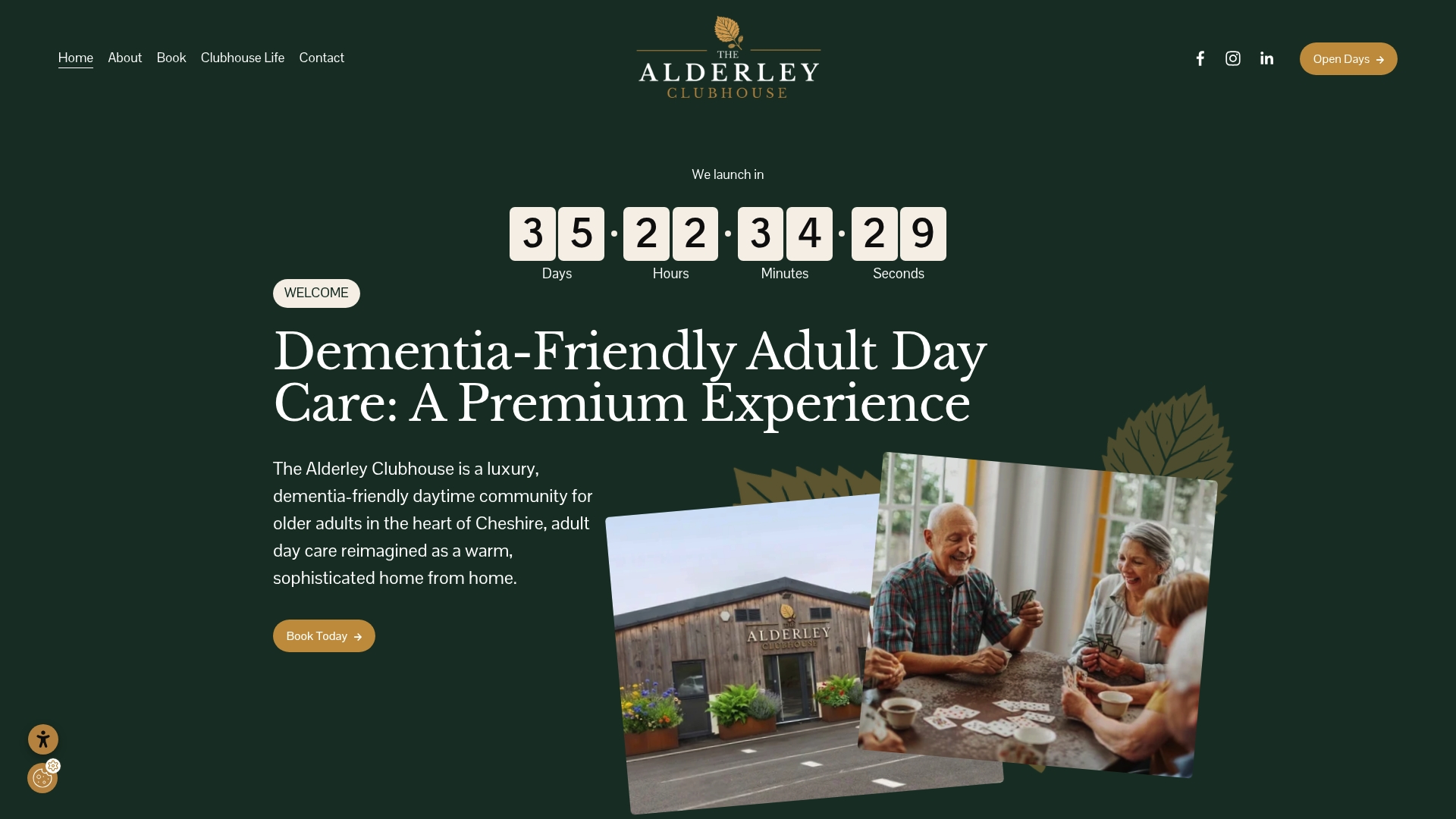
A typical day includes breakfast on arrival, a cooked two-course lunch, traditional afternoon tea, and a full programme of physical, creative, cognitive and social activities, as well as some visiting services. The care team includes trained staff delivering therapeutic activities, and attendance is capped to ensure personalized attention.
- Book a single day pass through our Day Pass Membership page to try a day for yourself or a family member.
- Explore the full facilities and activity programme on our facilities and activities page before you visit.
- Ask about our 10-Session Pass, which offers ten days for the price of nine, ideal for carers who need regular, dependable respite.
If you'd like to arrange a trial day, visit our Alderley Clubhouse overview for full details, or go straight to the Day Pass Membership booking page to check availability this week.
This article is general information, not a substitute for advice from a qualified doctor. Consult a qualified healthcare professional about your own circumstances before acting on anything here.
FAQ
How do I get a dementia diagnosis in Macclesfield?
Start by booking an appointment with your GP, who can rule out other causes of memory problems and refer you to the Cheshire East Memory Service for a full assessment. The Memory Service offers home visits, occupational therapy advice and ongoing support once a diagnosis is confirmed.
What local support groups exist for dementia in Macclesfield?
Alzheimer's Society runs local sessions including Singing for the Brain, held twice monthly at Tytherington Family Worship Church, and Always Active Macclesfield. Both offer music, gentle activity and social contact for people living with dementia and their carers.
How long does it take to arrange respite care?
Cheshire East Council advises that planned community respite typically needs at least two weeks to arrange, so it's worth requesting a Carer's Assessment well before you need the break. Emergency or short-notice support may be available through the Carers Hub in urgent situations.
What does The Alderley Clubhouse cost?
Pricing for day passes and the 10-Session Pass is available on the Day Pass Membership page, where you can also check current availability. Days run from 9:30am to 4:30pm, Monday to Friday, and include meals, activities and access to Cognitive Stimulation Therapy delivered by trained staff.
Who do I contact in a dementia-related emergency in Macclesfield?
For a medical emergency, contact your local emergency services or your GP's out-of-hours service as you would for any urgent health concern. For a sudden gap in care arrangements, contact the Cheshire East Carers Hub directly, since some short-notice support options exist outside the usual planned respite process.
Sources
- Living with dementia - Cheshire East Council
- Memory service - Cheshire East :: Cheshire and Wirral Partnership NHS Foundation Trust
- Always Active Macclesfield - Alzheimer’s Society listing