

Paid daytime dementia care gives families a practical, structured answer to the daily question of how to keep a relative safe, active and looked after while carers work, rest or simply catch their breath. For families in Cheshire, The Alderley Clubhouse offers exactly this: a private day club in Nether Alderley running 9:30am to 4:30pm, Monday to Friday, with Cognitive Stimulation Therapy delivered by trained staff, chef-prepared meals, and a full programme of activities.
Here's what makes it worth a closer look:
- Hours that actually help carers: 9:30am to 4:30pm, a full hour longer than most local provision
- Therapeutic, not just occupational: Cognitive Stimulation Therapy, the only non-drug therapy NICE recommends for mild to moderate dementia
- Transparent pricing: day passes at £120 including VAT, with a 10-session pass covering ten days for the price of nine
Key Takeaways
Dementia-specific day care combining Cognitive Stimulation Therapy, capped numbers and trained staff delivers better outcomes than generic adult day services.
| Point | Details |
|---|---|
| Evidence supports attendance | Regular attendance is linked to higher quality of life for attendees and reduced stress for carers. |
| Ask about CST specifically | Confirm whether staff are trained to deliver Cognitive Stimulation Therapy, not just general activities. |
| Budget for £40 to £100+ daily | Private day rates vary by region; premium centres with therapeutic programming sit above this range. |
| Plan for a settling period | Most people take three or four visits to feel comfortable; prepare a life history for staff beforehand. |
| The Alderley Clubhouse meets the brief | Cheshire-based day club with capped attendance, CST delivery, meals included, and day passes from £120 including VAT. |
Table of Contents
- What does paid dementia day care actually provide?
- Does dementia day care actually improve quality of life?
- What should you ask when choosing a dementia day-care provider?
- How much does dementia day care cost in the UK?
- How do you prepare a relative for their first day-care visit?
- Why The Alderley Clubhouse fits this brief in Cheshire
- Where paid daytime dementia care fits for Cheshire families
- Frequently asked questions
- Sources
What does paid dementia day care actually provide?
A well-run day is more structured than most families expect, and that structure is precisely what helps someone with dementia feel settled rather than adrift. Mornings typically begin with breakfast on arrival, followed by a session of physical or cognitive activity, then a proper sit-down lunch, a quieter rest period, and afternoon activities before pickup.
The activities themselves matter more than the label "day care" suggests:
- Cognitive Stimulation Therapy sessions, run in small groups by trained facilitators
- Music and reminiscence work, which tends to reach people that conversation alone cannot
- Gentle physical exercise suited to mixed mobility levels
- Multisensory activities for people who find verbal engagement harder
The best providers pair this with visible staffing ratios, dementia-friendly building design and step-free access. That's the real difference between a dementia-specific day club and a generic adult day service: the latter often runs bingo and a cup of tea, while the former is built around evidence-based cognitive and social programming from the ground up.
Does dementia day care actually improve quality of life?
The evidence here is genuinely encouraging, if not absolute. Several studies show that attending a dementia-focused day centre is linked to higher self-reported quality of life among attendees, alongside a measurable drop in caregiver stress. Whether it delays a move into residential care is less settled. Some studies find a delay; others find none. Families should treat this as a genuine possible benefit, not a guarantee.
Day programmes work best when the environment feels homely and activities connect to a person's past interests. Staff who dress and act in a normalised, friendly way tend to reduce behavioural distress rather than trigger it.
A 2023 scoping review catalogued the psychosocial interventions used across day care settings, cognitive therapies, music, multisensory and animal-assisted activities among them, and found they consistently aim to protect quality of life and preserve cognitive and social function. A separate realist review makes an important point: outcomes depend heavily on context. A homely setting, person-centred staff, and joined-up care with other services all shift the odds in your relative's favour.
The practical takeaway: regular attendance, once someone has settled, tends to bring calmer moods, more social contact, and a carer who gets real, reliable breaks.
What should you ask when choosing a dementia day-care provider?
Booking the wrong provider wastes money and unsettles your relative. Work through this before you commit:
- Ask about staff training. Do they deliver Cognitive Stimulation Therapy, and are staff qualified to run it, not just supervise it?
- Check staffing ratios and safeguarding. How many staff are on duty against how many attendees, and what's their safeguarding policy?
- Look at the building. Is it dementia-friendly by design, step-free, secure, with a proper drop-off point?
- Request an activities timetable. A real programme names specific sessions by day; a vague one says "activities included".
- Confirm mealtimes and medication handling. Who manages prescriptions during the day, and is hydration actively encouraged, not just available?
- Ask about trial sessions and attendance caps. Uncapped numbers mean your relative becomes a face in a crowd, not a known individual.
Pro Tip: Ask specifically whether Cognitive Stimulation Therapy groups are set by ability level, not just by whoever turns up that day. Mixed-ability groups dilute the therapy's benefit for everyone in them.
A reasonable cancellation policy allows short notice for illness without penalty. If a provider is vague about qualifications or dodges questions about ratios, treat that as a red flag.
How much does dementia day care cost in the UK?
Private day centres in the UK vary widely by region, with typical day rates falling roughly between £40 and £100, depending on what's included. Premium centres offering therapeutic programming, chef-prepared meals and capped numbers sit above that range, reflecting the higher staff-to-attendee ratios needed to deliver genuine dementia care rather than general supervision.
- Private day passes are paid directly by the family, with no means-testing involved
- Local authority-funded places exist, but availability depends on a carer's assessment through adult social services
- The Alzheimer's Society's replacement care guidance confirms day centres are a common respite option, and that councils and carers' organisations can advise on assessments
- Some charitable grants and carer's benefits can offset costs; your local council's directory is the fastest starting point
- Always confirm what's included in the headline price: transport, personal care and VAT can all be extra elsewhere
How do you prepare a relative for their first day-care visit?
Preparation makes the difference between a settled first fortnight and a distressing one. A few steps genuinely help:
- Write a short life history. Two or three paragraphs covering past roles, favourite music and calming routines lets staff personalise care from day one.
- Pack an essentials bag. Labelled clothing, medication with clear instructions, and any comfort items should travel with your relative.
- Consider staying for part of the first session. Many centres welcome this, and it eases the transition.
- Expect a settling period. Most people take three or four visits before they're fully comfortable; don't judge the fit after one difficult afternoon.
- Agree a review point with staff. A conversation after two weeks tells you far more than guessing.
If your relative seems unsettled afterwards, ask staff for specifics on mood and engagement during the session rather than assuming the placement isn't working.
Why The Alderley Clubhouse fits this brief in Cheshire
The Alderley Clubhouse in Nether Alderley was built specifically around the needs this article has covered, not adapted from a generic day centre model. A few facts worth knowing before you enquire:
- Days run during typical working hours from morning until late afternoon, Monday to Friday, somewhat longer than many local provisions
- Attendance is limited to a moderate number of members each day, allowing staff and attendees to build personal familiarity
- Every day includes breakfast on arrival, a cooked two-course lunch, traditional afternoon tea and an all-day hydration station
- Our care team is fully trained to deliver Cognitive Stimulation Therapy, the only non-drug therapy NICE recommends for mild to moderate dementia
- The building is purpose-designed and dementia-friendly, with secure parking and a drop-off point right at the door
- Weekly live entertainment plus visiting hairdressing and chiropody round out the full programme
- Day passes cost £120 including VAT, and a 10-session pass gives ten days for the price of nine
Families can book a welcome tour before committing to a first day pass, which lets you see the building and meet staff without any pressure.
A carer's perspective on managing respite well
Settling in rarely happens on day one, and that's normal, not a warning sign. Carers who've been through this tend to say the same thing afterwards: the first two weeks matter far more than the first afternoon. What actually helps is combining day visits with whatever home care already exists, so your relative experiences one consistent rhythm rather than two disconnected worlds. If you're weighing this up, book a welcome tour and talk it through with the team before deciding.

Where paid daytime dementia care fits for Cheshire families
Paid daytime dementia care works best when it combines therapeutic activity, capped numbers and genuine staff training, not just supervision and a hot meal.
There are other routes to daytime respite, including community events tailored to support carers and their relatives. Some families rely entirely on home carers, others cobble together informal support from neighbours and community groups. Both have real limits: home care alone rarely offers structured cognitive therapy or the social contact that a day club provides, and informal support is unpredictable when carers themselves need a break. The Alderley Clubhouse gives you a fixed, bookable alternative: known hours, a capped daily number, meals included, and Cognitive Stimulation Therapy delivered by staff trained to run it properly.
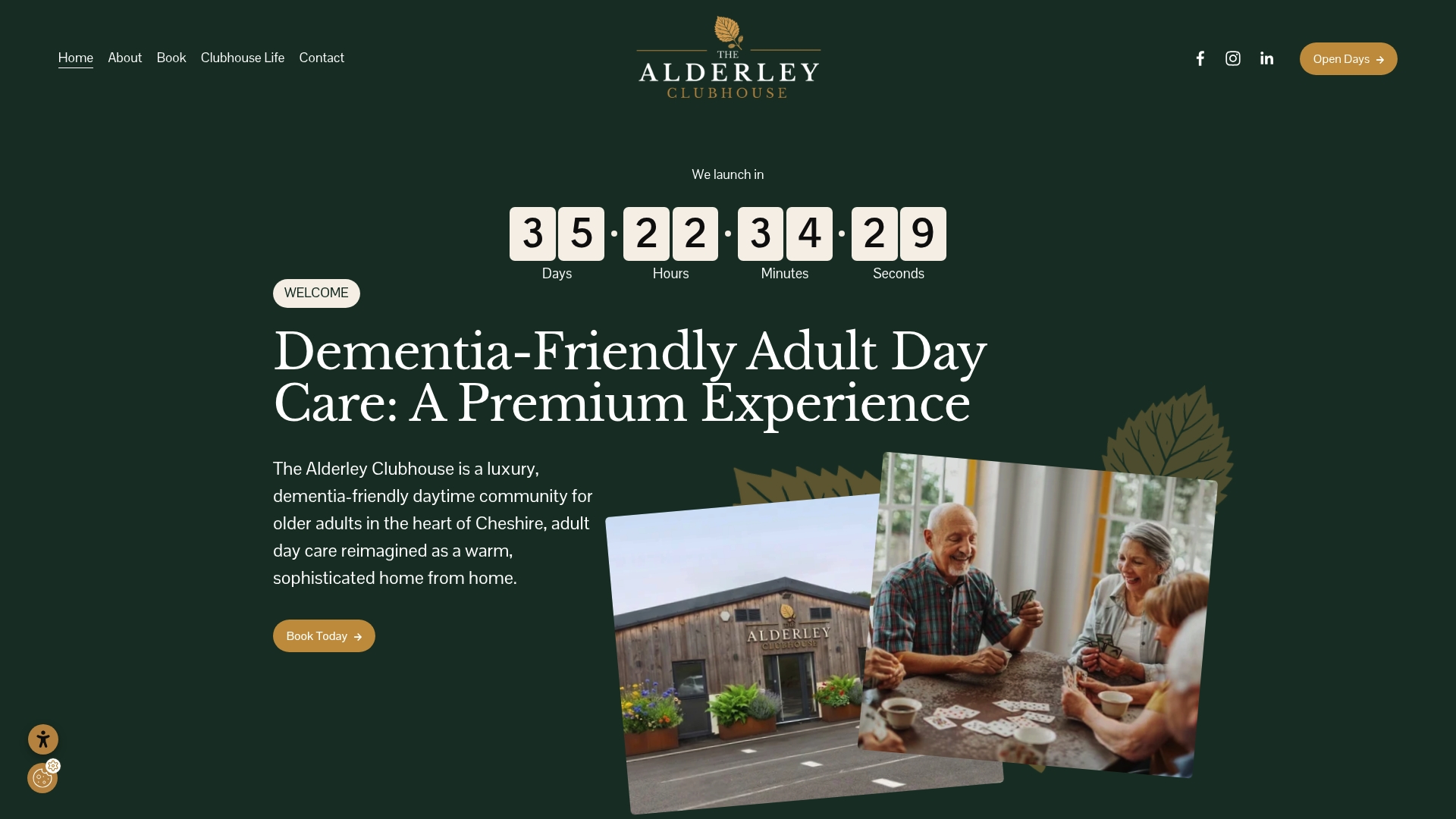
If your relative has mild to moderate dementia and you need reliable, dementia-friendly daytime respite in Cheshire, book a welcome tour to see the building and meet the team, then secure a day pass or 10-session pass once you're both comfortable with the fit.
Frequently asked questions
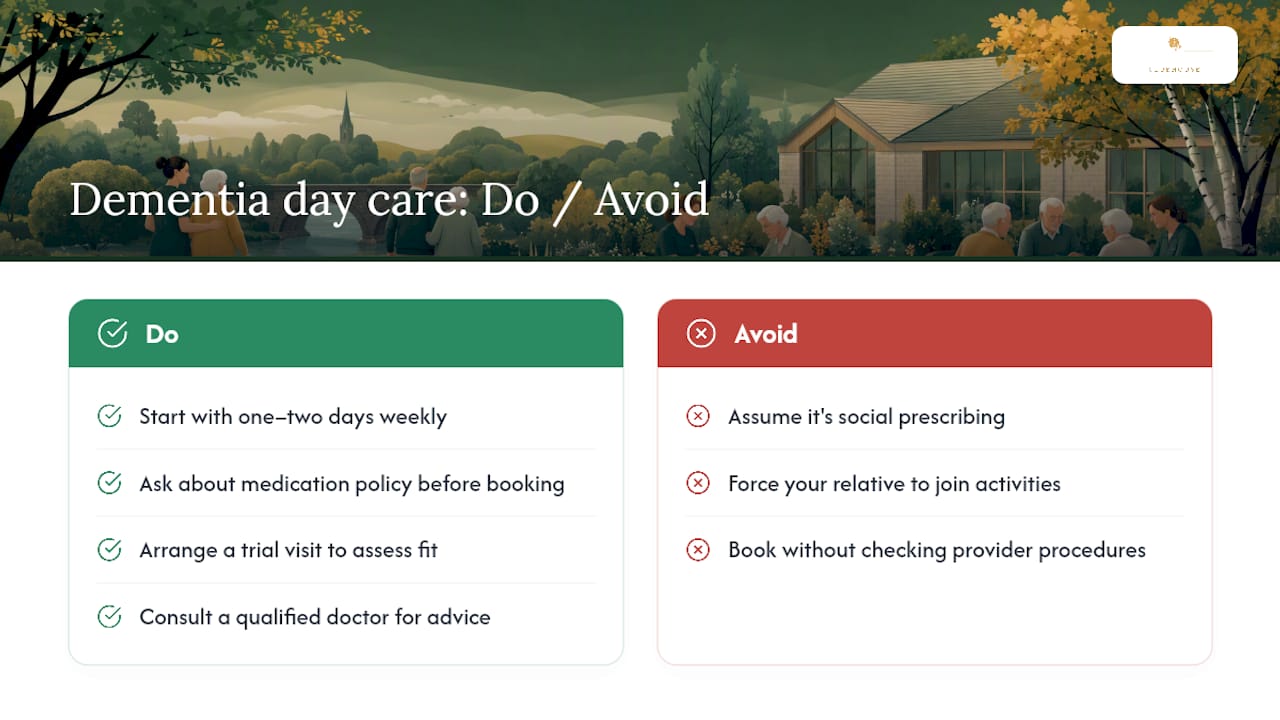
Is paid dementia day care the same as social prescribing? No. Social prescribing usually refers to NHS teams linking patients to community activities. Paid dementia day care, like The Alderley Clubhouse, is a private service families book directly for structured daytime respite and therapeutic activity.
How many days a week should my relative attend? Most families start with one or two days and adjust based on how their relative settles and how much respite the carer genuinely needs.
Can someone with more advanced dementia still attend? Day care generally suits mild to moderate dementia best, where structured activity and social contact still bring clear benefit. Providers can advise whether a specific case is a good fit during a trial visit.
What happens if my relative needs medication during the day? Ask providers directly about their medication handling policy before booking; reputable centres have clear procedures for administering and recording doses safely.
Will my relative be forced to join in with activities? No good provider insists on participation. Person-centred care means offering activities and allowing your relative to engage at their own pace.
This article is general information, not a substitute for advice from a qualified doctor. Consult a qualified healthcare professional about your own circumstances before acting on anything here.
Sources
For evidence and local support beyond this guide, these are worth bookmarking:
- Psychosocial interventions in day care services for older people living with dementia (PLOS One)
- Association between attending specialised day care centres and quality of life (International Psychogeriatrics)
- Alzheimer's Society — replacement care guidance
- Realist review on how and why day programmes work for people with dementia
Request a carer's assessment early, even if you plan to pay privately. It costs nothing and may open up support you didn't know existed.