
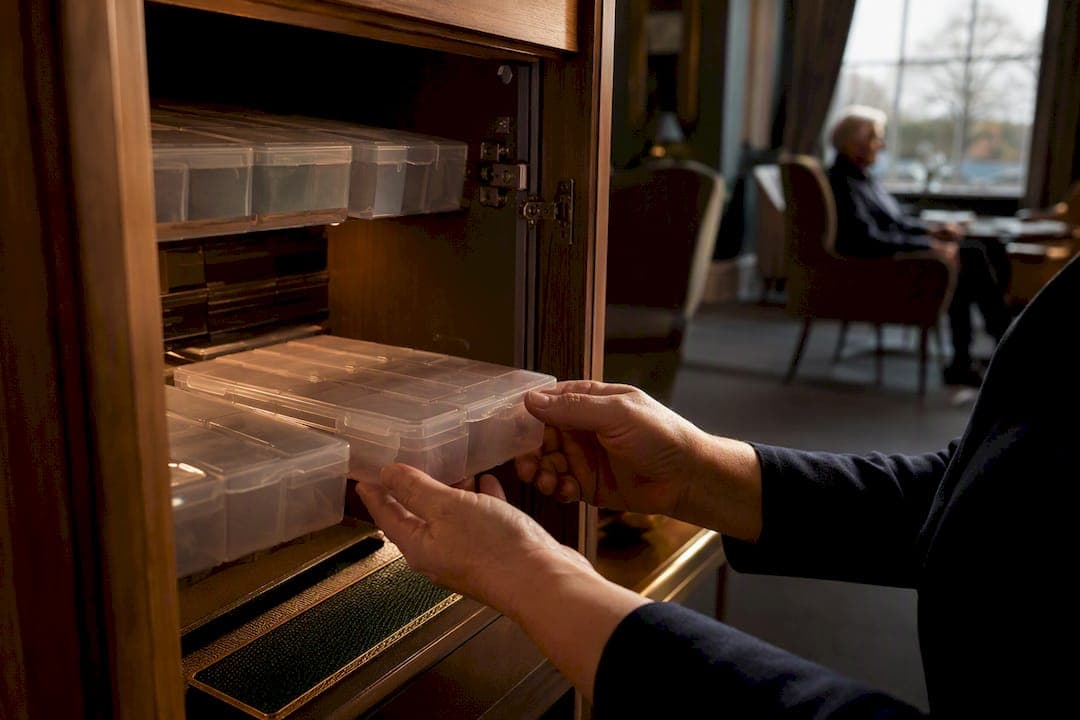
Medication support in adult day care usually falls into three levels: gentle reminders, supervised or assisted administration by trained care staff, and full nurse-led administration for more complex regimens. Before you book anywhere, ask about the centre's written medication policy, who is qualified to give medicines, how they're stored, and how consent is handled. The sections below walk through exactly what to check.
TL;DR:
- Centers with nurse-led medication administration are more suitable for complex regimens like injections or controlled drugs, but staff consistency and monitoring are crucial regardless of policy level.
- Always verify that medicines are stored securely in locked cabinets, with controlled drugs having dedicated logs, and that doses are recorded immediately to prevent errors.
- Bringing medicines in original pharmacy-labelled containers and providing a current medication list helps ensure safe reconciliation and avoids confusion on the first day.
- Ask about staff qualifications, especially for those handling medication, and ensure clear escalation procedures are in place for any adverse events or discrepancies.
- Smaller, well-trained teams with consistent staff are better at noticing changes in medication effects or health status than centers that simply follow a high-level policy.
Table of Contents
- What 'levels of medication support' mean in practice
- Who provides medication support and which credentials matter
- Preparing medicines: a checklist for the first day
- Safety and incident handling: storage, records and reporting
- How to evaluate a centre on a visit
- Example: how the Alderley Clubhouse approaches medication support
- What actually matters most in this decision
- Ready for a medication-aware day club? Here's how to start
- Sources
- FAQ
What 'levels of medication support' mean in practice
Not every adult day care service offers the same level of medication support, and knowing the difference matters more than most families realise before their first visit. Some centres focus on companionship and gentle prompting; others are set up for genuine clinical oversight. According to Age UK, social-focused day centres may only offer reminders, while medical models employ clinical staff who can administer medicines directly.
The three levels typically look like this:
- Reminders: staff prompt your relative to take medicine they've brought themselves, but don't handle or administer it.
- Supervised or assisted administration: trained care staff check the prescription, hand over the correct dose at the right time, and record it.
- Nurse-led administration: a qualified nurse gives medicines, including anything more complex such as injections or controlled drugs.
Behind all three, good centres run the same routine checks: verifying the pharmacy label matches the prescription, timing doses against meals or activities, logging any "as needed" (PRN) medicine given, and watching for side effects. Coordinating pharmacy refills and updating the family or GP when something changes is standard practice too, according to medicine handling guidance from RDaSH NHS. The wellbeing side matters just as much: NHS guidance on adult day care notes that consistent routines support participation, not just physical safety.
Who provides medication support and which credentials matter
The person handing over a pill matters as much as the pill itself. Ask exactly who at the centre is involved in medication support, because titles vary widely between providers and "carer" can mean very different levels of training.
Typical roles include:
- Care worker: usually trained in basic medicine prompting and recording, under supervision.
- Senior care worker: often authorised for assisted administration after specific medication training.
- On-site or visiting nurse: handles more complex regimens, injections, and clinical monitoring.
- Visiting pharmacist: reviews regimens periodically and flags interactions or unnecessary medicines.
Look for staff who hold recognised medication handling training, and, where nursing input is offered, confirm the nurse is registered with the Nursing and Midwifery Council. Dementia-specific training matters too, since confusion or refusal around medicines is common in people living with dementia. Ask how escalation works: a well-run centre has a clear line back to the GP or supervising nurse if something looks wrong, rather than staff quietly deciding what to do.
Preparing medicines: a checklist for the first day
Getting the paperwork and packaging right before the first visit saves confusion later and keeps your relative safer from day one. Most centres will not accept loose or unlabelled tablets, and for good reason: RDaSH's medicine handling procedure treats original, pharmacy-labelled containers as the baseline for safe reconciliation.
- Bring every medicine in its original, pharmacy-labelled container. No pill boxes filled at home, no unmarked strips.
- Bring an up-to-date medication list and the latest prescription or repeat slip, including dosage and timing.
- Expect to complete a consent form and a medication reconciliation check on arrival, ideally with a nurse or trained senior member of staff, as recommended in reviews of medication management for older adults.
- Ask in advance which pharmacy-packed dosette boxes the centre accepts, since some only work with specific blister-pack formats.
- Label any "as needed" medicine clearly, with written instructions for when it should be given, and provide separate instructions for anything topical or inhaled.
Pro Tip: Take a photo of every medicine label on your phone before drop-off day. If a label smudges or a box goes missing, you have a backup the centre's staff can check against instantly.
Safety and incident handling: storage, records and reporting
Ask how medicines are stored before you ask anything else about safety, because storage failures are where most avoidable incidents start. Reputable centres keep medicines in a locked cabinet or trolley, separate from general supplies, and controlled drugs need their own locked storage with a specially maintained log, a requirement set out in NHS trust guidance on safe and secure handling of medicines.
Every dose given should be recorded at the time, not from memory later. That record forms an audit trail that gets shared with families and, where relevant, the GP.
- Immediate notification to family if a dose is missed, given late, or given incorrectly.
- A written incident report, separate from the day's general notes.
- A review of what went wrong and what changes, if any, follow.
A single missed or delayed dose might sound minor, but documentation gaps are exactly what allow small errors to repeat unnoticed. Evidence reviews on medication management in older adults link consistent reconciliation and monitoring directly to fewer adverse drug events.
How to evaluate a centre on a visit
A tour tells you more than a brochure ever will, provided you ask the right questions rather than accepting reassurance at face value. Bring a short list and watch how confidently staff answer, not just what they say.
- Ask to see a written medication policy, not just a verbal description.
- Ask what mix of staff is on duty daily, and whether a nurse is on-site or only visiting.
- Ask exactly how and where medicines are stored, and who holds the keys.
- Ask what happens in a medical emergency, step by step.
- Ask how records are kept and how quickly families are told about problems.
Treat vague or shifting answers as a warning sign. If nobody can produce a policy summary, or different staff members give contradictory answers about who administers medicines, that inconsistency matters more than any single missing detail. Ask to speak directly to the nurse or manager responsible for medication oversight rather than settling for a general answer from reception staff. Smaller, capped groups tend to make this kind of close monitoring easier, since staff attention isn't spread across dozens of unfamiliar faces.
Example: how the Alderley Clubhouse approaches medication support
At the Alderley Clubhouse, medication oversight sits inside a wider structure built for close attention, not just a policy on paper. Our care team is fully qualified and trained, including in Cognitive Stimulation Therapy, the only non-drug therapy NICE recommends for mild to moderate dementia. Attendance is capped at 35 members a day, which means every member is known by name and any change in behaviour or medicine response is far easier to spot than in a larger, busier setting.
A dementia-friendly building, a capped daily group, and a trained team aren't separate features. Together, they're what makes it realistic for staff to notice a missed dose, a side effect, or a change in mood before it becomes a bigger problem.
Day passes have a fixed price including VAT. Some centres offer multi-day passes with a discount for multiple sessions. When you visit any centre, ask the questions above and compare the answers against this kind of working model.
What actually matters most in this decision
Most guidance on medication support treats it as a compliance checklist: get the policy document, tick the boxes, move on. That misses the point. The centres that handle medicines well are the ones where staff know your relative well enough to notice when something's off, not just when a form says a dose is due.
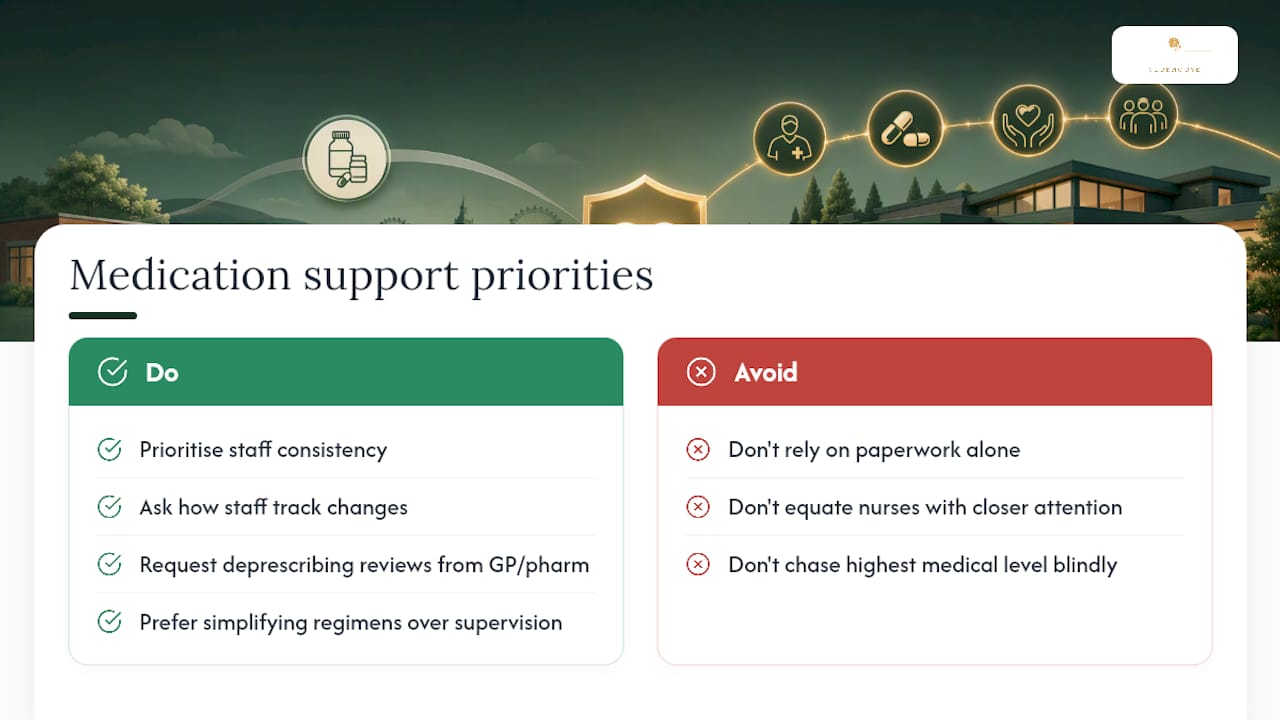
That's why group size and staff consistency deserve more weight than they usually get. A nurse-led administration policy on paper means little if the same person rarely sees your relative twice in a row. Families chasing the "highest" level of medical provision sometimes overlook this, assuming clinical staff automatically means closer attention. It doesn't always follow.
If you take one thing from this guide, make it this: prioritise asking how staff track changes over time, not just how they administer a dose today. Regimens shift, dementia symptoms fluctuate, and the real test of a centre's medication support isn't the policy binder. It's whether anyone would notice if something changed. Ask about deprescribing reviews with the GP or pharmacist too. Simplifying an overcomplicated regimen is often more valuable than adding another layer of supervision to a confusing one.
— Scott @ The Clubhouse
Ready for a medication-aware day club? Here's how to start
If everything above has left you wanting a centre where medication oversight and genuine companionship sit side by side, a centre with trained staff, limited daily attendance, and dementia-friendly design can provide an environment where medicines are noticed, tracked, and discussed with families as a matter of course, not an afterthought.
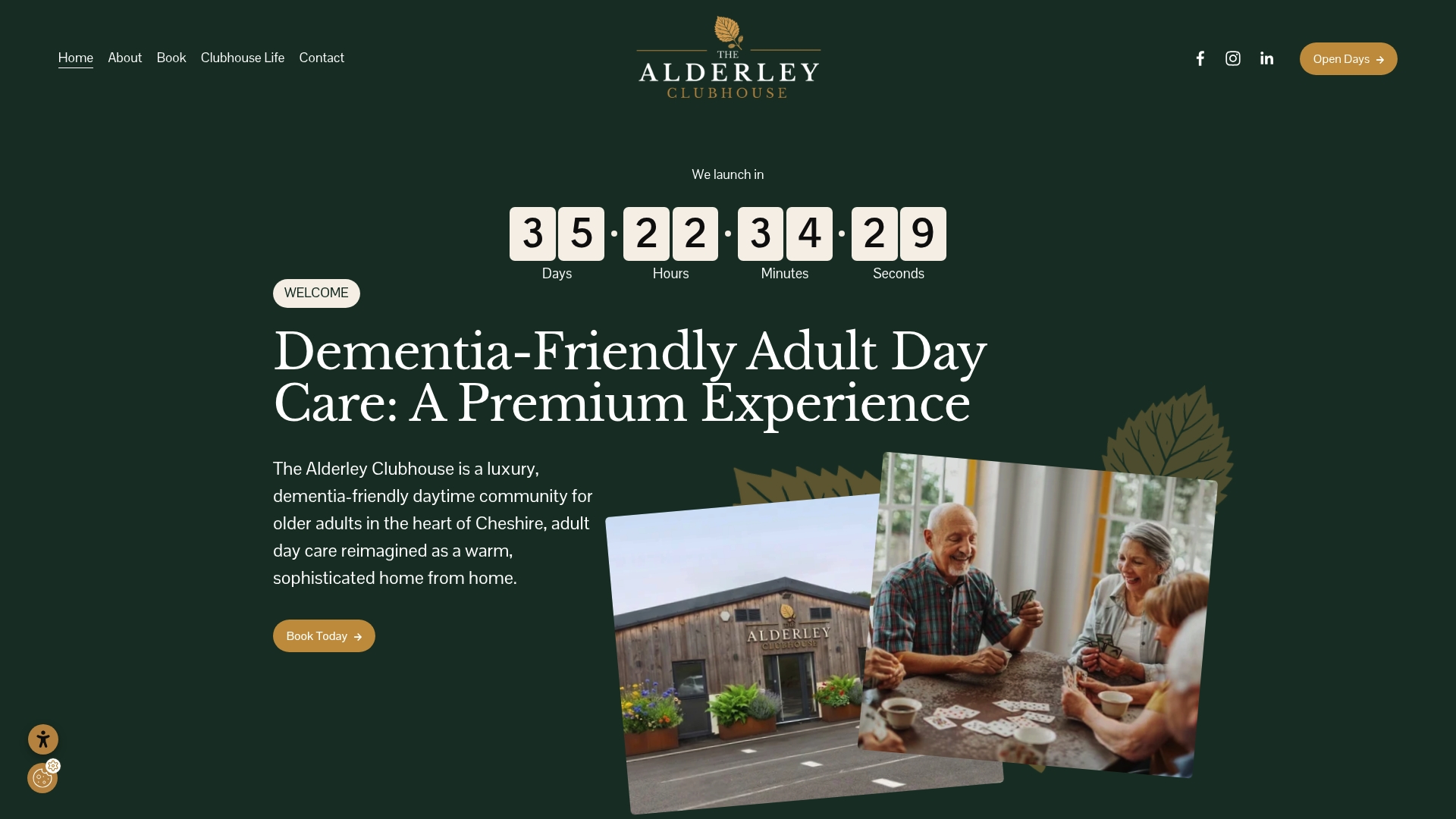
Before you commit anywhere, ask to see a policy summary in writing, then book a trial day and bring your relative's current medication list and latest prescription along with them. That single visit tells you more than any brochure. You can view details and book a trial day at the Alderley Clubhouse directly, with day passes at £120 including VAT or a 10-Session Pass giving ten days for the price of nine.
Sources
For policy evidence, check the NHS overview of adult day care, Age UK's guidance on day centres, NIHR's deprescribing guidance, and the Alzheimer's Association's guidance on adult day centres.
This article is general information, not a substitute for advice from a qualified doctor. Consult a qualified healthcare professional about your own circumstances before acting on anything here.
- Safe and secure handling of medicines in trust day care facilities — RDaSH
- Day centres for older people — Age UK
- Medication Management of the Community‑Dwelling Older Adult — NCBI Bookshelf
- How to deprescribe in primary care — NIHR Evidence
FAQ
What are the three levels of medication support in day care?
Most centres offer reminders, supervised or assisted administration, and nurse-led administration for more complex regimens, with the level offered depending on whether the centre is social or medically focused.
How can I help an older relative manage medications at day care?
Bring medicines in their original pharmacy-labelled containers, provide an up-to-date medication list, and complete the centre's consent and reconciliation process on the first visit.
Are care staff allowed to give medication?
Trained care staff can often assist with or administer medicines under a centre's policy, but more complex tasks such as injections typically require a qualified nurse, so it's worth confirming what medical assistance is available before enrolling.
Can dementia cause someone to forget their medication?
Yes. Memory loss and confusion linked to dementia commonly lead to missed or duplicated doses at home, which is one reason structured, supervised medication support at a day centre can be reassuring for families.
What should I ask before choosing a centre?
Ask to see the written medication policy, find out the staff mix and whether a nurse is on-site, and check how incidents are recorded and communicated to families.