
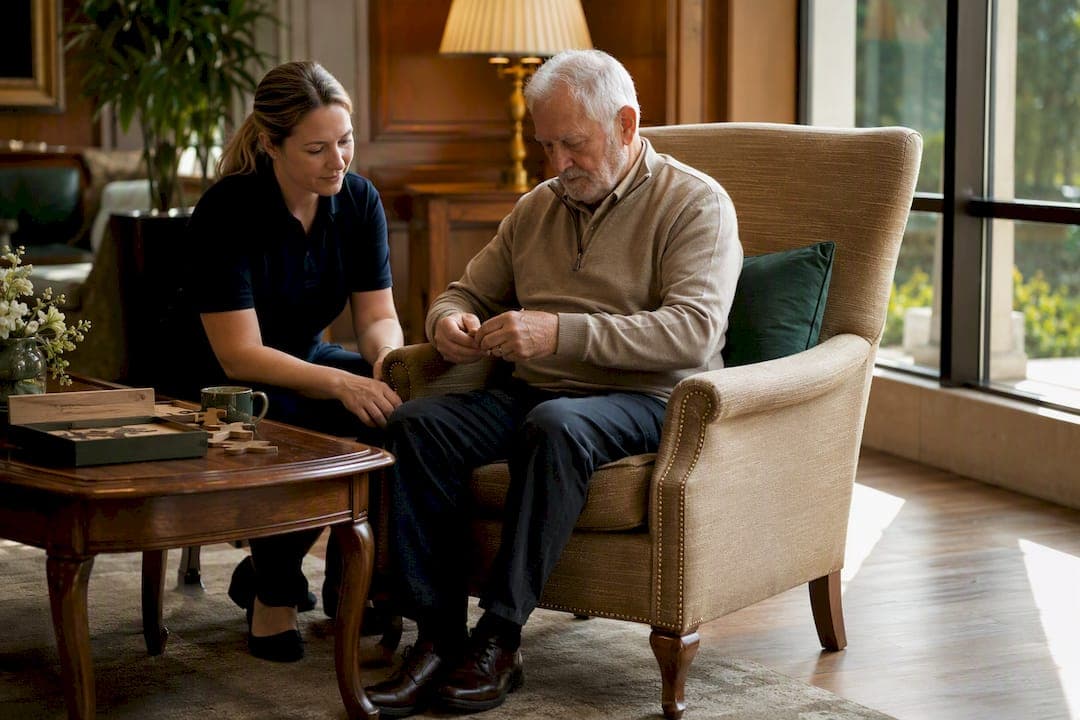
The most effective activities for frontotemporal dementia are person-centred and low-demand: music, meaningful practical tasks, sensory work and short physical exercises adapted to what the person can still do. Keep instructions to one step, watch for fatigue or frustration, and adjust the moment it appears. Structured therapies like occupational therapy and Cognitive Stimulation Therapy can help too, but only when tailored to the individual rather than delivered as a generic programme.
TL;DR:
- FTD activities should be simple, one-step tasks like folding towels or sensory work, tailored to individual preferences and abilities to avoid frustration.
- Short, predictable sessions in quiet environments with visual cues and easy exits promote engagement and reduce agitation.
- Use familiar music, practical routines, and reminiscence prompts that match the person's stage of dementia for better outcomes.
- Adapting activities based on ongoing assessment and involving professionals when behaviors escalate can improve safety and well-being.
- Structured day programs, like the Alderley Clubhouse, offer carers a reliable break while providing consistent, person-centered activities.
Table of Contents
- Quick activity categories for frontotemporal dementia
- Practical tips to adapt activities for frontotemporal dementia
- Activity ideas by type and stage
- How to plan and personalise activities like an occupational therapist would
- Safety, routine and managing challenging behaviour during activities
- When to involve professionals and how structured therapies help
- A note from Scott @ The Clubhouse
- Give yourself and your family member a day that works
- Sources
- FAQ
Quick activity categories for frontotemporal dementia
You don't need special equipment or a therapy qualification to start. You need activities matched to the person in front of you, not a generic "dementia activities" list pulled from a leaflet. FTD affects behaviour, language and initiative differently to other types of dementia, so what works for a parent's friend with Alzheimer's might fall flat here, or worse, cause distress.
Start with categories, then personalise within them:
- Physical movement — a short walk around the garden, chair-based stretches, or throwing a soft ball back and forth. Short periods of time are generally sufficient.
- Music and singing — a playlist of songs from their teens and twenties tends to land better than anything new; familiarity matters more than genre.
- Sensory activities — textured fabrics, scented hand cream, a bowl of dried lentils to sift through. Sensory sessions work well when someone can no longer follow verbal instructions.
- Meaningful practical tasks — folding towels, sorting cutlery, watering plants. If they were a gardener, hands-on gardening often works better than any craft table.
- Reminiscence prompts — old photographs, a favourite football scarf, a smell like fresh bread. Keep the questions simple and open-ended.
The NHS lists similar categories, including creative activities, singing, memory cafés and structured distraction such as puzzles, as reliable starting points for anyone supporting a person with dementia.
Practical tips to adapt activities for frontotemporal dementia
FTD often affects planning, sequencing and impulse control before memory. That changes how you set an activity up.
- Break it into one step at a time. Say "hold the cup" rather than "make yourself a cup of tea." Multistep instructions cause more frustration in FTD than in other dementias, because the part of the brain that sequences tasks is often hit early.
- Use visual cues over verbal ones. Lay materials out in the order they're needed. Point rather than explain.
- Keep groups small. Two or three people, in a quiet room, beats a lounge full of noise and competing conversations.
- Build in an easy exit. A chair near the door, permission to leave without explanation, no fuss if they walk off mid-task.
- Redefine what success looks like. If someone folds three towels and wanders off, that's a successful session, not a failed one.
- Never correct. If they call the dog by the wrong name, let it go. Correction in FTD often triggers agitation rather than insight, because self-awareness is frequently affected by the condition itself.
Pro Tip: Prepare everything before you invite the person to join in. FTD often reduces initiative and patience, so a five-minute wait while you find scissors can undo the whole activity before it starts.
Predictability matters as much as content. The same time, the same chair, the same opening phrase each day does more for engagement than novelty ever will.
Activity ideas by type and stage
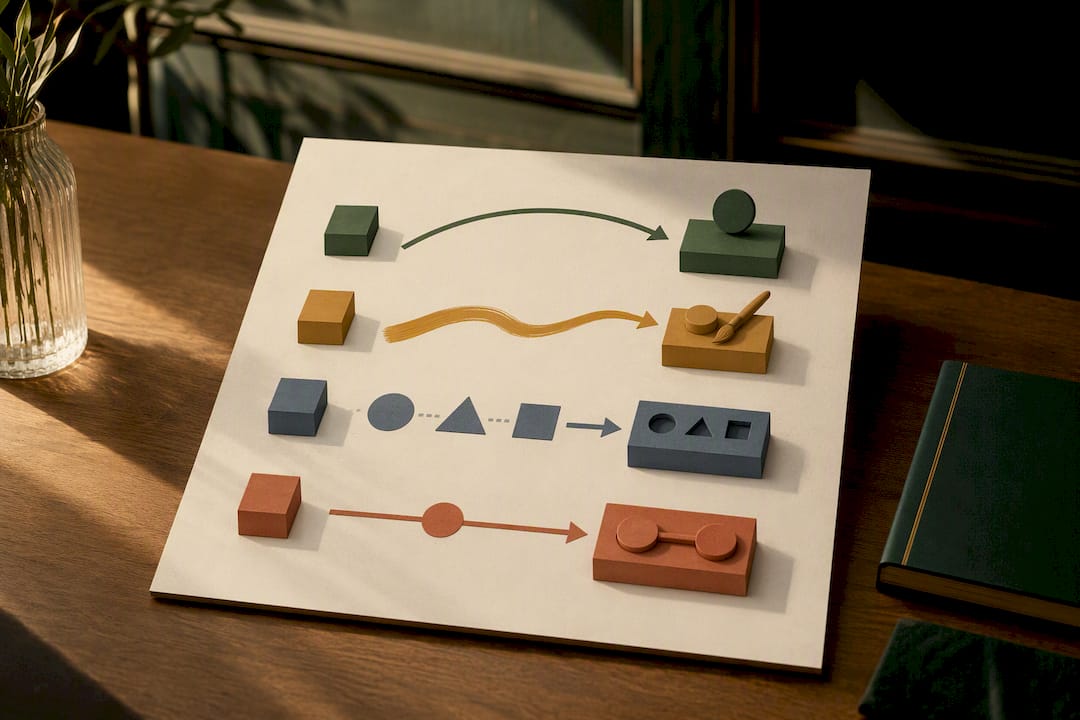
What works shifts as frontotemporal dementia progresses, and pretending otherwise sets carers up to feel like they're failing when actually the person's needs have simply changed.
Early stage, when language and initiative are only mildly affected:
- Group conversation with strong facilitation. Equipment: a photo or newspaper cutting. Prompt: "Tell me about a time you went somewhere like this." Time: 15 to 20 minutes. Success looks like: any verbal or non-verbal engagement, not a full conversation.
- Simple cooking. Equipment: pre-measured ingredients for something like scones. Prompt: "Can you stir this for me?" Time: 20 minutes. Success looks like: participation in one or two steps.
- Gardening. Equipment: a trowel, a pot, some seedlings. Prompt: "Let's get this one in the soil." Time: 15 minutes outdoors. Success looks like: sustained attention on the task, even without conversation.
Middle stage, when repetition and routine become more comforting than novelty:
- Repetitive practical tasks. Equipment: a basket of mixed laundry. Prompt: "Can you find me the socks?" Time: 10 to 15 minutes. Success looks like: calm, repeated motion, regardless of accuracy.
- Personalised music playlists. Equipment: headphones or a speaker, a playlist from their 20s. Prompt: just press play and watch. Time: 20 to 30 minutes. Success looks like: tapping a foot, humming, visible relaxation.
- Sensory trays. Equipment: a shallow tray with rice, buttons, ribbon, a shell. Prompt: "Have a feel of what's in here." Time: 10 minutes. Success looks like: hands staying engaged with the materials.
Later stage, when verbal communication is significantly reduced:
- Tactile objects. Equipment: a soft blanket, a stress ball, a piece of fur fabric. Prompt: place it in their hands, no instruction needed. Time: as long as they hold interest.
- Hand massage. Equipment: unscented or lightly scented hand cream. Prompt: gentle, slow strokes while sitting close. Time: 5 to 10 minutes. Success looks like: relaxed shoulders, slower breathing.
- Music listening. Equipment: familiar songs at low volume. Prompt: none required. Time: unlimited. Success looks like: stillness, eye contact, or simply the absence of distress.
Simple dementia-friendly games that need no reading or memory can bridge the gap between the middle and later stages well, especially matching or sorting games with large, tactile pieces.
How to plan and personalise activities like an occupational therapist would
Occupational therapists don't guess. They assess first, then build a plan around what's left rather than what's lost. You can borrow the same structure at home without any formal training.
- Assess before you plan. Note down interests before diagnosis, daily routines that still feel comfortable, known triggers (loud noise, hunger, being rushed) and skills that remain intact, such as counting or folding.
- Write a one-page activity plan. Include the goal (calm engagement, not "completion"), the level of prompting needed, materials required, any safety notes, and where the exit or pause point is.
- Test it, then adjust. Run the activity once. If it causes agitation, change one variable, the time of day, the noise level, the group size, rather than abandoning the whole idea.
- Know when to bring in professional input. If challenging behaviour escalates or an activity consistently fails despite changes, an occupational therapist assessment is worth requesting through your GP.
Structured group programmes exist too. NHS England describes Cognitive Stimulation Therapy as a 14-session programme, delivered in 45-minute sessions twice-weekly over seven weeks, using music, word games and practical tasks. NICE recommends it for mild-to-moderate dementia generally, though suitability for FTD needs individual assessment given the communication and behavioural differences involved.
Safety, routine and managing challenging behaviour during activities
A well-planned activity can still go wrong if the environment or timing works against you.
- Check the space before movement activities. Clear trip hazards, secure rugs, keep a chair within reach at all times.
- Build a predictable daily schedule. Same wake time, same activity slot, same wind-down routine each evening.
- Serve snacks individually where needed. FTD frequently causes disinhibited eating, so a shared bowl can trigger overeating or conflict; individual portions reduce this risk.
- Watch for disinhibition during activities. Blunt comments or impulsive actions are symptoms, not defiance. Redirect calmly rather than reasoning or arguing.
- Stop when distress appears, not when you've decided to. If frustration rises, end the activity early and revisit it another day rather than pushing through.
Pro Tip: If a session doesn't go to plan, write down what triggered it while it's fresh. A pattern often only becomes visible after the third or fourth time, not the first.
A failed session isn't wasted if you learn what to change next time.
When to involve professionals and how structured therapies help
Occupational therapy, speech and language therapy and Cognitive Stimulation Therapy each address a different piece of the puzzle. Occupational therapists focus on daily function, adapting tasks and environments so someone can keep doing what matters to them for longer. Speech and language therapists support communication strategies and, later, swallowing safety. NHS guidance on FTD treatment lists these alongside relaxation techniques, music therapy and structured routines as core supports.
Evidence for tailored programmes specific to FTD is still developing but promising. A pilot study of the Tailored Activity Program in FTD followed 20 carer-patient pairs and found reduced behavioural symptoms at four months among the intervention group, compared with controls. It was a small feasibility trial, not a definitive result, but it supports the case for individualised planning over one-size-fits-all activity sheets.
Group CST can genuinely help people with mild-to-moderate dementia, but FTD's impact on communication and behaviour means group size, content and exit routes all need adapting for each person rather than assumed.
The Clubhouse team is trained to deliver CST alongside a daily programme of physical, creative, cognitive and social activities, adjusted for each member rather than run as one script for everyone in the room.
A note from Scott @ The Clubhouse
Start smaller than feels natural. Ten minutes of genuine engagement beats an hour of forced participation, and a wander to the door mid-activity isn't failure, it's information. Build routines around what the person still enjoys, not what a leaflet says they should be doing.
Progress with FTD rarely looks like improvement. It looks like fewer bad afternoons and a few more moments of calm connection. That's worth protecting, and it's worth giving yourself a break from carrying it alone. Respite, even for a single day a week, changes what you have left to give.
— Scott @ The Clubhouse
Give yourself and your family member a day that works
Planning FTD-friendly activities daily, alone, wears carers down faster than most people admit. The Alderley Clubhouse offers a full day of structured, adapted activity so you get a genuine break while your family member gets consistency, not just supervision.
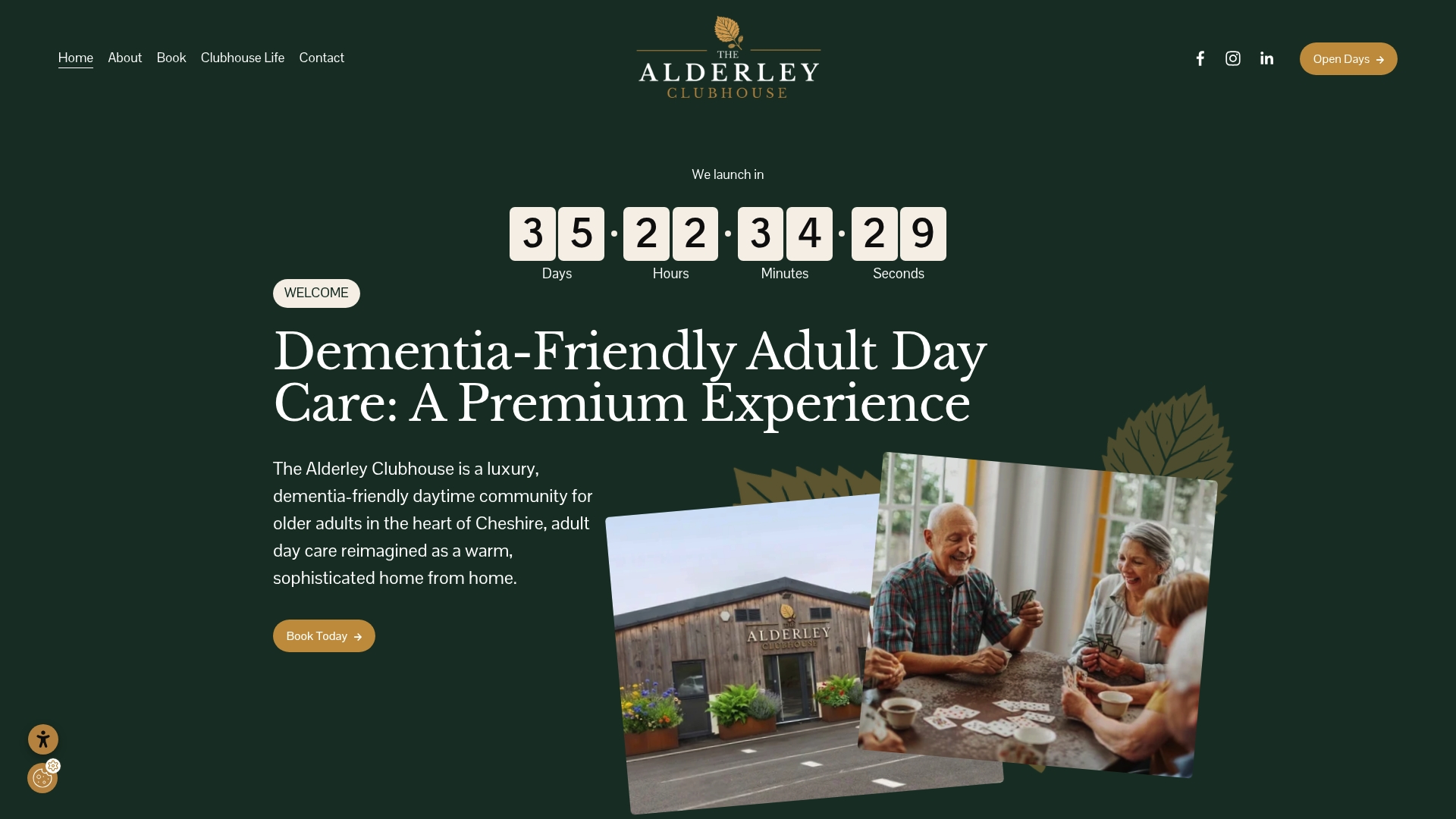
The day at the Clubhouse runs from 9:30am to 4:30pm, Monday to Friday, with breakfast on arrival, a cooked two-course lunch, traditional afternoon tea and all-day hydration, alongside physical, creative, cognitive and social activities, weekly live entertainment, and visiting hairdressing and chiropody. Attendance is limited so staff know each person by name rather than treating the room as one group. Families using this kind of support tend to be those juggling work, other caring responsibilities, or simply needing one predictable day back each week. See the full Day Pass Membership details, or book a welcome tour to see whether it fits your family's routine.
Sources
- Activities for dementia - NHS
- Tailored Activity Program pilot in FTD — PubMed
- Cognitive Stimulation Therapy — NHS England evidence summary
- Occupational-therapy systematic review — MDPI (2023)
This article is general information, not a substitute for advice from a qualified doctor. Consult a qualified healthcare professional about your own circumstances before acting on anything here.
FAQ
Can you slow down frontotemporal dementia?
There's no treatment that reverses or halts the underlying disease process in frontotemporal dementia. Structured activity, routine and therapies such as occupational therapy can support daily function and wellbeing, which is why NHS treatment guidance focuses on managing symptoms rather than curing the condition.
What are some common behaviours seen in people with frontotemporal dementia?
Common changes include disinhibition, loss of initiative, repetitive behaviours, blunted social awareness and difficulty planning multi-step tasks. These behaviour and language changes are what make FTD activities need more individual tailoring than general dementia activity lists provide.
How do you cope with FTD as a carer?
Coping usually comes down to predictable routines, one-step activities, and accepting that "success" looks different day to day. Regular breaks matter too. A day-care option like The Alderley Clubhouse gives carers a consistent day of rest without leaving their family member without structured support.
Can frontotemporal dementia cause anxiety?
Yes. Anxiety and restlessness are frequently reported alongside FTD, and a 2023 systematic review found an eight-week programme combining physical activity, music therapy and walking improved anxiety and restlessness in one included study of people with frontal-lobe symptoms. Personalised movement and music-based activities are a reasonable starting point, alongside professional advice if anxiety becomes severe.
What does a day at The Alderley Clubhouse actually include?
A day pass covers breakfast on arrival, a cooked two-course lunch, traditional afternoon tea, all-day hydration, and a full programme of physical, creative, cognitive and social activities from 9:30am to 4:30pm. Current pricing is available on the Day Pass Membership page.