
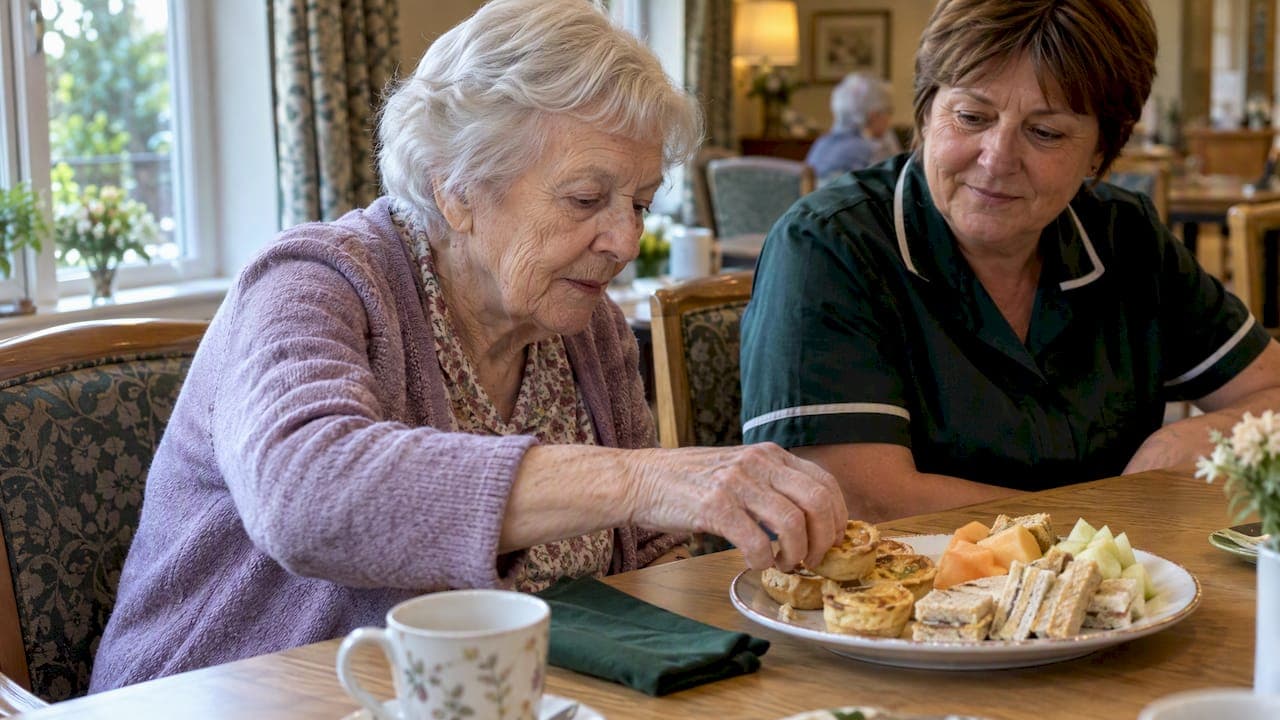
Finger foods are often a genuinely helpful option when someone living with dementia struggles with cutlery, loses focus during long meals, or prefers to move around while eating. They are not right for everyone, though: if you notice coughing, a wet voice, or pocketing of food, stop and speak to a Speech and Language Therapist before continuing. Below, we share practical lists, serving tips and two sample menus you can use today.
TL;DR:
- A small nursing home study found that fruit and vegetable finger foods raised average daily intake from 91.7 grams to 165.4 grams, though evidence remains limited.
- Coughing, a wet voice, or food pocketing can signal swallowing difficulty; pause finger foods and arrange an assessment with a Speech and Language Therapist.
- Until assessed, cut food into one or two bite pieces, keep it moist, avoid whole grapes, cherry tomatoes, and nuts, and supervise new foods.
- Serve small portions through the day, favor familiar foods and contrasting plates, and offer fortified milk when weight loss is a concern.
Table of Contents
- Why finger foods help and who benefits most
- When finger foods are unsafe: spotting dysphagia
- How to serve finger foods so they get eaten
- Finger-food ideas by food group
- Two sample days and shortcuts that save time
- How the Alderley Clubhouse puts this into practice
- A short reflection on dignity and independence
- Supervised mealtimes and respite at the Alderley Clubhouse
- FAQ
- Sources
Why finger foods help and who benefits most
Finger foods remove a layer of difficulty from mealtimes. There is no cutlery to manage, no need to sit still for twenty minutes, and food can be picked up and eaten whenever the person feels ready, which suits those who wander or find it hard to concentrate through a full meal.
The evidence, while limited, is encouraging. A small feasibility study in a Dutch nursing home found that offering fruit and vegetable fingerfoods raised average daily intake from 91.7 grams to 165.4 grams, a meaningful shift for residents who had previously eaten very little produce. Results like this come from small trials, so they point to a promising approach rather than a guaranteed one.
Finger foods tend to work best when they build on what someone already knows and likes:
- Choose foods tied to happy memories, such as a favourite sandwich filling or a childhood pudding.
- Offer familiar shapes and textures rather than unfamiliar "diet" foods.
- Watch what gets eaten first. That preference tells you more than any general list ever will.
When finger foods are unsafe: spotting dysphagia
Finger foods are not suitable for everyone, and getting this wrong carries real risk. Swallowing difficulties, known clinically as dysphagia, become more common as dementia progresses, and eating and swallowing problems can lead to aspiration pneumonia if food or drink enters the airway instead of the stomach.
Watch for these warning signs during meals:
- Coughing or spluttering while eating or shortly afterwards.
- A wet, gurgly-sounding voice after swallowing.
- Pocketing food in the cheeks instead of swallowing it.
- Choking episodes or repeated chest infections.
Pro Tip: If any of these signs appear, pause finger foods and arrange an assessment with a Speech and Language Therapist, who can recommend safe textures or thickened fluids.
Until that assessment happens, stick to safer basics: cut everything into 1 to 2 bite portions, avoid whole grapes, cherry tomatoes and whole nuts, keep food moist rather than dry or crumbly, and stay with the person for the first few attempts at any new food.

How to serve finger foods so they get eaten
Presentation matters as much as the food itself. Small, practical changes to how and where food is served can make the difference between a plate that is picked at and one that is finished.
- Cut food into pieces of one or two bites, keep it moist, and serve at a pleasant, not scalding, temperature.
- Offer food on a proper plate rather than a tray or plastic dish, and avoid cutlery substitutes that feel infantilising.
- Use plain plates that contrast with the food's colour, since a white plate with white mash can be genuinely hard to see.
- Keep the dining space calm: good lighting, few distractions, and familiar tableware the person recognises.
- Offer small portions throughout the day rather than relying on three big sittings, and keep snacks within easy reach if the person tends to wander.
Pro Tip: Half-fill cups rather than filling them to the brim. Lighter cups are easier to lift steadily and spill less.
Good lighting and clear visual contrast help well beyond the dining table. Our guide to room-by-room lighting fixes for dementia care covers simple changes that reduce confusion and falls risk throughout the home.
Finger-food ideas by food group
Building a rotation across food groups keeps meals balanced without needing a fresh plan every day. Below is a bank of options we return to again and again.
Protein, and how to boost calories: mini quiches, meatballs, Scotch eggs, cheese cubes, fish fingers and small sausage pieces are all robust, easy-to-hold options that hold their shape well. For anyone at risk of weight loss, add a dip such as hummus or soft cheese, and offer a fortified milk alongside rather than water.
Starchy foods: sandwich fingers with the crusts removed, mini jacket-potato scoops, potato waffle strips and small pizza fingers all travel well and can be eaten one-handed. These work as a simple base when someone is reluctant to try anything unfamiliar.
Fruit and vegetables: soft melon wedges, halved soft berries, stewed fruit pieces and well-cooked vegetable sticks are gentle on the mouth and easy to manage. Whole grapes, cherry tomatoes and anything with hard pips or skin should be cut or avoided, since they carry a real choking risk for anyone with reduced chewing control.
Dairy and mixed snacks: yoghurt tubes, small pancakes, custard pots and smoothie lollies are useful when appetite dips, since they deliver calories and fluid together. Pudding squares and small cake pieces work well as an afternoon treat.
A few quick guidelines on how to use this list:
- Quick snacks between meals: cheese cubes, yoghurt tubes, fruit pieces, small cake squares.
- Items that can stand in for a full meal: mini quiches, meatballs with a starchy side, sandwich fingers with a protein filling.
- Cultural or dietary swaps: replace meat items with paneer cubes, falafel or boiled egg quarters, and swap dairy snacks for soya or oat-based yoghurts where needed.
For readers whose loved one cannot safely manage any of these textures, our piece on pureed food ideas for carers covers a gentler alternative that still looks and tastes appealing.
Two sample days and shortcuts that save time
Having a repeatable plan removes the daily guesswork. Here are two starting points you can adapt.
- Sample Day A, higher-calorie plan: breakfast of mini pancake squares with fruit compote, lunch of meatballs with potato waffle strips, afternoon snack of cheese cubes and a fortified milk, evening snack of a custard pot with soft berries.
- Sample Day B, snack-led day for a reluctant eater: small sandwich fingers mid-morning, a mini quiche at midday, fruit and yoghurt tube in the afternoon, and a smoothie lolly in the evening if appetite has been low all day.
- Shortcuts: buy ready-made quiches, meatballs and fish fingers to cut prep time, freeze portions in batches, and keep a stock of fortified milk and yoghurt tubes for low-appetite days.
Always check for allergies and personal or cultural food preferences before introducing a new item. For more on fluids and fortified drinks, see our hydration guide for dementia carers, and for a broader look at eating well with dementia beyond finger foods, our nutrition guidance covers the wider picture.
How the Alderley Clubhouse puts this into practice
We have a structured daily rhythm including breakfast on arrival, a cooked two-course lunch, traditional afternoon tea and an all-day hydration station. In practice, that means portable snacks on hand, supervised snack stations, and gentle prompting that keeps members feeding themselves for as long as possible.
A short reflection on dignity and independence
Getting finger foods right is less about the food and more about respect: letting someone feed themselves for as long as they can, even if it takes longer or gets messier. Small changes, tried gently and repeated, tend to matter more than any single clever recipe.
— Scott @ The Clubhouse
Supervised mealtimes and respite at the Alderley Clubhouse
A Day Pass Membership gives your family member a full day of structured, supervised eating, from breakfast on arrival through to a cooked two-course lunch, traditional afternoon tea and hydration throughout the day, alongside activities designed around their interests.

- Days run with meals and snacks built into the structure rather than left to chance.
- Attendance is limited so the team gets to know each person's preferences, including the foods they will and won't eat.
- If you'd like to see whether a day pass fits your situation, you can enquire about The Alderley Clubhouse or browse our facilities and activities before booking.
If you're also weighing up a longer-term move, this week-by-week assisted living checklist is a useful companion for planning ahead.
This article is general information, not a substitute for advice from a qualified doctor. Consult a qualified healthcare professional about your own circumstances before acting on anything here.
FAQ
What are the top foods linked to dementia risk?
Diet research on dementia risk generally points to high intake of processed and sugary foods as unhelpful over the long term, while fruit, vegetables and oily fish are more often associated with better outcomes. This article focuses on practical eating support once dementia is already present, rather than on prevention through diet.
What is the 90 second rule for dementia?
There isn't an established clinical rule with a specific time limit for dementia care, and definitions of such phrases vary online. If you've seen it referenced in a specific care setting, it's worth checking directly with that source rather than treating it as standard guidance.
What foods are easiest to eat with dementia?
Soft, moist foods cut into one or two bite pieces tend to be the easiest to manage, such as mini quiches, meatballs, sandwich fingers with the crusts removed and soft fruit pieces. Avoiding dry, crumbly or hard textures reduces the effort needed to chew and swallow safely.
What food is particularly useful for someone with dementia?
There's no single food that helps everyone, but fruit and vegetable fingerfoods have shown a real improvement in intake in small studies, and familiar, high-calorie options like cheese cubes or mini quiches are useful for anyone at risk of weight loss. The right choice depends on the person's preferences, chewing ability and any swallowing concerns.
Can a fresh fruit basket work as a finger-food option?
Soft, ripe fruit cut into manageable pieces can be a useful part of a finger-food rotation, and ready-prepared options like this guide to fruit baskets for elderly parents can take the preparation work off your hands. Always check the fruit is soft enough to chew safely and remove any pips, skins or hard cores first.
Sources
- Finger foods | Dorset County Hospital
- Fingerfoods: a feasibility study to enhance fruit and vegetable consumption in Dutch patients with dementia in a nursing home
- Advice on eating, drinking and swallowing in dementia — WSH NHS
- Eating and drinking — Alzheimer’s Society