
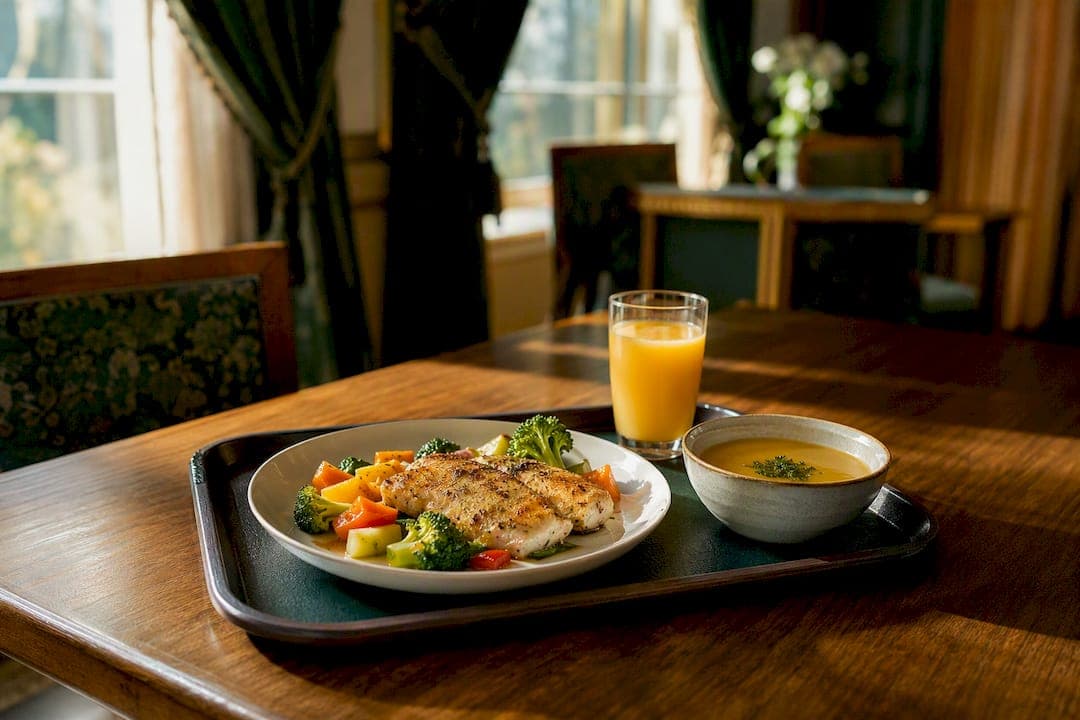
If you're caring for someone with dementia, the single most useful thing you can do today is start a simple daily log of what they eat and drink, plus a weekly weight check. Offer small, fortified meals often rather than three big ones, keep fluids visible and appealing, and if you notice rapid weight loss, coughing on food, or signs of dehydration, get a GP, dietitian or speech and language therapist (SLT) involved without delay. This approach follows ESPEN's 2024 guideline on nutrition and hydration in dementia, alongside NHS screening advice and tools such as the Mini Nutritional Assessment (MNA).
We see this play out every week at Clubhouse-group, where good, homely food and a proper cup of tea do far more for appetite than any amount of worrying alone can.
- Start a simple food, fluid and weight log today
- Offer small, frequent, fortified meals rather than three large ones
- Watch for coughing, choking or a wet voice after swallowing
- Seek a GP or dietitian review if weight loss looks rapid
Key Takeaways
Good nutrition for dementia depends on early screening, small fortified meals offered often, safe management of swallowing changes, and prompt referral to a GP, dietitian or SLT when problems appear.
| Point | Details |
|---|---|
| Screen early and often | Log weight weekly and fluids daily; use the MNA or NHS pathways to catch decline before it's severe. |
| Fortify small meals | Add milk powder, cream, cheese or nut butter to everyday food rather than relying on large portions. |
| Watch for dysphagia signs | Coughing, a wet voice, or chest infections mean an SLT referral, not a home guess at thickened fluids. |
| Escalate on clear triggers | Refer if weight loss reaches roughly 5% in a month or 10% in six months. |
| Hospitality supports intake | Clubhouse-group pairs chef-prepared meals, texture options and unhurried social dining with trained staff support. |
Table of Contents
- How dementia commonly changes eating and drinking
- Why poor nutrition matters in dementia
- Evidence-backed strategies to boost food and drink intake
- Recognising and managing swallowing problems safely
- Structuring meals and the mealtime environment
- Screening, monitoring and when to involve professionals
- What the research says about supplements, vitamins and dietary patterns
- Fortification and snack ideas you can use today
- Setting realistic goals and tracking progress
- UK resources for further tailored help
- What we've learned from years of shared mealtimes
- How a dementia-friendly day club supports nutrition day to day
- Frequently asked questions
- Sources
How dementia commonly changes eating and drinking
Dementia rarely affects appetite in one simple way. Memory loss means someone might genuinely forget they've already eaten, or forget to eat at all if nobody prompts them. Changes to taste and smell, common as the condition progresses, can make once-favourite meals taste bland or even unpleasant, which is why familiar comfort food sometimes lands better than anything new. Some people lose the ability to recognise food on a plate as food, particularly with certain types of dementia, while apraxia (difficulty with the physical planning of movement) can make cutlery frustrating even when the hands themselves work fine.
Later on, chewing and swallowing difficulties, known clinically as dysphagia, can develop and change what's safe to offer.
- Forgetting to eat, or forgetting they've already eaten
- Reduced appetite and slower eating pace
- Taste and smell changes making food seem less appealing
- Not recognising food, or apraxia with cutlery
- Coughing or throat clearing during meals, an early dysphagia sign
Each of these has a practical fix. Taste changes often respond to stronger, safe flavours; apraxia usually improves with finger foods; coughing on food is a signal to slow down, watch closely, and flag it for review rather than push on regardless.
Why poor nutrition matters in dementia
Unintentional weight loss is not a cosmetic worry. It's an early warning sign of malnutrition, which in turn raises the risk of dehydration, muscle wasting (sarcopenia), falls, and infections that hit harder in someone already living with cognitive decline. NHS guidance on malnutrition sets out how quickly this can spiral in older people, and ESPEN's 2024 guideline treats routine screening as a baseline standard of care, not an optional extra, for anyone living with dementia.
Why this matters: ESPEN's 2024 guideline recommends routine screening for malnutrition and dehydration at diagnosis and at regular intervals afterwards, precisely because both risks tend to build quietly before anyone notices.
- Unintentional weight loss, often the first visible sign
- Malnutrition, which weakens immunity and slows recovery from illness
- Dehydration, especially where thirst cues are blunted
- Sarcopenia, raising the risk of falls and fractures
- More frequent infections and slower healing
Poor nutrition and cognitive decline can feed each other. Someone eating too little has less energy to engage, which lowers appetite further, which worsens intake again, and the cycle continues unless something interrupts it.
Evidence-backed strategies to boost food and drink intake
Start with the basics: weigh regularly, watch portions actually eaten (not just served), and offer food more often in smaller amounts. Five or six small meals and snacks across the day usually work better than three large sittings, particularly when appetite dips as the day goes on.
Fortification is your quickest win. You don't need special products to add meaningful calories and protein.
- Stir milk powder into soups, mash and porridge
- Add cream, butter or olive oil to vegetables and sauces
- Mix nut butter into porridge or fruit
- Choose full-fat yoghurt and cheese over low-fat versions
Feeding technique matters as much as the food itself. Social dining, where people eat alongside others, tends to increase intake compared with eating alone, and reducing distractions such as a loud television helps concentration stay on the plate. Finger foods (sandwich quarters, cheese cubes, roasted vegetable batons) suit anyone struggling with cutlery, and adaptive utensils with thicker or angled handles can restore some independence.
Hydration deserves the same deliberate attention as food. Thirst signals often weaken with dementia, so fluids need to be offered rather than waited for: a glass of juice left within reach, a milky drink mid-morning, soup counted as fluid as well as food. NHS eat well guidance applies just as much to fluids as to meals, and a varied approach, water, juice, milk, soup, works better than relying on one drink someone has grown tired of.
When mealtimes meet resistance, gentle routine beats persuasion. Offer two simple choices rather than an open question, give one instruction at a time, and let refusal pass rather than pushing. A systematic review of nutrition interventions for people living with dementia found that structured approaches like this genuinely improved nutritional status in several trials, including two large studies that outperformed usual care.
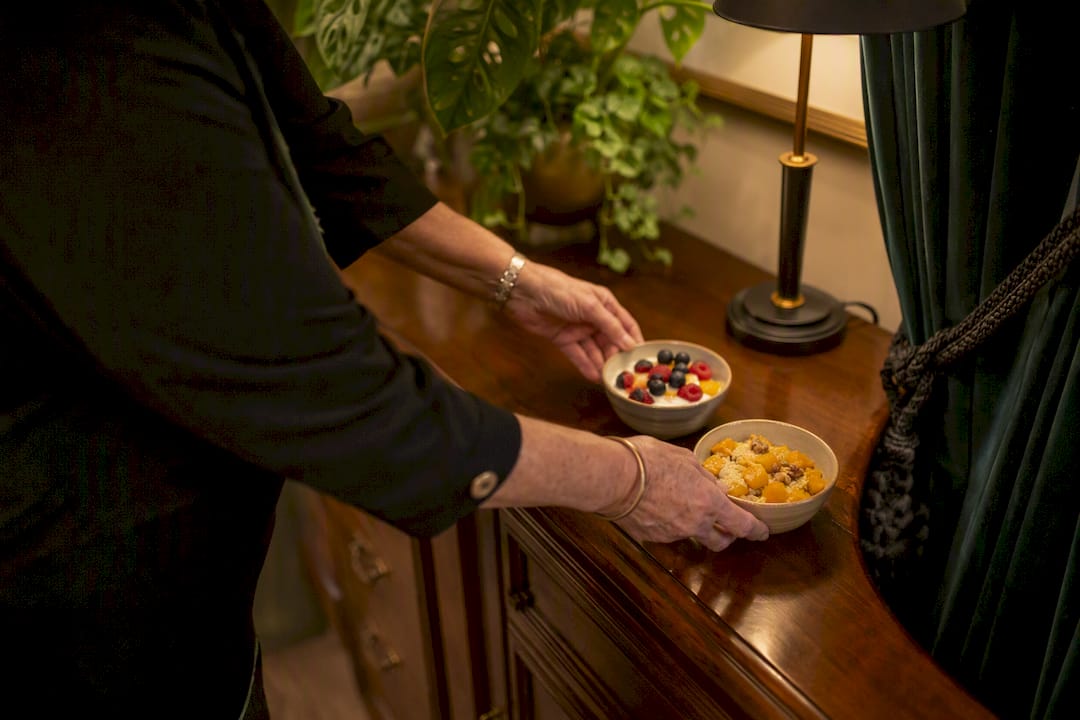
Pro Tip: Pair clinical fortification with genuine hospitality. A meal that smells good, looks appealing, and arrives with a warm "here you go" often gets eaten when the identical dish served briskly does not.
Recognising and managing swallowing problems safely
Watch for coughing or choking during meals, a wet or gurgly voice straight after swallowing, repeated chest infections, or weight dropping off faster than usual. Any of these point towards dysphagia, difficulty swallowing safely, and none of them should be managed by guesswork.
- Coughing or choking while eating or drinking
- A wet, gurgly voice after swallowing
- Recurring chest infections with no obvious cause
- Sudden or unexplained weight loss
If you spot these signs, the safest immediate step is to slow the pace, supervise meals closely, and stop offering thin fluids or hard textures until someone qualified has assessed the situation. Texture modification and thickened fluids can help, but only when a speech and language therapist (SLT) has actually recommended the specific texture and thickness. Guessing at thickener levels carries real choking risk, so this is one area where a referral to your GP or directly to SLT services matters more than trying something at home first.
Structuring meals and the mealtime environment
A predictable routine, similar times, similar setting, does more for appetite than most people expect. Calm lighting, minimal background noise, and a dining area free of clutter all help someone with dementia focus on the plate in front of them rather than competing sensory demands.
Small hospitality touches carry real weight too: a proper table setting, familiar crockery, food that's visible rather than hidden under a lid, and a choice of portion size offered warmly rather than assumed. ESPEN's guideline is explicit that adequate staffing is part of the nutritional care picture. Someone who has time to sit, encourage, and simply notice when a plate isn't being touched, catches problems days before a scale does.
- Consistent mealtime routine, same time, same place
- Calm, well-lit dining space with minimal distraction
- Visible food, familiar crockery, and a genuine choice of portion
Pro Tip: Offer smaller portions as standard and always offer seconds. A full plate can look daunting to someone with a reduced appetite, whereas a modest plate finished, followed by "would you like a little more?", builds confidence rather than pressure.
Screening, monitoring and when to involve professionals
Keep it simple: check fluid intake daily, weigh weekly if you can, and note down missed meals or noticeably smaller portions as they happen. Tools such as the Mini Nutritional Assessment (MNA) give a structured way to score risk if you want something more formal than a running notebook.
- Track daily fluids, weekly weight, and any missed or reduced meals
- Escalate if weight loss reaches around 5% in a month, or 10% over six months
- Contact your GP first for sudden appetite loss or suspected illness
- Ask for a dietitian referral if intake stays low despite fortification
- Refer to SLT immediately for any coughing, choking or voice change while eating
Your GP is usually the right first call for anything sudden, since new appetite loss can flag infection, pain, or medication side effects rather than dementia progression alone. A registered dietitian takes over from there for ongoing nutritional planning, and SLT involvement should never wait once swallowing looks unsafe.
What the research says about supplements, vitamins and dietary patterns
Oral nutritional supplements have a genuine, if limited, role. ESPEN's 2024 guideline supports their use to improve nutritional status once someone is identified as at risk, but is equally clear that supplements are not recommended as a way to slow or prevent cognitive decline itself. Those are two different goals, and it matters to keep them separate when a well-meaning relative suggests a supplement as a cure.
Mediterranean-style eating patterns show promise in some studies. One large cohort suggested a reduced risk of around 23% in certain groups, according to Alzheimer's Society, yet the evidence across studies remains inconsistent, and a dietary pattern that lowers risk in a population study is not the same as a treatment that reverses decline in one individual.
The Alzheimer's Association recommends the MIND diet, built from leafy greens, berries, whole grains, fish, nuts and olive oil, as a practical, whole-pattern approach rather than any single "brain food". Be cautious with standalone omega-3 or vitamin supplements marketed for memory: evidence for prevention through a single nutrient is weak, and some supplements interact with prescribed medication. Always check with a GP or pharmacist before adding anything new.
Fortification and snack ideas you can use today
You don't need a special shopping list, just habits that quietly raise calories and protein in food already being eaten. Stir milk powder into soup, fold cream through mashed vegetables, and mix a spoonful of nut butter into porridge or stewed fruit; grated cheese works into almost any savoury purée.
- Mini quiches or egg muffins, easy to hold and rich in protein
- Thick Greek yoghurt with honey, soft and calorie-dense
- Mashed salmon or tuna pâté on toast soldiers, ideal finger food
- Custard-based puddings, gentle on chewing and genuinely enjoyed
At Clubhouse-group, afternoon tea often does double duty this way. A scone with a generous spread of butter, or a warm custard pudding after lunch, delivers real calories inside something that still feels like a treat rather than a clinical top-up.
Setting realistic goals and tracking progress
Pick one measurable target and stick with it for a couple of weeks before adding another. Reasonable starting goals: stabilise weight over four to eight weeks, cut missed meals to fewer than two a week, or add a specific extra glass of fluid each day.
- Log daily fluids, weekly weight, and a one-line note on meal enjoyment
- Give any single change two full weeks before judging whether it's working
- If a target is missed twice in a row, escalate to your GP or dietitian
Changing everything at once makes it impossible to know what actually helped. One new habit, measured properly, beats five vague ones tried together.
UK resources for further tailored help
For guidance beyond this article, several UK organisations offer free, practical support. NHS provides balanced diet basics and malnutrition pathways; Alzheimer's Society runs a helpline with practical mealtime advice; Dementia UK offers specialist nurse advice (Admiral Nurses) for tricky situations; and the British Dietetic Association (BDA) helps you find a registered dietitian near you.
- NHS – balanced eating guidance and malnutrition screening routes
- Alzheimer's Society – helpline and practical dementia-specific advice
- Dementia UK – specialist Admiral Nurse support for complex cases
- British Dietetic Association – directory to find a registered dietitian
Keep your GP updated throughout. They coordinate onward referrals and hold the fullest picture of what else might be affecting appetite.
What we've learned from years of shared mealtimes
Most nutrition advice for dementia focuses on what to avoid or correct. What gets underestimated is how much a genuinely pleasant mealtime, not a clinical one, does the heavy lifting. At Clubhouse-group, every day starts with a proper cup of tea and something warm from the toaster, moves through a cooked two-course lunch with seasonal vegetables and a generous pudding, and closes with afternoon tea before home time.

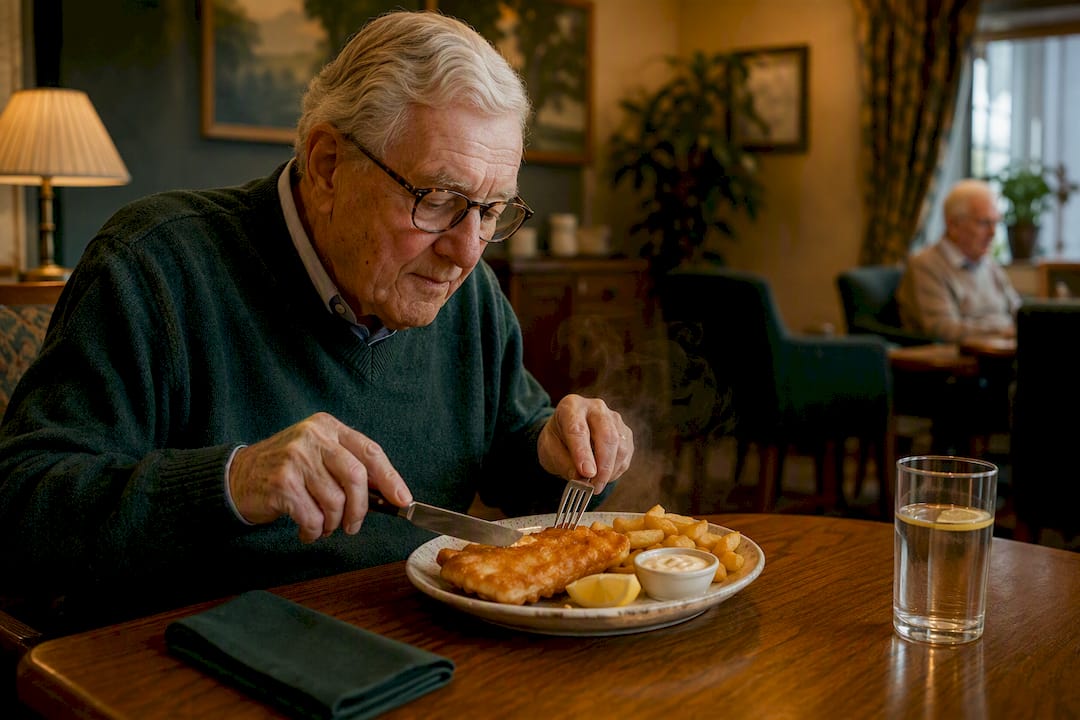
Fish and chips from Charlie's of Mobberley every Friday isn't a gimmick. It's proof that food people actually look forward to gets eaten, while the clinically "correct" plate nobody enjoys often goes back half full. Smaller portions offered as standard, with seconds always available, remove the pressure that makes so many people with dementia push a plate away.
How a dementia-friendly day club supports nutrition day to day
Clubhouse-group exists precisely for the gap between well-intentioned home cooking and full clinical care. Everything served is freshly prepared on site, with lighter and vegetarian choices, soft texture options, and clearly labelled allergen information available every single day, so appetite changes and swallowing needs are catered for without singling anyone out.
A typical day runs from a warm welcome and proper tea through to a cooked two-course lunch and afternoon tea with finger sandwiches, scones and cake, all served in a social dining room designed to encourage exactly the kind of relaxed, unhurried eating this article recommends. Trained staff notice when a portion goes untouched, offer seconds without being asked, and adjust texture where needed, the practical, staffed hospitality that ESPEN's own guideline treats as a genuine prerequisite for good nutrition, not a luxury add-on.
This isn't a substitute for clinical assessment. If you're seeing rapid weight loss or swallowing difficulties, speak to a GP or SLT first. But for steady, everyday nutritional support delivered with genuine warmth, book a welcome tour and see a Clubhouse-group mealtime for yourself.
Frequently asked questions
What foods help memory and brain health in dementia? No single food reverses decline, but whole dietary patterns like the MIND diet, leafy greens, berries, whole grains, fish, nuts and olive oil, are the most consistently recommended approach for supporting brain health.
How does diet affect dementia progression? Diet doesn't reverse dementia, but good nutrition protects against malnutrition, dehydration and infection, all of which can worsen confusion and speed functional decline if left unmanaged.
Are vitamin supplements useful for dementia? Oral nutritional supplements can improve nutritional status once someone is at risk, per ESPEN guidance, but they're not proven to prevent or slow cognitive decline, so always check with a GP or pharmacist first.
When should I worry about weight loss in someone with dementia?
What are the first signs of swallowing problems in dementia? Coughing or choking during meals, a wet or gurgly voice after swallowing, and recurring chest infections are the clearest early signs, and warrant an SLT referral rather than home adjustments.
This article is general information, not a substitute for advice from a qualified doctor. Consult a qualified healthcare professional about your own circumstances before acting on anything here.
Sources
- Understanding healthy eating/nutrition interventions for people living with dementia: A systematic review - PMC
- Malnutrition - NHS
- Diet and dementia | Alzheimer's Society
- Eat right | Alzheimer's Association