
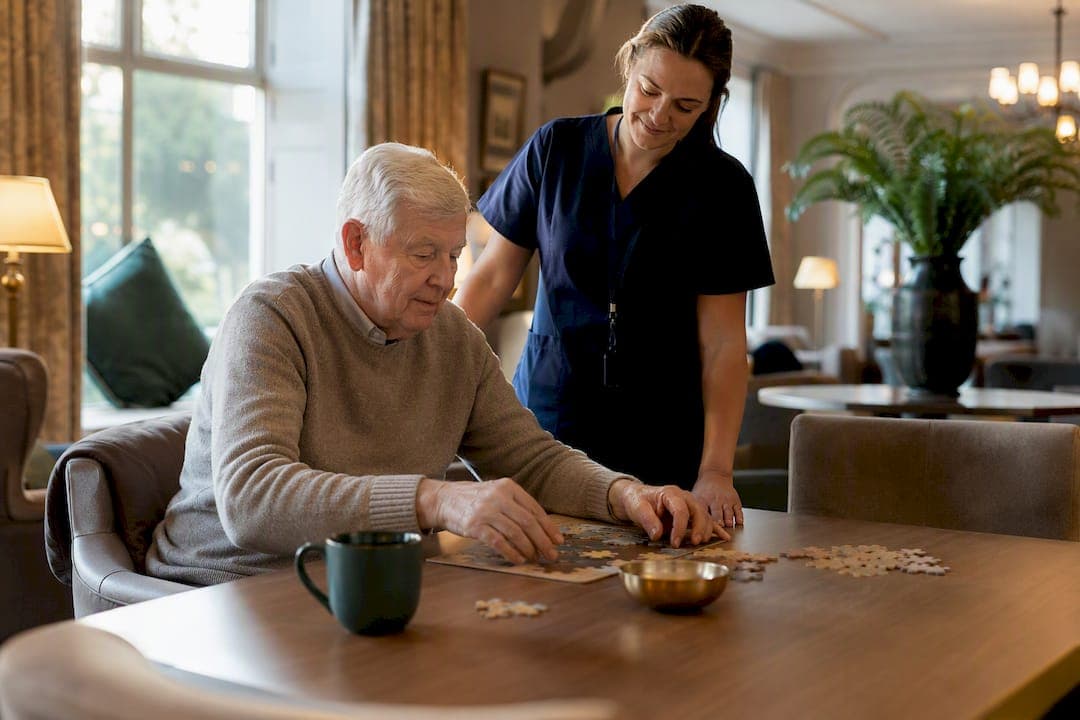
Daytime respite, often called adult day care, gives you dependable daytime cover so your relative is safe, occupied and cared for while you rest, work or simply breathe. It suits people who are lonely, isolated or living with mild to moderate dementia. Your first step is straightforward: check the provider's regulator listing or call your local council's adult social care team today.
TL;DR:
- Regulated providers can be verified through the Care Quality Commission or equivalent organizations, and asking for recent inspection reports is essential before booking.
- In-home respite visits are suitable for individuals who find travel distressing or have mobility issues, while day centres are best for those who enjoy social routines and activities.
- Costs for private daytime respite vary depending on session length, meals, and activities, with discounts often available for multi-session packs and funding options through local authorities or charities.
- A trial day is recommended before committing to a provider, as it offers a clear view of staff interaction, environment cleanliness, and activity quality.
- The Alderley Clubhouse provides extended hours, trained staff in Cognitive Stimulation Therapy, and a structured activity programme designed for adults with mild to moderate dementia.
Table of Contents
- What is daytime respite for carers, and who does it help?
- What types of daytime respite are available in the UK?
- What benefits does daytime respite bring to carers?
- How do you choose the right daytime respite provider?
- How do you find and verify local providers in the UK?
- What does daytime respite cost, and where can you get financial help?
- How does The Alderley Clubhouse deliver dependable daytime respite?
- A carer-centred perspective from Scott at The Clubhouse
- Book a trial day at The Alderley Clubhouse
- Sources
- FAQ
What is daytime respite for carers, and who does it help?
Daytime respite is planned, structured time away from caring, where your relative attends a day centre or has support at home while you step back. It typically runs for several hours during the day, with staff providing supervision, meals, and activities suited to the person's needs.
It matters because caring without a break wears people down. You might be managing your own job, health conditions or family life alongside caring duties, and a regular pause protects your own wellbeing as much as it benefits the person you support.
A typical day at a dementia day programme might include:
- A relaxed arrival with breakfast or a hot drink
- Morning activities such as gentle exercise, music or reminiscence sessions
- A proper sit-down lunch
- Afternoon social time, quizzes or crafts
- A wind-down period before collection
This structure gives your relative something to look forward to, not just somewhere to be looked after.
What types of daytime respite are available in the UK?
You have several realistic routes, and the right one depends on how much support your relative needs and how they respond to new environments.
- Adult day centres or day clubs. These offer full or half-day sessions with meals, activities and trained staff on-site. They suit people who enjoy company and benefit from routine, and adult day care centres typically provide structured activities and meals whether privately funded or council-arranged.
- In-home respite visits. A carer comes to the house for a set number of hours. This works well for people who find new places distressing, or where mobility makes travel difficult.
- Short residential respite. An overnight or multi-day stay in a care home, useful when you need a longer break, such as a holiday or hospital stay of your own.
- Community alternatives. Lunch clubs, befriending schemes and social prescribing offer lighter-touch support for people who are mainly isolated rather than needing personal care. Opening hours vary widely between providers, with some centres running shorter afternoon sessions than others, so always check before assuming a service fits your schedule.
What benefits does daytime respite bring to carers?
The benefits run in both directions. You get real time back, and your relative gets stimulation and structure that's genuinely hard to replicate at home alone.
- Lower stress and better long-term physical and mental health for you
- Social contact and routine for the person you care for, which can slow isolation-related decline
- Practical breathing room for GP appointments, work shifts or simply sleeping properly
- A chance to maintain your own relationships and interests outside caring
NHS guidance highlights respite as a key part of protecting carers' health and preventing burnout, and even occasional respite, rather than a full weekly routine, measurably reduces caring strain. You don't need to wait until you're exhausted before booking a day. Starting early, while you still have energy, tends to make the transition easier for everyone.
How do you choose the right daytime respite provider?
Not every service that calls itself "dementia-friendly" backs that claim up with trained staff or evidence-based activities, so a short checklist saves you wasted visits.
- Check regulation first. In England, look up the provider on the Care Quality Commission (CQC) register; Scotland uses the Care Inspectorate, and Wales uses CIW.
- Ask about dementia-specific training. Find out whether staff run Cognitive Stimulation Therapy (CST) groups, since NICE guidance names CST as the only recommended non-drug therapy for mild to moderate dementia, and not every centre that markets itself as dementia-aware actually delivers it.
- Confirm the practical details. Opening hours, transport arrangements, meal provision, staff-to-attendee ratios, and whether a trial day is offered before you commit.
- Ask directly about safeguarding, medication support and cancellation terms. A confident, specific answer tells you more than any brochure.
- Watch for red flags. Vague answers about staffing, no visible inspection reports, or a visibly unclean environment are reasons to walk away.
Pro Tip: Book a trial day before signing up for a package. A single visit, watching how staff handle lunchtime and settling-in, tells you more than three phone calls ever will.
How do you find and verify local providers in the UK?
Verification takes a bit of legwork, but it's the part that protects your relative, so it's worth doing properly before you hand over any money.
- Search the CQC care directory for regulated providers near you, then cross-check with your local council's adult social care team, who often hold their own approved lists.
- Contact your nearest Alzheimer's Society branch for recommendations, and use established directories such as Autumna to compare dementia-friendly centres and filter by cost or location.
- Check community noticeboards, GP surgeries and local carer support groups. Some of the best-regarded centres are small, community-rooted operations that rely on word of mouth rather than large online listings.
- Arrange a trial day wherever possible. Ask to see safeguarding policies and the latest inspection report, meet the staff who'll actually be caring for your relative, and observe a mealtime or activity session in progress. That's usually where the true quality of care shows itself.
What does daytime respite cost, and where can you get financial help?
Private daytime respite in the UK is usually priced as either a day pass or a discounted multi-session pack, with cost rising alongside meal quality, staff ratios, session length and any therapeutic programmes such as CST. A centre offering a longer day, chef-prepared meals and specialist dementia activities will sit at a higher price point than a basic lunch club, and that's usually a fair trade if the extra hours genuinely suit your routine.
- Ask for full-day package costs in writing, including meals, activities and any add-ons like hairdressing
- Contact your local council for a carer's assessment, which can unlock short-break funding or local authority support depending on eligibility
- Ask about charitable grants through organisations like the Alzheimer's Society, and check whether NHS continuing healthcare applies in more complex cases
- Compare session-pack pricing against single day passes, since packs often work out cheaper per visit
Get everything confirmed on paper before booking, so there are no surprises on your first invoice.
How does The Alderley Clubhouse deliver dependable daytime respite?
The Alderley Clubhouse is a purpose-designed, dementia-friendly and fully accessible day community in Nether Alderley, Cheshire, built for adults aged 50 and over, including people living with mild to moderate dementia or experiencing loneliness. Days run 9:30am to 4:30pm, Monday to Friday, longer than many local provision, with breakfast on arrival, a cooked two-course lunch, traditional afternoon tea, and a full programme of physical, creative, cognitive and social activities.
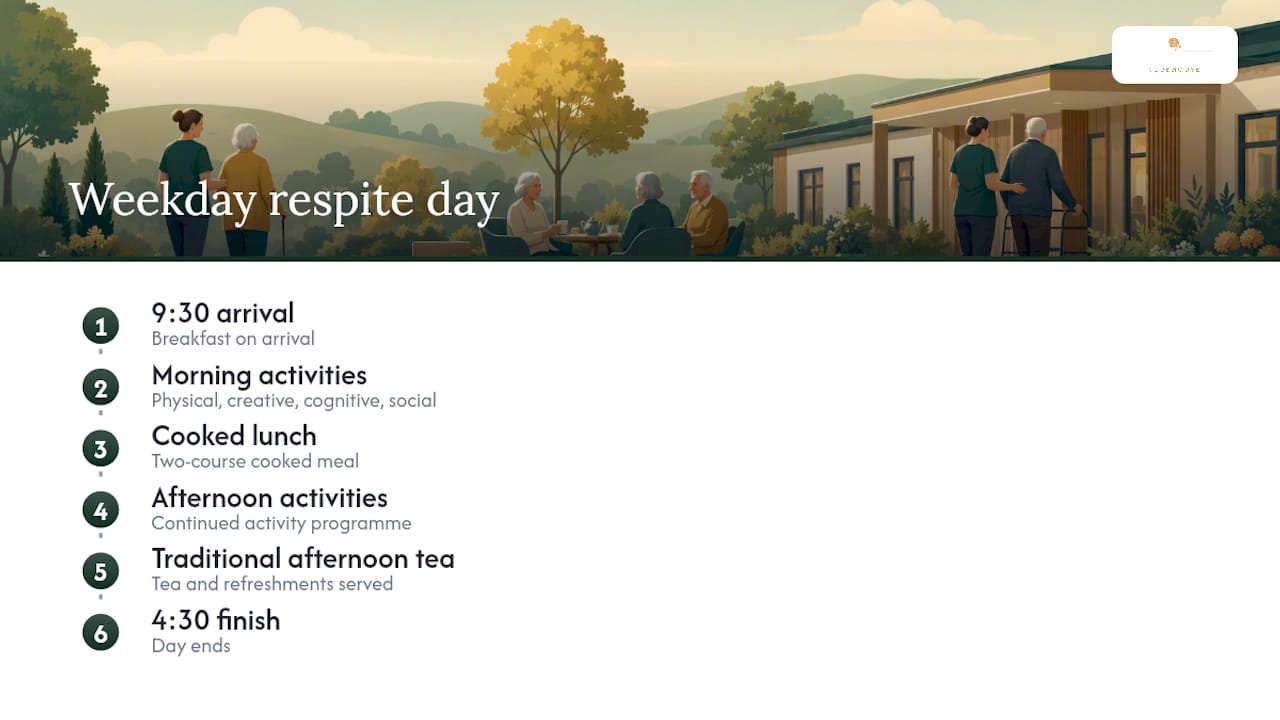
Its care team is trained to deliver Cognitive Stimulation Therapy, the therapy NICE recommends for mild to moderate dementia, and attendance is limited each day to ensure staff know members by name. Day passes and a 10-session pass are both available; current pricing sits on the Clubhouse facilities page.
A carer-centred perspective from Scott at The Clubhouse
Working alongside The Clubhouse, I've seen how much guilt carers carry about asking for a break, as though needing one means they're failing somehow. That's backwards. Booking a trial day, with notes on your relative's routines, likes and triggers, tells you more in one afternoon than weeks of research. Every reputable provider expects safeguarding questions, so ask them without hesitation. The right centre will welcome the scrutiny, not dodge it.
— Scott @ The Clubhouse
Book a trial day at The Alderley Clubhouse
Choosing between a basic day club and a fully staffed, CST-trained day community comes down to what your relative actually needs, and The Alderley Clubhouse is built specifically around dementia-friendly routines and evidence-based activity, not just supervision. The longer opening hours, limited daily attendance, and a chef-prepared two-course lunch are some of the features that distinguish this from a standard local drop-in centre.
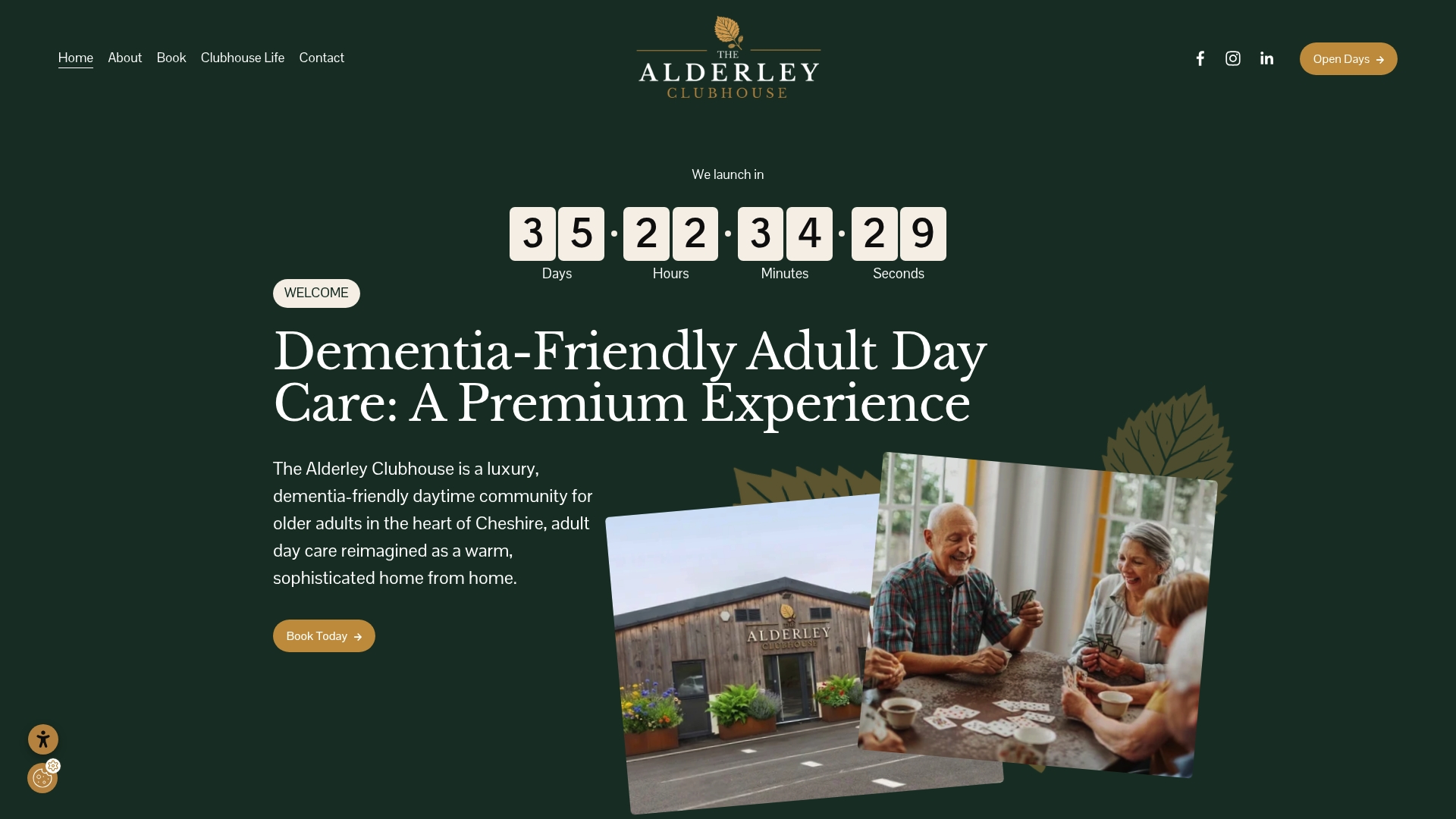
Booking a trial day is simple: get in touch through the Alderley Clubhouse booking page, and your first visit will include a proper introduction to the team, lunch, and a taste of the day's activity programme. Before you commit anywhere, compare the CQC or equivalent inspection reports for any provider you're considering, and bring your checklist of questions on staffing, CST availability and cancellation terms. Get your questions answered, meet the team, and see the facilities and daily activities for yourself.
Sources
Before booking anywhere, run these three checks: search the CQC care directory for regulated status, contact your nearest Alzheimer's Society branch for local recommendations, and use Autumna's directory to shortlist and compare dementia-friendly day centres by cost and location.
This article is general information, not a substitute for advice from a qualified doctor. Consult a qualified healthcare professional about your own circumstances before acting on anything here.
- Data
- NHS — advice and support for carers
- Autumna — how to find an adult day care centre
- Lilian Faithfull — adult day care example (UK)
FAQ
What is daytime respite for carers?
It's planned daytime cover, usually at a day centre or through in-home visits, that gives you a reliable break while your relative receives supervised care, meals and activities.
How do I check if a day centre is safe and regulated?
Search the CQC directory for England, or the Care Inspectorate and CIW for Scotland and Wales, and ask to see the centre's latest inspection report before booking.
What is Cognitive Stimulation Therapy, and why does it matter?
CST is the only non-drug therapy NICE recommends for mild to moderate dementia, and centres like The Alderley Clubhouse train staff to deliver it as part of the daily programme.
How much does daytime respite typically cost?
Pricing varies by session length, meals and staffing, and providers usually offer either a single day pass or a discounted multi-session pack, so always request full costs in writing.
Can I get funding help for daytime respite?
Yes. Contact your local council for a carer's assessment, which may unlock short-break funding, and ask charities such as the Alzheimer's Society about additional grants.