

Most families pay privately for dementia care unless NHS continuing healthcare covers a primary health need, or a council means test finds savings below the threshold. If neither applies, you'll be a self-funder. Start by requesting a needs assessment from your local authority, then a financial assessment, so you know exactly where you stand.
TL;DR:
- Most families pay privately for dementia care unless NHS or council support covers specific medical needs or savings are below the threshold.
- The means test considers savings, property, and income, with the family home often disregarded if relatives still live there.
- NHS routes like continuing healthcare and funded nursing care offer fully funded support outside means testing, but require specific assessments.
- Regional differences significantly impact care costs, with weekly fees typically ranging from mid 800s to over 1,200 pounds for residential dementia care.
- Benefits checks and deferred payment agreements can help delay selling the family home and maximize financial support before choosing full-time care.
Table of Contents
- What does private pay dementia care actually mean?
- How does the means test decide who pays?
- What are NHS continuing healthcare and funded nursing care?
- How much does private dementia care cost in the UK?
- What are deferred payment agreements, top-ups and benefits?
- How do you choose the right kind of private dementia care?
- How can day services support a private-pay plan?
- What should you do first if you're likely to self-fund?
- Where day respite fits alongside private-pay care planning
- Where to get official help and advice
- Sources
What does private pay dementia care actually mean?
Private pay dementia care simply means you or your family cover the cost of care without council or NHS funding. It's the default position for most people in the UK, at least at first, and it's worth understanding the alternatives before you commit to it.
There are four main routes into paid care, and knowing which one applies to you changes everything about how you budget and plan.
- Self-funding — you pay the full cost yourself and choose the provider, setting and pace of care, enjoying the most freedom but bearing the full financial responsibility.
- Council-funded care — after a means test, your local authority contributes towards costs, though you may still pay a top-up.
- NHS continuing healthcare (CHC) — a fully funded package for people whose needs are primarily health related, assessed separately from any means test.
- NHS-funded nursing care (FNC) — a weekly contribution towards the nursing element of care in a nursing home, again without a means test.
Most people move between these routes over time. CareHomeGuide notes that many families begin as self-funders and later receive council support once savings fall below the threshold. If you suspect a health need is driving the care requirement rather than general frailty, it's worth requesting a CHC checklist assessment early, alongside the standard needs assessment you can Gov.
How does the means test decide who pays?
The financial assessment looks at your capital and income against two national thresholds. In England, if your capital sits above the upper capital threshold, you're considered a self-funder. Below the lower threshold, the council typically covers the cost of care (subject to a needs assessment confirming you need it). Between these thresholds, you pay a contribution amount from savings above the lower limit.
Capital that usually counts:
- Savings, investments and most property (though the family home is often disregarded if a spouse or certain relatives still live there).
- Some pension arrangements and other assessable assets.
Councils must factor in disability-related expenditure, such as specialist equipment or extra heating costs, when calculating your contribution, and cannot reduce your income below the minimum income guarantee. If your assessment doesn't reflect this, you can request a review.
Don't assume the family home is automatically counted or automatically protected. Ask your local authority in writing how they've treated the property in your specific case, and get the answer confirmed on paper.
What are NHS continuing healthcare and funded nursing care?
Two NHS routes sit outside the means test entirely, and they're often missed because families assume all care funding involves a financial assessment.
- NHS continuing healthcare (CHC) covers the full cost of care for people with primarily health-related needs, without means testing. Eligibility depends on a "primary health need" test conducted by an NHS-led team, as described in NHS guidance.
- NHS-funded nursing care (FNC) provides a weekly contribution towards the nursing element of care in a nursing home, also without means testing, but it does not cover accommodation or personal care costs.
- To request an assessment, ask your GP, hospital discharge team or local authority for a CHC checklist. Claims often fail because paperwork understates day-to-day fluctuation in need, so keep a diary of difficult days, not just calm ones.
How much does private dementia care cost in the UK?
Dementia care tends to cost more than general residential care, and the gap can be substantial once you factor in staffing ratios and specialist training. As a rough national guide, residential dementia care often runs from the mid £800s to over £1,200 a week, with nursing dementia care frequently higher still, though your actual figure depends heavily on where you live.
Regional variation is the single biggest factor in your quote. Which? reports that fees can differ by several hundred pounds a week between regions, meaning a national average tells you very little about what you'll actually pay locally.
- Ask your council for its published "standard rate" for dementia care in your area before comparing quotes.
- Use that local figure, not a national average, as your budgeting baseline.
- Expect nursing dementia care to sit above residential dementia care, and specialist units above general homes.
Comparing your quote against the local standard rate is also the strongest tool you have if you're negotiating a top-up fee later, since providers price against what councils actually pay locally, not against national headlines.
What are deferred payment agreements, top-ups and benefits?
A deferred payment agreement (DPA) is a way to delay selling the family home to pay for care, with the council placing a legal charge on the property and reclaiming costs plus interest upon sale. Alzheimer's Society explains how this can provide financial flexibility. Third-party top-ups are additional payments made by someone other than the person receiving care to cover the difference if the care home charges exceed what the council pays; a written agreement is required, and if payments cease, the care placement may need to change.
Before assuming you'll self-fund everything, check what benefits still apply:
- Attendance Allowance — may continue for self-funders, but some benefits can cease after several weeks if the council begins paying care home fees. See details in Alzheimer's Society's guide.
- Pension Credit — it's advisable to check eligibility as income thresholds may allow more recipients than anticipated.
Pro Tip: Get a full benefits check done before you sign any care contract. It costs nothing, takes an hour, and regularly uncovers entitlements families assumed they'd lost the moment care began.
How do you choose the right kind of private dementia care?
Care home, live-in care and day services each suit different stages and budgets, and the right answer often changes over time rather than staying fixed.
- Residential or nursing care homes suit higher, round-the-clock needs but mean giving up the family home as a living space, and often as an asset if self-funding long term.
- Live-in care keeps someone at home, preserving routine and property, though it can cost more than a care home for complex needs and depends on finding consistent, well-matched carers.
- Day services support people living at home or with family carers, reducing pressure without the cost or upheaval of a full-time placement.
Whichever route you're considering, check the CQC rating, ask about dementia-specific staff training, and get fee-increase terms in writing before you sign. Ask directly what happens if needs escalate: some providers require a move, others adapt in place.
How can day services support a private-pay plan?
Day services often sit quietly in the background of a funding plan, yet they can delay or reduce the need for full-time residential care considerably. A local day service for older adults runs weekdays with meals and a full programme of activities included.
Our care team delivers Cognitive Stimulation Therapy, the only non-drug therapy NICE recommends for mild to moderate dementia. Day passes can be purchased for a per-day rate, with multi-session packages offering value for families seeking respite care. Check current pricing and availability before booking.
What should you do first if you're likely to self-fund?
Request the needs assessment and financial assessment straight away, and keep copies of every letter and form. Get a benefits check done before assuming what you can and can't claim, and think hard about a deferred payment agreement before rushing to sell the family home. Keep the person with dementia part of every decision, and put any top-up agreement in writing.
— Scott @ The Clubhouse
Where day respite fits alongside private-pay care planning
Full-time residential care isn't always the next step the moment things get harder at home. The day service gives families a way to buy structured, dementia-friendly daytime support without committing to a permanent placement, with flexible day pass options and multi-session packages.
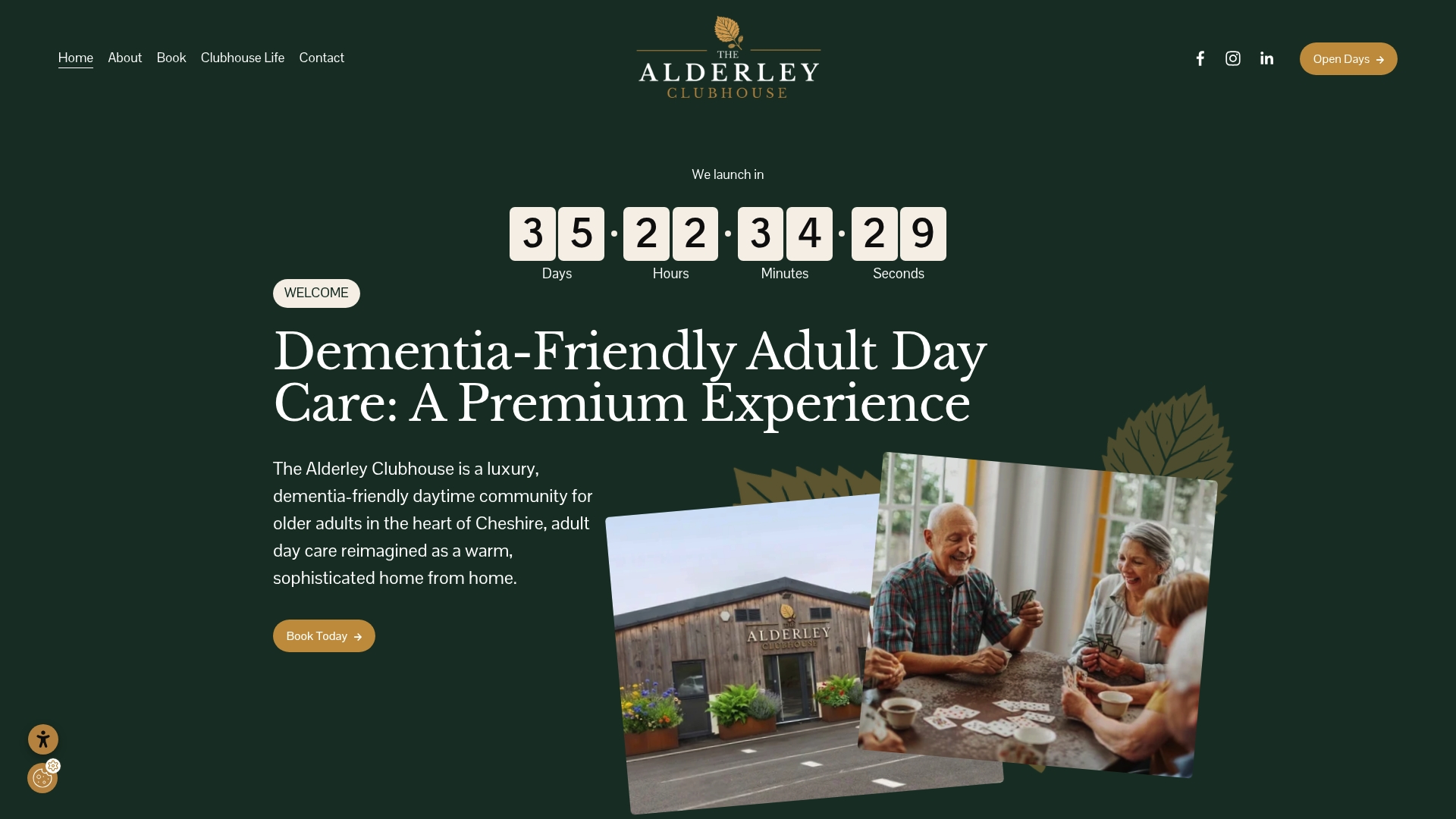
Every weekday, the team delivers Cognitive Stimulation Therapy alongside meals, activities and companionship, with attendance capped to ensure personalised care. For a family carer or live-in carer needing dependable, regular respite, this can ease pressure for months before a bigger decision becomes necessary. Visit The Alderley Clubhouse to check current availability and book a day pass or session package.
Where to get official help and advice
For assessments, start with your local authority's needs assessment service and the NHS guidance on care homes. Alzheimer's Society's paying for care booklet covers means testing in detail. For a free benefits check, contact Age UK or Citizens Advice before signing any care contract.
This article is general information, not a substitute for advice from a qualified financial advisor. Consult a qualified financial professional about your own circumstances before acting on anything here.
Sources
- NHS — NHS-funded nursing care
- Alzheimer's Society — Paying for care and support in England (booklet 532)
- CareHomeGuide — Care home funding options UK
- Which? — Care home fees across the UK explained