
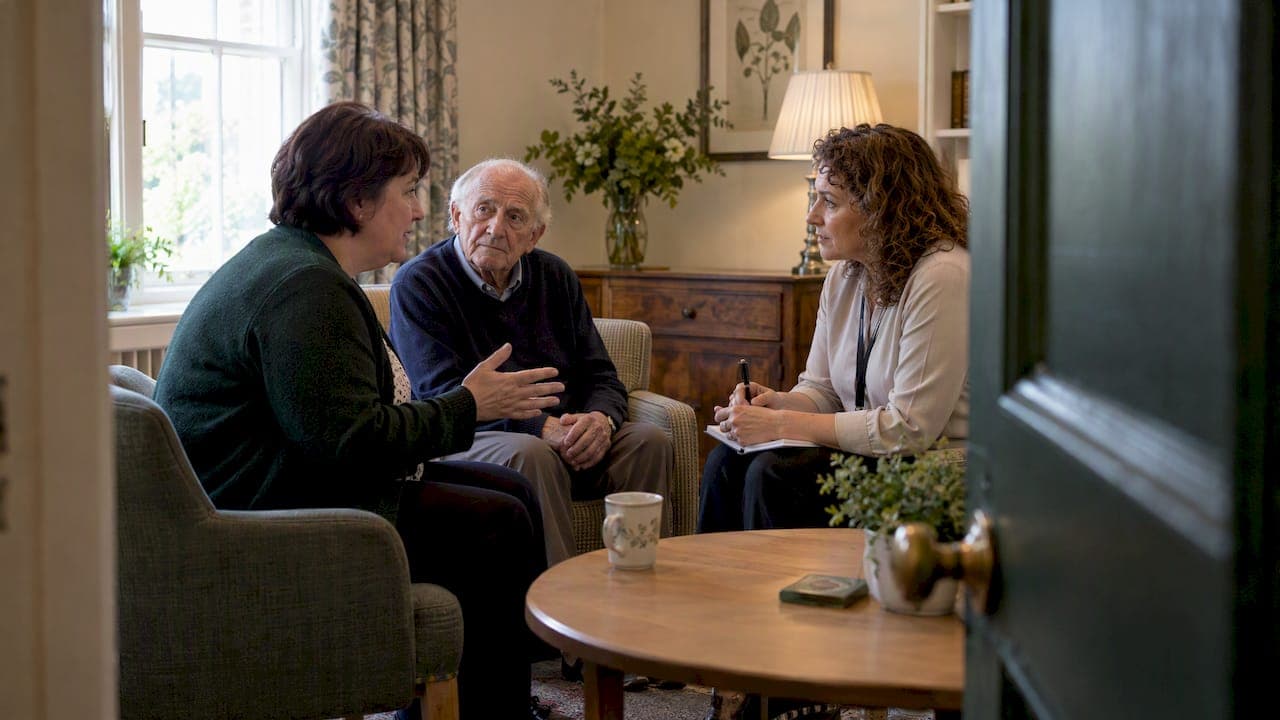
Start every difficult conversation by getting eye level, using one short sentence, and offering a simple choice rather than an open question. Then slow down: allow extra time for a reply and keep "what matters" to the person at the centre of the exchange. These two habits solve most everyday communication problems, and the detailed techniques below build on them.
Key Takeaways
Effective communication with dementia patients and caregivers relies on simple, Respectful techniques, structured routines, and proper planning to maintain connection and reduce stress.
| Point | Details |
|---|---|
| Use short, clear sentences | Speak in simple phrases and ask one question at a time to avoid confusion and frustration. |
| Offer simple choices | Present two options instead of open-ended questions to make decisions easier for dementia patients. |
| Involve carers in care planning | Carers should document routines, preferences, and important details to ensure care consistency and effectiveness. |
| Share clear care summaries | Use concise, updated one-page summaries with medication, routines, and emergency contacts for everyone involved. |
| Establish family boundaries | Set clear objectives, choose neutral times for discussions, and assign specific tasks to prevent misunderstandings. |
Table of Contents
- Practical communication techniques for everyday conversations
- How to communicate effectively with health and social care professionals
- Simple templates and habits for sharing care information
- Holding family conversations about sharing care and boundaries
- Why a structured day service supports better communication for carers
- A note from the Clubhouse floor
- FAQ
- Sources
Practical communication techniques for everyday conversations
Dementia changes how someone processes language, but it rarely changes what they want: to feel understood and respected. The NHS guidance on communicating with someone with dementia recommends short, simple sentences, fewer distractions, and plenty of time for a response, and these principles work well for most family conversations, not just dementia-related ones.
A few habits make the biggest difference:
- Speak in short, clear sentences and ask one thing at a time.
- Offer two simple options ("tea or juice?") rather than open questions ("what would you like?").
- Sit at eye level, keep your face warm and relaxed, and use a gentle touch if that feels natural for your relationship.
- Reduce background noise, turn off the television, and use photos or familiar objects as visual prompts.
- Practise active listening: pause, reflect back what you heard, and repeat key words rather than rephrasing everything.
As dementia progresses, words often become harder to find before feelings do. Watch for frustration or withdrawal and shift towards non-verbal approaches: a hand held, a familiar tune, a shared photograph. The NHS guidance notes that reminiscence and life-story work help maintain identity and connection long after conversation becomes harder.
Pro Tip: Keep a small card with three or four reliable conversation openers (a favourite memory, a pet, a familiar song) so you always have somewhere calm to go when a conversation stalls.
How to communicate effectively with health and social care professionals
Family carers have legal standing in care planning, not just a seat at the table. Under the Care Act 2014, local authorities have a duty to involve carers in care and support planning and to offer a carer's assessment, separate from any assessment of the person you support.
To make the most of that right:
- Write a short "what matters" note before appointments: routines, preferences, triggers, and anything that reassures the person.
- Ask for written summaries of medication changes, discharge instructions and care plans rather than relying on memory.
- Request reasonable adjustments or accessible formats such as large print or easy-read documents under the Accessible Information Standard.
- Bring someone else where possible, and take notes during the conversation, especially at hospital discharge.
Hospital discharge conversations move quickly, and good practice means carers should be involved in planning, given written information, and have communication needs recorded rather than assumed, according to UK government discharge guidance. A written copy of what was agreed protects your contribution from being lost between appointments.
Simple templates and habits for sharing care information
A one-page care summary saves enormous time and reduces errors, particularly when several people share caring duties. Keep it short and specific:
- Current medications, doses and times.
- Daily routines: waking, meals, rest, bedtime.
- Communication preferences and known triggers.
- Emergency contacts, GP details and next of kin.
Keep a paper copy at home, a scanned version in a shared family folder, and a photo of it in a group chat so everyone has access during an emergency. Under the Care Act, you can ask your local authority for a combined care and support plan, and you are entitled to keep your own copy of any assessment or plan drawn up. Small technology habits help too: labelled photos of medication boxes, a shared calendar for appointments, and simple reminder apps all reduce the daily load of repeating the same information.
Holding family conversations about sharing care and boundaries
Most family rifts over caregiving come from vague expectations, not bad intentions. Set a clear objective before you raise the subject, and let everyone know in advance what you want to discuss.
- Choose a quiet, neutral time, away from a crisis moment.
- Use "I" statements ("I need help on Tuesdays") rather than accusations, and give each person a turn to speak.
- Work from a short agenda: what needs doing, who can realistically help, and what happens next.
- Turn the conversation into actions, not just goodwill: name who does what, and by when, then write it down.
Naming a small, bounded task for each person, such as collecting a prescription every Monday, works far better than a general request for support. If conversations stall or relationships are strained, a mediator, a social worker, or a carers' organisation can help structure the discussion fairly.
Pro Tip: End every family meeting by reading the actions back aloud, so nobody leaves with a different understanding of what was agreed.

Why a structured day service supports better communication for carers
Calm, unhurried time makes every communication technique easier to practise, and that is exactly what a well-run day service aims to provide. At The Alderley Clubhouse, days run from 9:30am to 4:30pm, Monday to Friday, with attendance capped at 35 members so staff know each person by name.
- Meals including breakfast, lunch, and afternoon tea structure the day around familiar rhythms.
- The care team can be trained to deliver Cognitive Stimulation Therapy, a non-drug therapy recommended by NICE for mild to moderate dementia.
- A programme of physical, creative, and social activities can give carers a reliable window of respite.
Knowing someone is settled and well cared for during the day gives family carers room to rest, prepare for the next conversation, or simply recover. For more on starting with day services, our piece on dementia day centres worth booking first sets out where to begin.
A note from the Clubhouse floor
A member once stopped answering questions about her day but still hummed along to her favourite hymn every Friday. We learned to lead with the tune, not the question, and the conversation followed. Look after your own wellbeing too: carers who are exhausted communicate worse, not less lovingly. Try this today: "Would you like tea, or shall we sit in the garden?" One sentence, one choice.
— Scott @ The Clubhouse
This article is general information, not a substitute for advice from a qualified doctor. Consult a qualified healthcare professional about your own circumstances before acting on anything here.
FAQ
What are the symptoms of caregiver stress?
Common signs include constant tiredness, irritability, trouble sleeping, withdrawing from friends, and feeling unable to cope with daily tasks. Physical symptoms such as headaches or a weakened immune response can also appear when stress goes unaddressed for a long time.
What are some self-care practices for caregivers?
Regular breaks, even short ones, help prevent burnout, alongside staying connected to friends and seeking peer support through local carer organisations. Structured respite, such as a day service, gives carers predictable time to rest rather than relying on irregular, last-minute help.
Can caregiving lead to PTSD?
Prolonged, high-intensity caregiving, particularly involving trauma, crisis or sudden decline, can contribute to significant psychological distress in some carers. If you notice flashbacks, persistent anxiety or emotional numbness, speak to your GP, who can refer you to appropriate mental health support.
When does caregiving become too much?
Caregiving becomes too much when it consistently affects your own health, work, sleep or relationships, rather than being an occasional hard day. At that point it is worth requesting a carer's assessment from your local authority and looking into respite options such as a structured day service.
Sources
- Communicating with someone with dementia (NHS)
- Care Act 2014 and unpaid carers: handy summary (Local Government Association)
- Hospital discharge and community support guidance (UK government)