

The three checks that matter most this week are claiming Attendance Allowance, requesting a council care needs assessment (with a Continuing Healthcare screening alongside it), and asking about direct payments. Attendance Allowance is quick to claim and never means-tested. A needs assessment can uncover partial council funding or, in some cases, full NHS Continuing Healthcare. Direct payments turn council money into cash you control, which many families then put towards a private day club.
TL;DR:
- Obtain a care needs assessment and NHS Continuing Healthcare screening before committing to a provider to determine eligible funding and avoid unnecessary out-of-pocket expenses.
- Use direct payments or council contributions carefully by setting up signed top-up agreements and verifying invoicing or attendance records from providers.
- Budget approximately £120 per day for private dementia day care, with possible savings of about £114 weekly from Attendance Allowance, and additional council support reducing expenses further.
- Start paperwork and arrange a taster day within two weeks to ensure funding eligibility and assess suitability, avoiding delays that could lead to paying full rates unprepared.
Table of Contents
- What funding routes exist for adult day care in the UK?
- How do you apply funding to a private day club?
- What should you budget for at a private dementia day club?
- What will you actually pay after benefits and council help?
- What's the checklist and timeline for getting funding sorted?
- Why early paperwork and a taster day matter
- How The Alderley Clubhouse can help you fund day care
- Official pages and charities to consult next
- Sources
- FAQ
What funding routes exist for adult day care in the UK?
Several routes can help pay for private day care, and most families qualify for more than one without realising it. Knowing which applies to your relative's situation now saves months of paying full price unnecessarily.
Attendance Allowance is the easiest win. It's paid regardless of income or savings, at £76.70 or £114.60 a week depending on care needs, and can go straight towards day care fees.
NHS Continuing Healthcare (CHC) covers all care costs, again without a means test, but only for people assessed as having a primary health need. Dementia alone rarely qualifies someone outright, though complex or advanced cases sometimes do, so it's always worth asking for the national framework assessment rather than assuming the answer is no.
Council-funded care depends on the means test. In England, anyone with assets above £23,250 is expected to self-fund, while those with assets between £14,250 and £23,250 usually get partial help, with a tariff income charged on savings in that band.
Beyond these three, families sometimes lean on:
- Direct payments and personal budgets, which convert council funding into money you spend on the provider you choose
- Deferred Payment Agreements, which let homeowners delay paying care costs until the property is sold
- Equity release, used occasionally as a last resort to free up cash without selling immediately
- Charitable and benevolent fund grants, which top up gaps rather than fund care in full
How do you apply funding to a private day club?
Once you know which route applies, the mechanics of actually paying a private provider are where most families get stuck. Here's the order that tends to work.
- Confirm eligibility first. Get the outcome of your care needs assessment and, where relevant, the CHC Decision Support Tool result before agreeing to anything with a provider.
- Set up direct payments if the council is contributing. The council pays money into a dedicated account (or via a broker), and you use it to book sessions at the day club of your choice. Independent Age notes that direct payments let you commission private providers directly, rather than being limited to council-contracted services.
- Get a written top-up agreement. If the council's contracted rate is lower than a private club's fee, you'll need a signed agreement covering who pays what and when the top-up is reviewed.
- Ask the provider what evidence they can supply. Councils typically want invoices or attendance records to prove direct payment money was spent as agreed.
Pro Tip: Claim Attendance Allowance before crisis point, not after. It usually stops 28 days after entering a care home permanently, but for day care and respite it keeps being paid, so early claims cost nothing and only help.
A rough rule of thumb: CHC or NHS-funded nursing care covers everything if awarded; council contributions plus a private top-up cover the gap for most self-funders; Attendance Allowance stacks on top of either.
What should you budget for at a private dementia day club?
Premium day care costs more than a basic sitting service, and the difference shows up in what's actually delivered. Cognitive Stimulation Therapy, the only non-drug therapy NICE recommends for mild to moderate dementia, takes trained staff and structured sessions to deliver properly, and that's reflected in the fee.
A day club may run a day from 9:30am to 4:30pm and include breakfast on arrival, a cooked two-course lunch, traditional afternoon tea, and all-day hydration. It might offer a full programme of physical, creative, cognitive, and social activities, weekly live entertainment, visiting hairdressing and chiropody services, a dementia-friendly purpose-designed building with secure parking and doorstep drop-off, and capped attendance to ensure staff know attendees by name. Day passes and multi-session passes are often available, with pricing and terms confirmed on the provider's website. Many private clubs can provide invoices or attendance records that councils typically ask for when processing direct payment spend, so it's worth confirming this in writing before you apply. If you're still weighing up whether structured day care suits your relative's stage of dementia, our guide to what adult day care actually involves covers the practical side in more depth.

What will you actually pay after benefits and council help?
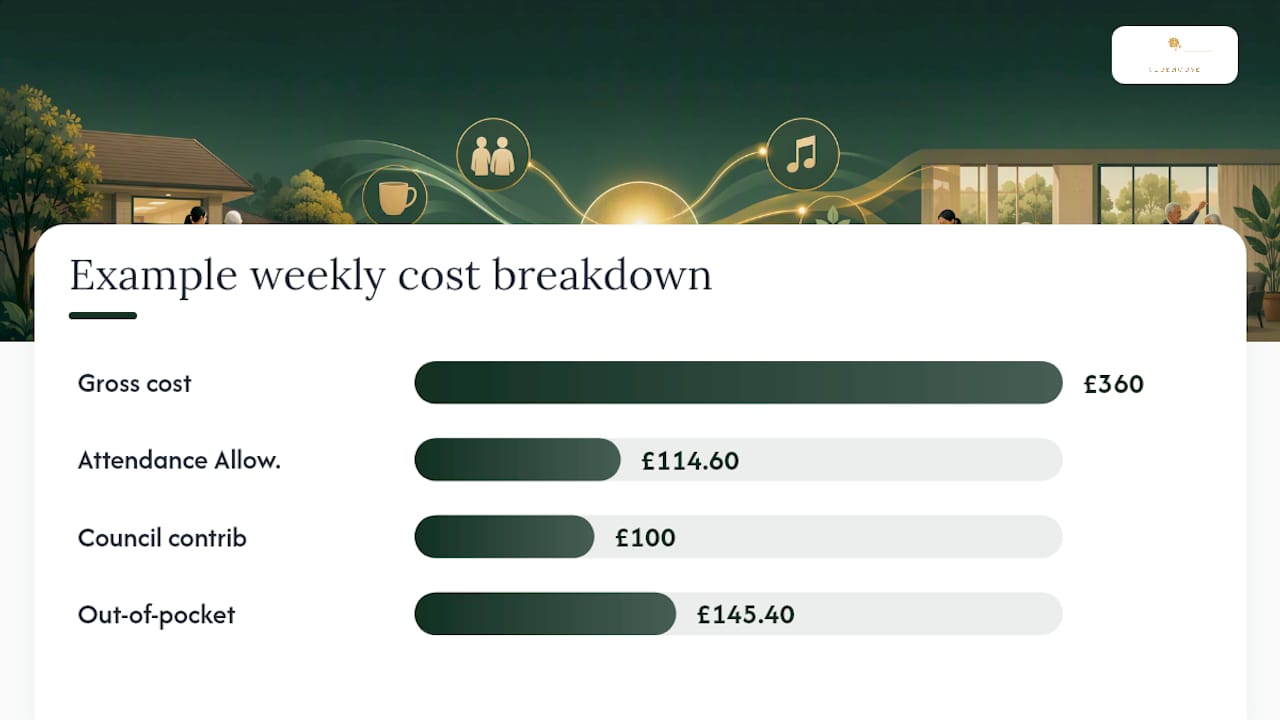
Take a family paying for three day-club sessions a week at £120 a day, £360 weekly. Attendance Allowance at the higher rate contributes £114.60, cutting the bill to roughly £245.40. If the council then agrees a partial contribution through direct payments, say £100 a week after the means test, the family's out-of-pocket cost drops to around £145.40.
A 10-Session Pass works the same way, just spread over ten days instead of one week's rota. Two things to flag: private rates almost always sit above council-contracted rates for the same hours, and contribution levels vary significantly between local authorities, so treat this as a worked example rather than a guaranteed outcome.
What's the checklist and timeline for getting funding sorted?
Act in this order, ideally within the next fortnight rather than waiting for a crisis to force the pace.
- Claim Attendance Allowance now. There's no downside to claiming early, and processing typically takes several weeks.
- Request a care needs assessment from adult social services, even if you expect to self-fund. This creates a dated record of need that matters later.
- Ask your GP or hospital team about a CHC screening if dementia is advanced or complicated by other health conditions.
- Gather documents now: recent bank statements, existing benefits letters, a log of care incidents or falls, GP correspondence, and property details if a Deferred Payment Agreement might ever apply.
- Ask the day club directly what invoicing or attendance evidence they provide for council direct payment claims.
Pro Tip: If savings are approaching the £23,250 threshold, ask for a financial reassessment before crossing it. Councils fund from the date of contact, not backdated to when savings actually dropped, so timing this call matters.
Why early paperwork and a taster day matter
Families who start the paperwork early keep every funding door open; those who wait until a crisis often find they've missed months of eligible support. A taster day costs little and tells you more about fit than any brochure. If you're unsure where to start, ring a trusted local club and ask.
— Scott @ The Clubhouse
How The Alderley Clubhouse can help you fund day care
Whichever combination of Attendance Allowance, council contribution or direct payments applies to your family, you still need somewhere that actually delivers on the promise of structured, dementia-aware day care. That's where The Alderley Clubhouse comes in.
Days run 9:30am to 4:30pm, Monday to Friday, with breakfast, a cooked two-course lunch, afternoon tea and Cognitive Stimulation Therapy delivered by trained staff, all inside a purpose-built, dementia-friendly space in Nether Alderley, Cheshire, with secure parking and capped attendance so your relative is known by name, not by a room number. As an example of current pricing, a day pass is £120 including VAT, and the 10-Session Pass gives ten sessions for the price of nine. If you're arranging direct payments, our team can talk you through invoicing and attendance evidence before you book. Visit the booking page for The Alderley Clubhouse to check availability for a taster day or ask about how sessions can be arranged around your funding.
Official pages and charities to consult next
For eligibility rules and claims, go straight to the source rather than relying on secondhand summaries:
- Attendance Allowance guidance and how to claim
- National framework for NHS Continuing Healthcare funding
- Social care charging circular covering means-test thresholds
- Age UK's day centre finder for local referral routes and practical advice
This article is general information, not a substitute for advice from a qualified financial advisor. Consult a qualified financial professional about your own circumstances before acting on anything here.
Sources
- Social care charging for care and support 2025 to 2026: local authority circular
- Attendance allowance
- National framework for NHS continuing healthcare funding
- When the council might pay for your care
- Day centres | Age UK
FAQ
Is Attendance Allowance means-tested?
No. Attendance Allowance is paid regardless of income or savings, at £76.70 or £114.60 a week depending on care needs, and can be spent on private day care.
Can I get NHS funding for dementia day care?
Only if your relative is assessed as having a primary health need under NHS Continuing Healthcare, which covers all costs when awarded. It's always worth requesting the assessment rather than assuming dementia alone qualifies.
What are the council means-test thresholds?
In England, assets above £23,250 usually mean self-funding, while assets between £14,250 and £23,250 often bring partial council help through a tariff income calculation.
Can direct payments pay for a private day club?
Yes. Direct payments let you use council funding to commission the private provider of your choice, provided you supply invoices or attendance evidence when asked.
How much does The Alderley Clubhouse cost?
A day pass costs £120 including VAT, and a 10-Session Pass offers ten days for the price of nine, with current pricing always confirmed on the booking page.